What to Do with Dinner Leftovers: A Second Meal from What's Left
Cooking usually works like this: you have a recipe and you buy the ingredients for it. With leftovers, it is worth turning that logic around.
You don't start with the question „what do I want to cook?”, but „what do I have left and what can I make from it?”
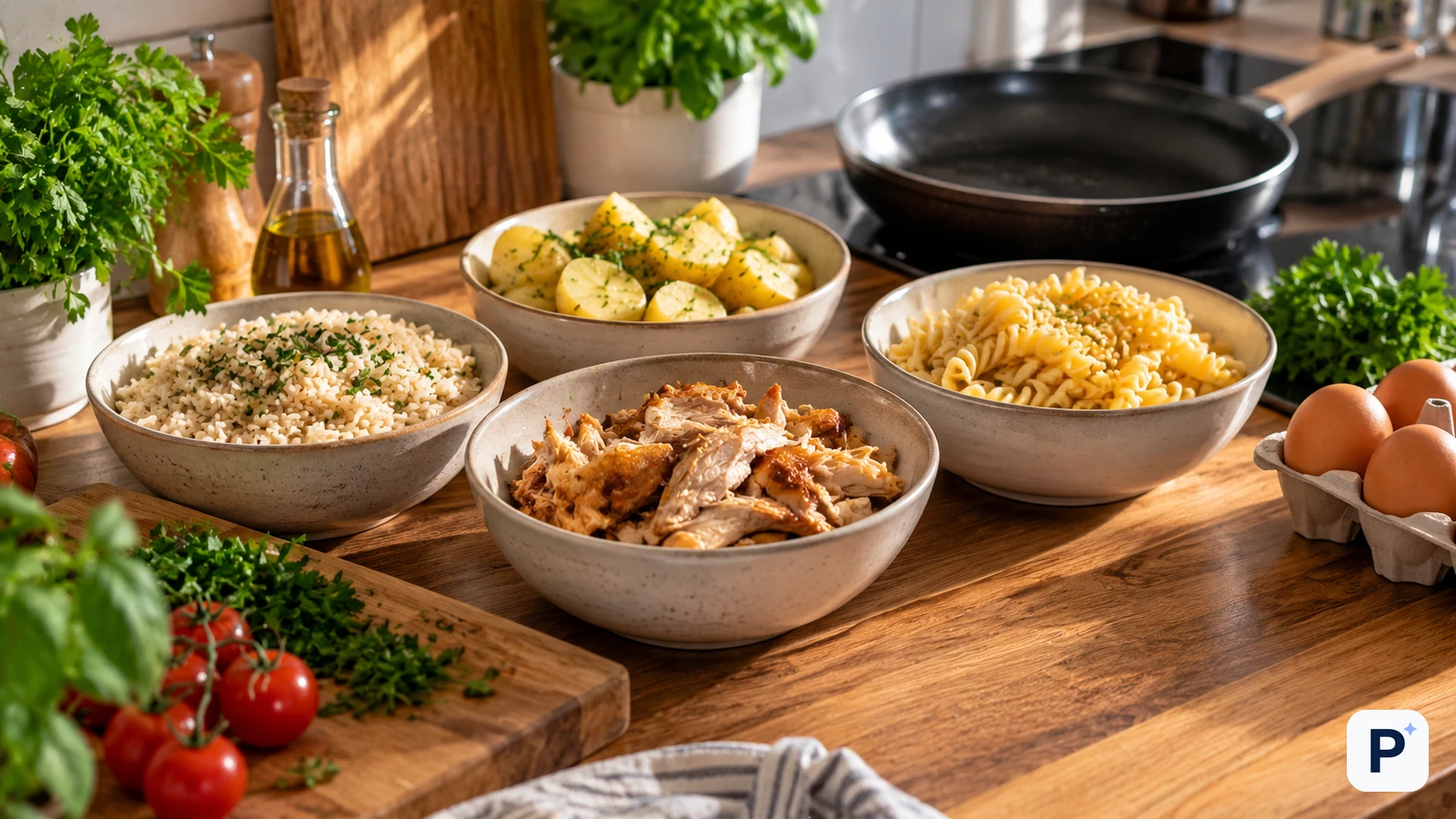
Got some cooked rice, a few potatoes, a handful of pasta or a piece of roast chicken left over? These aren't scraps from yesterday's dinner. They are ready-made bases for your next meal. The most time-consuming part, cooking the ingredient, is already behind you.
So instead of throwing leftovers away or eating exactly the same dinner two days in a row, change their format:
- rice becomes fried rice,
- potatoes become potato cakes,
- chicken becomes a wrap,
- pasta becomes a bake.
In this article you'll find a practical dictionary: you have a particular leftover and you know what to make from it.
Important: all of these ideas assume the food has been cooled and stored correctly. If you're not sure how long you can keep cooked dishes, see our guide to how long you can store cooked food in the fridge.
Leftover Cooked Rice
Rice is an excellent base to use the next day, especially if it has been cooled quickly and kept in the fridge.
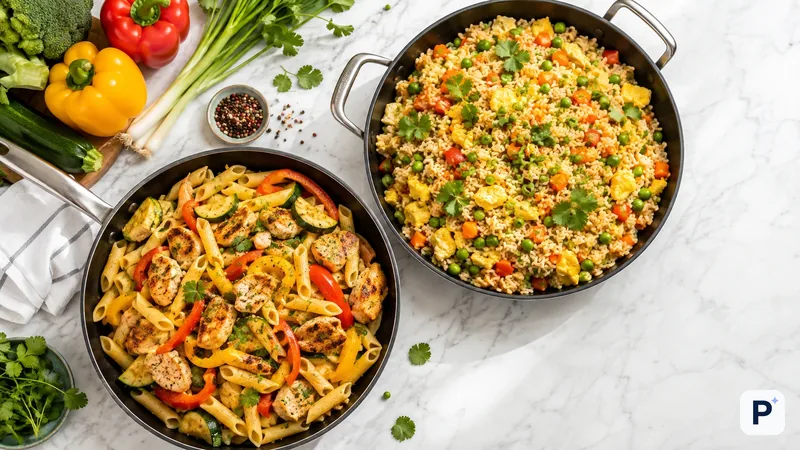
The simplest idea is fried rice with vegetables and egg. Throw whatever you have into the frying pan: carrot, peas, pepper, onion, sweetcorn, broccoli. Add the rice, an egg and a little soy sauce.
You can also use it as a stuffing for peppers or courgettes, a rice salad with tuna or chicken, a bake, or simply add it to soup.
If you only have a small portion left, you don't have to build a whole dinner around it. You can combine the rice with eggs, vegetables and cheese for a quick meal from the frying pan.
Fancy something specific? Fried rice with vegetables and egg is one of the simplest ways to use up this leftover.
Leftover Cooked Potatoes
Potatoes from yesterday's dinner can make a better base for the next meal than freshly cooked ones.
The simplest option is pan-fried potatoes with onion. Chop them, put them in the frying pan and add onion, garlic, herbs or leftover vegetables.
You can also make potato cakes from cooked potatoes. Just mash them, add an egg and a little flour, season and fry until golden.
Other options include a potato-and-egg tortilla, a frittata, a bake, kopytka (Polish potato dumplings) or other dumplings. We've gathered a full list of ideas for cooked and raw potatoes in our guide to what to do with leftover potatoes.
If you have a few potatoes and some other leftovers, don't go looking for the recipe for the „perfect potato dish”. Open the fridge and see what you can add to them.
Leftover Cooked Pasta
Yesterday's pasta can save dinner when you don't have time to start from scratch.
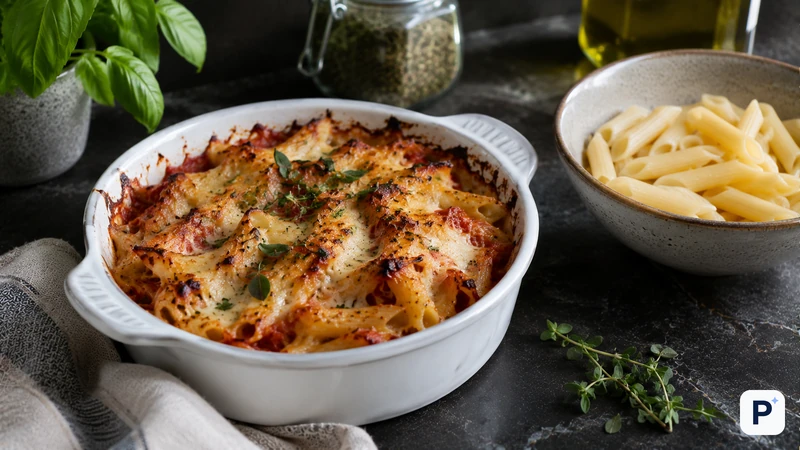
The simplest option is a pasta bake. Mix the pasta with sauce, vegetables or meat, add cheese and bake.
You can also pan-fry it with vegetables and egg, make a pasta frittata, or add it to soup.
If you have pasta left without any sauce, there are even more options. You can combine it with pesto, tomatoes, cheese, tuna, vegetables or a little leftover meat.
If the pasta has already been mixed with sauce, don't write it off either. Just use it up sooner, before it loses its good texture.
Leftover Roast or Boiled Chicken
Leftover chicken is one of the most versatile bases.
- Wrap or tortilla: chicken, vegetables, sauce and you're done.
- Salad: chicken, lettuce, tomato, cucumber, sweetcorn and a simple dressing.
- Pasta: pan-fry the chicken with vegetables and combine it with pasta and sauce.
- Bake: chicken, potatoes or pasta, vegetables, sauce and cheese.
- Filling: chopped chicken mixed with onion, vegetables or sauce can go into pancakes, wraps or pierogi.
You can also use the meat from a chicken broth. As it's often dry, it's best combined with something moist: sauce, onion, yoghurt, tomatoes or cheese.
The same principle works with other leftover meat. You don't have to recreate yesterday's dinner. You simply change its form. We've gathered a full list of ideas for roast and boiled chicken in our guide to what to do with leftover chicken.
Leftover Boiled or Roasted Vegetables
Vegetables are probably the most flexible leftover of all.
You can add roasted vegetables to grains, rice, a wrap or a salad. You can also blend them with stock to make a creamy soup.
Boiled vegetables from a broth can go into a vegetable salad, a vegetable spread or a filling.
Got half a pepper, a few mushrooms and a piece of courgette left? Throw them into scrambled eggs, an omelette, a bake, a sauce or fried rice.
A very simple rule applies here: if a vegetable has lost its crunch but is still good, use it in a dish where texture doesn't matter much. So you don't have to throw a vegetable away just because it no longer looks the way it did on the first day.
Leftover Bread
Stale bread isn't food for the bin just yet. You can turn it into croutons for soup, toast, bakes, breadcrumbs or French toast.
You can also make panzanella, a salad in which stale bread becomes one of the main ingredients.
If you have several different pieces of bread, dry them out and blitz them. Homemade breadcrumbs can later be used for coating, thickening a filling or sprinkling over bakes. You'll find more ideas for dry bread in our guide to what to do with stale bread.
There is just one limit: stale is not the same as mouldy. If mould has appeared on the bread, don't try to cut it off. With soft, porous bread the whole item should be thrown away. We write more about this in our guide to how to tell when food has gone off and when to throw it away.
Leftover Sauce
Sauce often looks like something you don't know what to do with, because only half a bowl is left. That's exactly why it's worth treating it as an ingredient rather than a leftover.
You can use tomato sauce for pasta, rice, a bake or shakshuka. Combine curry sauce with vegetables, chickpeas or chicken. You can use a cream sauce for pasta, potatoes or a bake. Got leftover gravy? Add some meat, grains or potatoes and you have a ready meal.
If you only have a small amount of sauce, it can be enough as part of a larger dish. There doesn't have to be much of it.
Leftover Soup
Yesterday's soup doesn't have to mean another identical bowl.
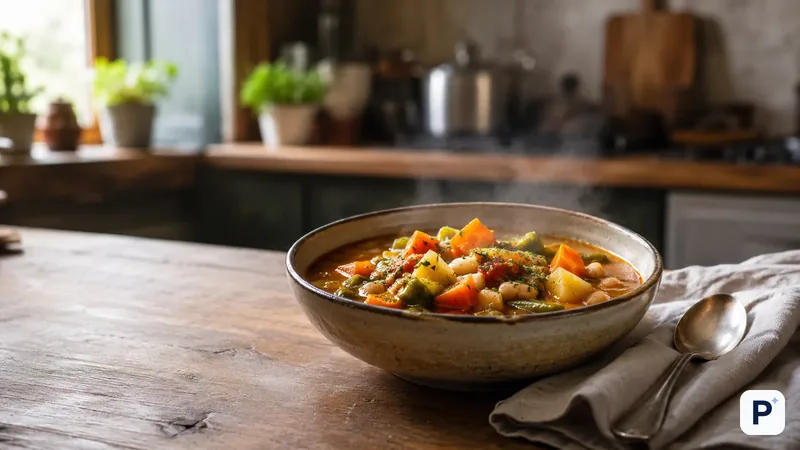
If you have a vegetable base left, you can thicken it and add pasta, rice, grains, pulses or meat. You can use tomato soup as a pasta sauce. A thick soup can be treated as a base for a sauce or served with croutons and cheese. And if only a very small amount is left, you can use it as a liquid for braising vegetables, meat or grains.
This is a good example of why, with leftovers, it's not worth thinking only in terms of „do I have enough for a whole dinner?”. Sometimes a leftover is simply one ingredient in the next meal.
Leftover Cheese
Cheese has the advantage that it can be used in many ways even when there's only a little left.
You can grate hard cheese over pasta, a bake, scrambled eggs, an omelette or pizza. Mozzarella can go into toasties, a bake or a salad. Feta works well with pasta, roasted vegetables, a salad or eggs. You can combine the ends of different cheeses in a single bake.
And if you have a piece of cheese that has started to dry out, that doesn't mean it has to be thrown away. In hot dishes its texture matters far less.
Of course, treat mouldy cheese according to the rules for that particular type of cheese. Not every cheese can simply have the mould cut off and the rest used.
Various Small Leftovers
The most interesting dinners often come about precisely when you don't have one big ingredient, but five small ones:
- half a pepper,
- a few mushrooms,
- a little leftover sweetcorn,
- a few spoonfuls of cooked grains,
- a piece of chicken,
- an opened jar of pesto,
- a bit of cheese.
You don't have to find a recipe that uses exactly all of these ingredients. Turn them into scrambled eggs, an omelette, a bake, a wrap, a grain bowl, fried rice or a one-pan dinner. If it happens to be egg whites you have left over from another recipe, see our guide to what to do with egg whites.
That's exactly why it's worth knowing a simple formula for a one-pan dish: base + protein + vegetables + sauce or seasoning. You'll find more examples in our guide to one-pan dinners.
The Rule: Change the Format, Don't Recreate
This is the most important rule of cooking with leftovers. If yesterday's meal was chicken with rice and vegetables, you don't have to eat chicken with rice and vegetables all over again today.
Turn the chicken into a wrap. Turn the rice into fried rice. Make the potatoes into potato cakes. Bake the pasta with cheese. Blend the vegetables into soup.
A dinner leftover stops being „yesterday's food” and becomes an ingredient in a new dish. This also reduces the temptation to order a takeaway just because you don't fancy eating exactly the same thing as the day before.
You Don't Need to Have Every Ingredient
Recipes are instructions, not a shopping test.
If a recipe calls for peppers and you have a courgette, use the courgette. If it should have chicken, you can use chickpeas. If you don't have cream, use another sauce that suits the rest of the ingredients.
Missing one extra ingredient doesn't always mean you have to go to the shop. This is especially important when cooking with leftovers. The goal isn't to prepare the perfect dish by the recipe. The goal is to make tasty use of what you already have.
First, Check What You Have
This whole system only works if you remember your leftovers.
The biggest problem often isn't a lack of ideas. It's the container that disappears behind other items and is discovered a few days too late.
So keep prepared food somewhere visible, label your containers and put older items at the front. It's also worth taking a quick look through the fridge before you start cooking. Before you reach for a new item, check whether something from previous days should be used up first.
This is where PantryOS helps. You can keep track in the app of what you have at home, including prepared food, and more easily stay on top of what should be used first. That way, instead of opening the fridge after a week and wondering what to do with a leftover, you can see it on your list a few days earlier and plan a dinner around it.
Cook with What You Already Have
Not every food has to be used exactly as it was prepared. Leftovers are ingredients.
Rice can become fried rice. Potatoes, potato cakes. Chicken, a wrap. Vegetables, soup. Pasta, a bake.
The most important change is reversing the order: don't choose a recipe and then buy the ingredients. First see what you have, and only then decide what to cook from it. It's a simple way to waste less, shop less and cook from scratch less often.
| Leftover | What you can make from it | Quick dinner idea |
|---|---|---|
| Cooked rice | fried rice, a bake, salad, filling | rice + egg + pan-fried vegetables |
| Cooked potatoes | potato cakes, tortilla, a bake, kopytka | pan-fried potatoes + egg + onion |
| Cooked pasta | a bake, frittata, pasta with vegetables | pasta + vegetables + cheese |
| Roast chicken | wraps, salad, pasta, filling | wrap + chicken + vegetables + sauce |
| Cooked meat | soup, sauce, filling, a bake | meat + pasta + tomato sauce |
| Roasted vegetables | creamy soup, omelette, salad, filling | vegetables + eggs + cheese |
| Leftover sauce | base for pasta, rice or grains | sauce + pasta + extra vegetables |
| Grains | salad, patties, filling, a bake | grains + vegetables + feta |
| Stale bread | croutons, breadcrumbs, toast, a bake | croutons + fried egg + vegetables |
| Leftover cheese | a bake, omelette, pasta, pizza | pasta + cheese + vegetables |
| Cooked vegetables | omelette, soup, filling, a bake | omelette + vegetables + cheese |
| A small portion of several different things | bowl, wrap, a bake | everything together + sauce or egg |