One-Pan Dinners: Fast Meals from What You Have
You open the fridge and see half a courgette, a piece of chicken, an opened pot of cream and a few vegetables that need using up. It might not look like a specific recipe, but in reality it is almost a whole dinner already.
One-pan dishes are one of the simplest ways to cook in exactly these situations. You need fewer dishes, less time, and you don't have to assemble ten perfectly matched ingredients. Instead of starting from a recipe and heading out for the missing items, you start with what is already waiting at home.
The most important thing is learning a simple framework. Once you have mastered it, you can swap courgette for broccoli, chicken for chickpeas, cream for tomatoes, and rice for pasta. The recipe stops being a set of instructions you have to follow rigidly and becomes a starting point.
First we'll show you how to build this kind of dinner yourself. Then you'll find three specific recipes you can make straight away.
The One-Pan Framework: Four Elements
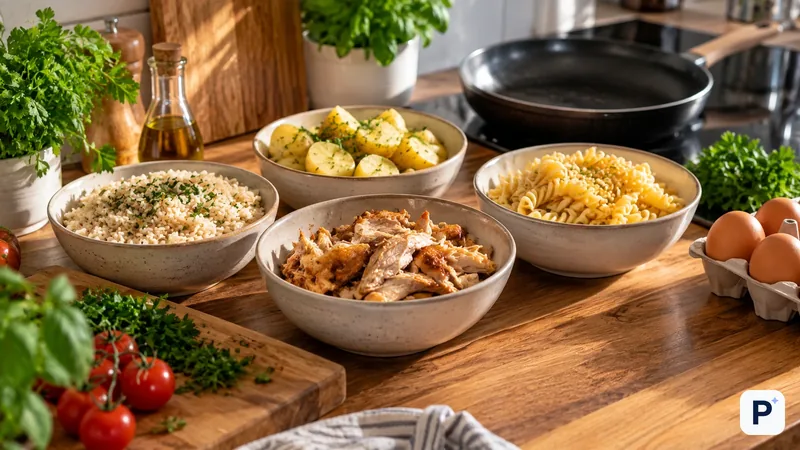
Most simple one-pan dinners can be put together from four elements.
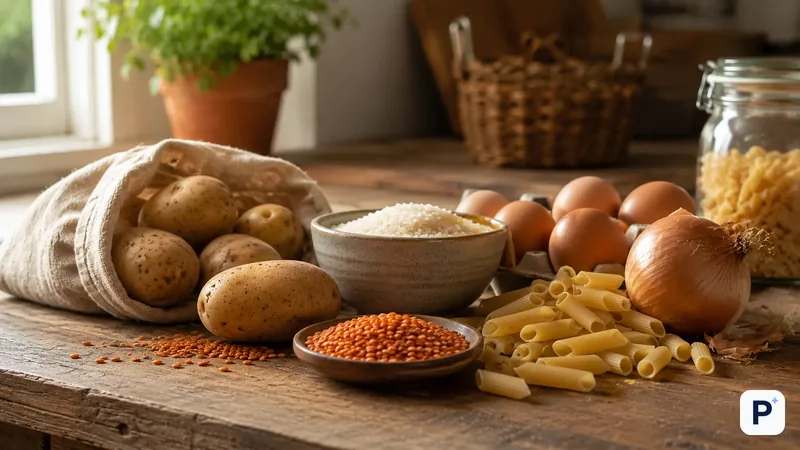
The base provides substance. It could be pasta, rice, a grain such as buckwheat or pearl barley, potatoes, or bread served with the finished dish.
Protein turns a few sides into a complete meal. It can be chicken, turkey, fish, egg, tofu, chickpeas, beans, lentils or cheese.
Vegetables are whatever you happen to have. Courgette, pepper, carrot, broccoli, spinach, mushrooms, peas or tomatoes can all go into exactly the same framework.
Flavour ties it all together. One time it will be tomatoes and oregano, another time cream and garlic, curry and coconut milk, or soy sauce with ginger.
So instead of opening the fridge and thinking "I've got nothing for dinner", you look for four categories.
Got rice, eggs, carrots and soy sauce? That's dinner.
Got pasta, chicken, courgette and a little cream? That's dinner.
Got chickpeas, pepper, tomatoes and a few slices of bread? That's dinner too.
This is exactly the method that lets you cook from what's in your kitchen rather than from yet another shopping list.
Start with What Needs Using First
Don't start by asking, "What do I fancy?". First ask: "What do I have at home, and what should be used first?"
Have a look in the fridge, the freezer and the cupboards. Pay particular attention to opened products, vegetables that are losing their firmness, leftovers from the day before and anything with the nearest date.
If you have half a courgette, you don't need a recipe created specifically for half a courgette. It's enough to treat it as part of the "vegetables" category and match the other three parts to it.
This builds on the method we describe in more detail in our guide to dinner from what you have in the pantry. There we show which types of dishes will take almost any leftovers. Here we focus on one of the most convenient: the frying pan.
If you use PantryOS, you can start even before you open the fridge. In the app you can see your supplies and search for ideas based on the products you already have. Instead of buying ingredients for a recipe, you first use up what you've already paid for.
The Order You Add Ingredients Makes All the Difference
One pan doesn't mean throwing everything in at once. If you add carrot, spinach, raw chicken and cooked pasta at the same moment, some ingredients will still be hard while others are starting to fall apart.
First fry the aromatics and the ingredients that need the most time. Onion, firm vegetables and raw meat therefore go into the pan earlier. Delicate vegetables, such as spinach, peas or fresh herbs, are added later.
If you're using dry pasta or another base that you want to cook directly in the pan, add the right amount of liquid and let it soak up the flavour of the whole dish. If you already have cooked rice or a grain, it goes into the pan only at the end, because it mainly needs warming through.
Cream, cheeses and delicate fresh herbs are usually best added last.
In practice, the framework looks like this: aromatics, then meat and firm vegetables, then the base and liquid, next the delicate vegetables, and finally the sauce, cheese and fresh additions.
If you're not sure how much pasta, rice, vegetables or meat you need for your number of people, you can check it in the PantryOS portion calculator. The calculator works out portions for pasta, rice, meat, fish, potatoes and vegetables, among others.
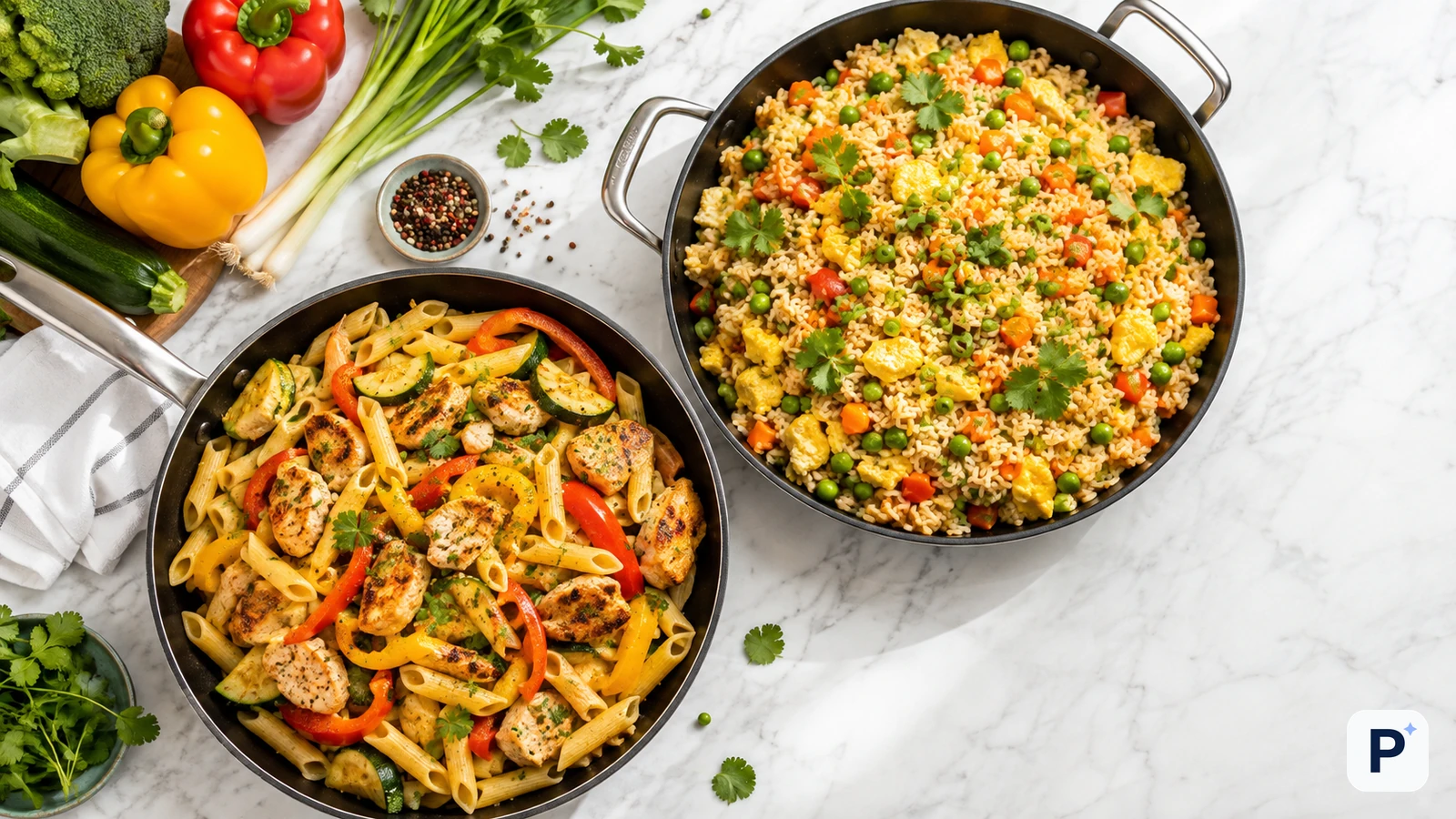
Recipe 1: Creamy One-Pan Pasta with Chicken and Courgette
This is a good recipe for when you've got a courgette, a piece of chicken and a little cream left in the fridge. The pasta cooks directly in the pan, so you don't need a separate pot.
Serves 2
Ingredients: 200 g short pasta, about 250 g chicken breast, 1 medium courgette, 2 cloves of garlic, about 450 to 500 ml hot water or stock, about 100 ml single cream (18%), a handful of grated Parmesan or another hard cheese, 1 tablespoon olive oil, salt and pepper.
Cut the chicken into small cubes. Halve the courgette lengthways and cut it into half-moon slices.
Heat the olive oil in a large frying pan. Add the chicken and fry for a few minutes until browned. It doesn't need to be fully cooked through yet, as it will go back into the sauce shortly. Transfer it to a plate.
In the same pan, fry the courgette. When it starts to brown, add the chopped garlic and fry for a further half a minute or so.
Tip in the dry pasta, pour in about 450 ml hot water or stock and stir. The liquid should almost cover the pasta. Cook, covered, for the time given on the packet, stirring every few minutes. If the liquid runs low, add a little more water.
Towards the end of cooking, return the chicken to the pan and bring it to fully cooked. Poultry should reach at least 74°C at its thickest point.
When the pasta is al dente, reduce the heat, add the cream and cheese. Stir, then season with salt and pepper. If the sauce becomes too thick, add a few more tablespoons of water.
No courgette? Use mushrooms, broccoli, pepper or a handful of spinach.
No chicken? You can add tinned chickpeas towards the end of cooking.
No cream? Add passata instead and make a tomato version.
The same framework gives you several different dinners.
Recipe 2: Fried Rice with Vegetables and Egg
This is one of the best ways to use up rice left over from a previous meal. The more separate and well chilled it is, the better it behaves in the pan.
Serves 2
Ingredients: about 2 cups of cooked rice, 2 eggs, 1 carrot, a handful of fresh or frozen peas, 2 spring onions or half an onion, 2 tablespoons soy sauce, 1 tablespoon oil. Optionally, you can add tofu, a piece of cooked chicken, pepper, sweetcorn or other vegetables.
Heat the oil in a large frying pan. Add the finely chopped carrot and onion. Fry for a few minutes until the carrot starts to soften.
Add the peas and any other firmer vegetables you're using.
Push everything to one side of the pan, crack the eggs into the free space and stir until set. Then add the rice and combine all the ingredients thoroughly.
Pour in the soy sauce and fry for a few more minutes over fairly high heat until the rice is hot all the way through. Finish by adding the chopped spring onion.
With rice, what happened beforehand matters more than the reheating itself. Cooked rice should be chilled quickly, ideally within an hour, kept in the fridge and, in line with cautious FSA advice, used within 24 hours. When reheating, it should be piping hot all the way through, and you shouldn't reheat it more than once.
You'll find more about safe chilling and using food prepared in advance in our guide to batch cooking and cooking in bulk.
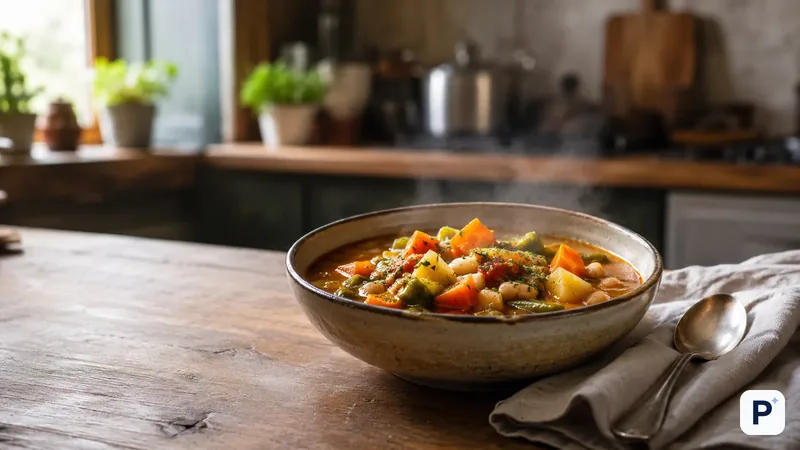
Recipe 3: One-Pan Leczo
Leczo is perfect for rescuing vegetables that need to be used over the next few days. You don't have to stick to the classic set, either. The most important things are onion, a few vegetables and a tomato base.
Serves 3 to 4
Ingredients: 1 large onion, 2 peppers, 1 courgette, 1 tin of chopped tomatoes or about 4 fresh ripe tomatoes, 1 tablespoon tomato purée, 1 teaspoon sweet paprika, 1 tablespoon oil, salt and pepper. Optionally, you can add about 250 g sausage or a tin of drained chickpeas.
Heat the oil in a large frying pan and soften the chopped onion.
If you're using sausage, add it now and fry briefly. Then add the pepper and fry for a few minutes.
Add the courgette, tomatoes, tomato purée and sweet paprika. Season with pepper and a little salt. Cover and simmer for about 15 to 20 minutes, stirring from time to time.
If you're making the chickpea version, add them at the end, as they're already cooked and just need warming through.
Taste before serving. If the tomatoes are very sharp, you can balance the flavour with a pinch of sugar, but it isn't essential.
To keep to the one-pan principle, serve the leczo with bread. If you have safely stored cooked rice or a grain in the fridge, you can add a portion directly to the leczo towards the end of cooking.
No peppers? Add mushrooms.
No courgette? Aubergine works well, or an extra portion of other vegetables.
No sausage? Chickpeas, beans or lentils will make it a filling meat-free dish.
The Best One-Pan Dish Is Often the One You Didn't Plan
The recipes above are a starting point, not a list of compulsory products.
If a recipe says "courgette" but you've got half a broccoli in the fridge, first consider whether the broccoli can do the same job. If you need chicken but have an opened tin of chickpeas, perhaps you don't need another trip to the shops. If the sauce was meant to be creamy but there's no cream, and instead there's an opened jar of passata, change the direction of the dish rather than heading to the shop for a single ingredient.
This is exactly how cooking from the pantry works. You're not trying to recreate a recipe at all costs. You look at the role the missing ingredient plays and find something you already have.
The same principle helps you use up yesterday's dinner. If you've got rice, potatoes or chicken left over, see what to do with dinner leftovers to turn them into a second, completely different dish.
How to Swap Ingredients Without Ruining the Whole Dish
The easiest swap is to replace an ingredient with another from the same group.
You can swap pasta for cooked rice or a grain. Chicken for tofu, egg, beans or chickpeas. Courgette for pepper, broccoli, mushrooms or another vegetable suited to frying. Cream for tomatoes, coconut milk or another sauce that matches the rest of the ingredients. Parmesan for another hard cheese.
Not every swap will give an identical result. And that's not the point. The dish is meant to use what you have, not to imitate the original recipe perfectly.
The same way of thinking appears in our guide to budget dinners from simple ingredients, where instead of expensive, complicated recipes we build on a few simple staples: potatoes, rice, grains, pasta, eggs and pulses.
Don't Overdo the Number of Ingredients
Cooking from leftovers has one trap. When you see seven products that "need using up", it's tempting to try to throw them all into one dish. You don't have to.
If you've got courgette, broccoli, carrot, pepper, mushrooms, sweetcorn and spinach, pick two or three ingredients that go well together. The rest can become the base of your next meal.
A one-pan dish usually turns out better when it has one clear flavour direction, rather than being a way to empty the whole fridge at once. You don't have to use up all the leftovers on the same day. What matters is knowing what you have and the order in which it's worth reaching for it.
One Pan Also Helps You Spend Less
The biggest saving doesn't come from the pan using fewer dishes. It comes from the fact that this kind of dinner is very easy to make from products you've already bought.
Half a pot of cream stops waiting for "some recipe". Leftover rice becomes the base of the next dinner. Vegetables that are losing their freshness end up in the pan rather than the bin. And you don't have to buy five extra ingredients just because one particular recipe calls for them.
If you want to take this further, see how much you can save on food each month. In that guide we break the potential saving down into specific sources, including less waste and fewer emergency food orders.
PantryOS Starts with the Products You Already Have
The hardest question before dinner often isn't "How do I cook this?", but "What can I actually make from all of this?".
PantryOS helps you start with exactly what's in your kitchen. You can see your supplies and get recipe ideas from the products you already have, instead of starting every dinner from yet another shopping list.
Got rice, eggs and vegetables? That could be fried rice. Got pasta, courgette and cream? There's the base for creamy pasta. Got a few vegetables and some tomatoes? Make leczo.
You don't need a perfect set of ingredients. You just need to see what you already have and how it can be combined.