How Long Can You Keep Cooked Food in the Fridge?
You cooked a pot of soup on Sunday. On Wednesday it's still in the fridge. On Thursday you wonder: is it still all right, or best not to risk it?
With leftovers, it's easy to fall into one of two extremes. Some people throw dinner away the very next day, because "better not to risk it". Others assume that once food has been cooked and sits in the fridge, nothing will happen to it for a week. Neither of these rules is a good one.
Cooking destroys a large proportion of the microorganisms present in raw food, but it does not make a dish keep indefinitely. After cooking, it can be contaminated again, and some bacteria can also multiply during storage.
That is why, with cooked food, three things matter above all: how quickly it was cooled, what temperature it is stored at, and how much time has passed since it was prepared.
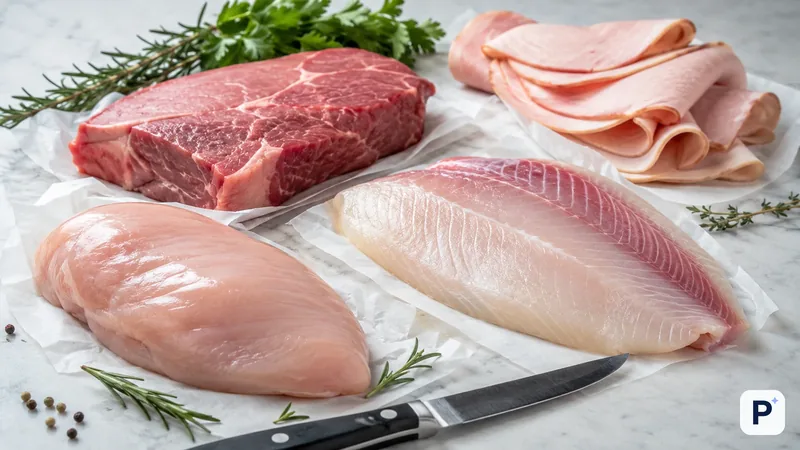
This guide is a practical cheat sheet for cooked food specifically. If you're looking for the rules on raw poultry, fish or meat, see our separate guide on how to store meat, fish and cold cuts.
First, the Two-Hour Rule
Before you start counting days in the fridge, first count the time spent out of it.
Food-safety authorities recommend not leaving cooked food at room temperature for longer than 2 hours, and chilling it in the fridge as quickly as possible, below 5°C.
Official guidance applies the same rule and shortens the limit to 1 hour if the surrounding temperature is above around 32°C.
Those two hours don't begin only once you've finished eating. What counts is the whole time a perishable dish spends out of safe refrigeration: from cooking, through serving, to putting the leftovers away.
So if dinner sat on the hob for an hour and then another hour and a half on the table, you don't start counting from zero when you put the container in the fridge.
You Don't Have to Wait for Food to Cool Completely
This is one of the most persistent kitchen myths. A large pot of soup left on the worktop "until it's completely cold" can take several hours to cool. That is exactly what we want to avoid.
Food-safety authorities recommend dividing large amounts of food into smaller portions and shallow containers to bring their temperature down quickly. Hot food can be put in the fridge, as long as it isn't stored as one huge, slowly cooling mass.
In practice:
- pour a large pot of soup into several smaller containers,
- slice a roast or divide it into smaller portions,
- don't leave five litres of hot stew in one deep pot until late in the evening.
The faster the centre of the dish cools, the better.
How Long You Can Keep Cooked Food
The times below assume the food was cooked properly, cooled quickly and is stored in the fridge at around 4°C or lower.
| Food | Fridge | Freezer | Key point |
|---|---|---|---|
| Cooked meat and poultry | 3–4 days | 2–6 months | Applies to properly cooled leftovers |
| Cooked fish and seafood | 3–4 days | up to around 3 months for best quality | Don't confuse this with raw fish, which lasts far less time |
| Soups and stews | 3–4 days | 2–3 months | A large pot needs dividing and cooling quickly |
| Cooked pasta | 3–4 days | can be frozen, but the texture may deteriorate | Best stored separately from the sauce |
| Cooked rice | up to 24 hours under the cautious official guidance | can be frozen | Cool it within an hour if you can |
| Cooked potatoes and grains | around 3–4 days | depends on the dish | Treat like other cooked leftovers |
| Bakes and egg dishes | 3–4 days | usually 2–3 months | A different rule applies to hard-boiled eggs |
| Hard-boiled eggs | up to 7 days | not recommended | Keep them in the fridge |
| Pizza | 3–4 days | 1–2 months | Cool quickly after the meal |
| Salads with egg, chicken, tuna or pasta | 3–4 days | usually freeze poorly | Don't leave them out for long |
Food-safety authorities give most cooked leftovers 3–4 days, including meat, poultry, soups, stews, pizza and egg dishes. Cooked fish and other seafood can also be kept in the fridge for around 3–4 days.
For cooked pasta, official guidance likewise gives around 3–4 days.
Don't treat the fourth day as a magic threshold, though, before which everything is definitely fine and after which it spoils instantly. These are recommended guideline times for properly prepared and stored food.
Why 3–4 Days Doesn't Always Mean Four Days
Let's say you cooked some chicken on Monday.
If you cooled it quickly, put it in the fridge in a clean container and it was kept at around 4°C throughout, you can use the recommended range for cooked leftovers.
If, however, that same chicken sat out on the table for three hours during a party, then went back in the fridge, and the next day was taken out for an hour and put away again, the number of days alone stops being enough information.
Time in the fridge does not undo mistakes made earlier. That is why no table can replace proper cooling.
Treat Rice Separately
Rice deserves its own rule, because of the bacterium Bacillus cereus.
Its spores can survive cooking. If cooked rice sits at room temperature for a long time, the bacteria can multiply and produce toxins. Reheating it thoroughly afterwards does not always solve the problem.
Food-safety authorities recommend:
- cooling the rice as quickly as possible, ideally within an hour,
- putting it in the fridge,
- using it within 24 hours,
- reheating it no more than once,
- and bringing it to a high temperature all the way through when reheating.
This is a more conservative recommendation than some other guidance, which treats cooked rice much like any other leftovers. At PantryOS, I'd go with the safer, simpler rule: cooked rice for tomorrow, not "for sometime this week".
If you've made more than you need, cool the portion for later quickly and freeze it. You'll find more about preparing food ahead like this in our guide to batch cooking.
With a Mixed Dish, Look at the Whole, Not One Ingredient
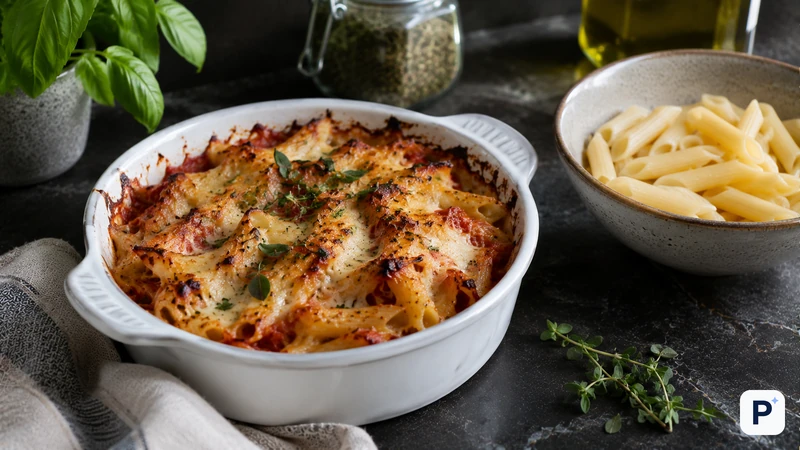
Most leftovers aren't plain cooked chicken or pasta on its own. They're curry with rice. Pasta with meat and cream. A bake with eggs. A salad with chicken and mayonnaise.
In such cases, don't try to "extend" how long a dish keeps based on its longest-lasting ingredient. If one element needs particularly careful storage, treat the whole dish by the shorter limit.
Rice is a good example. If you're storing it already mixed into a curry, you can't take the time for the stew alone from the table and assume the whole thing will automatically keep for four days. That is why, with batch cooking, it's often better to store some components separately.
How to Pack Cooked Food Properly
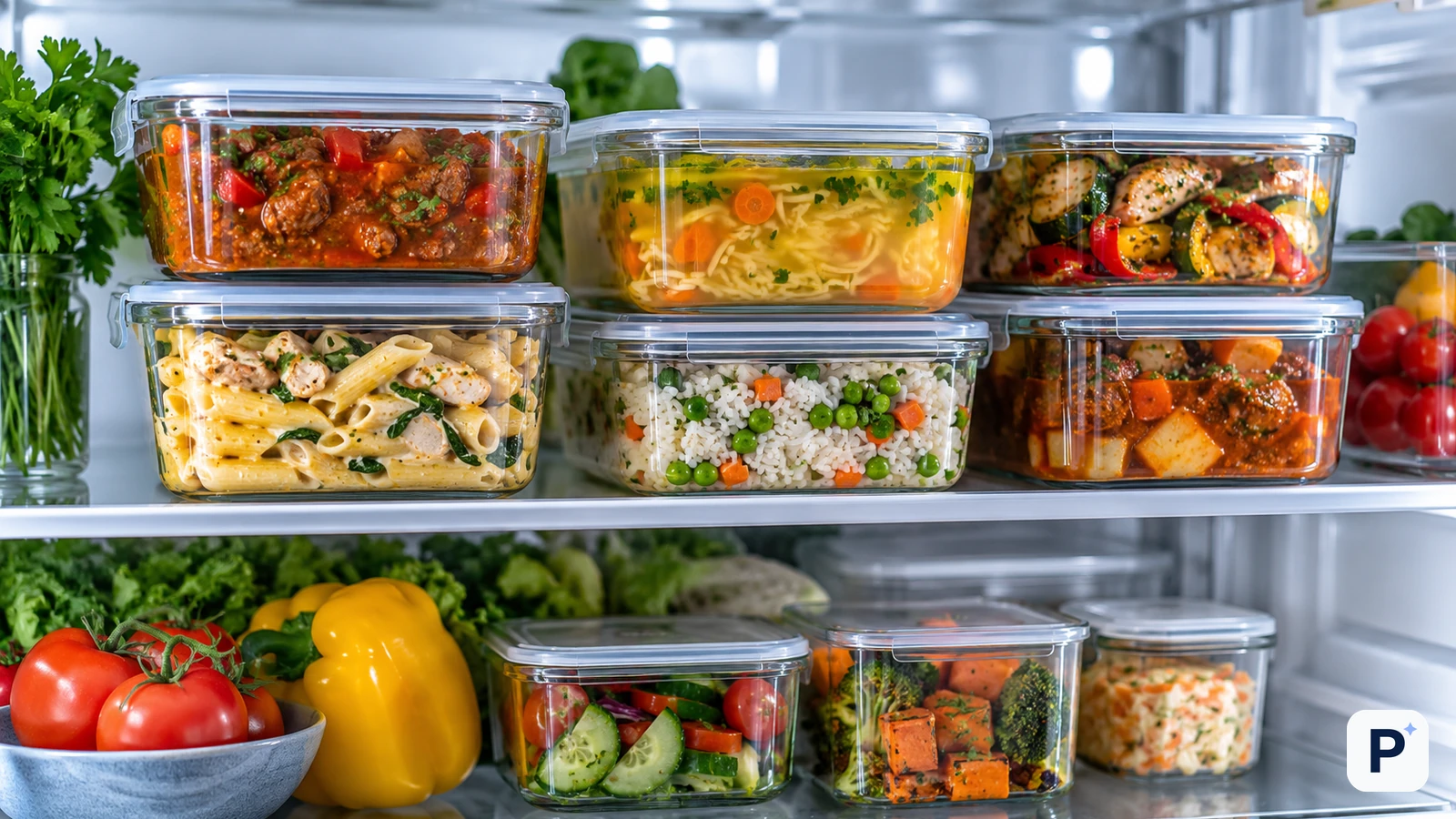
What matters most is portion size, cleanliness and sealing food tightly once it has cooled.
You don't need to move food because of the supposed rule that "metal ruins food". That's too much of a simplification. The problem with a large pot is far more practical: a big volume cools slowly. That is why smaller, shallow containers are more convenient for storage.
Official guidance recommends keeping chilled food in covered containers or sealed bags, and avoiding overloading the fridge so that cold air can circulate freely.
Portioning straight into single meals works well, too. Instead of one two-litre box of stew, you have three smaller portions. You take out only the one you intend to eat, and the rest don't go through repeated cycles of heating and cooling.
Sometimes It's Worth Storing the Sauce and Extras Separately
This isn't always a question of safety. More often it's about quality.
Pasta kept for several days in a lot of sauce can absorb the liquid and turn very soft. Croutons dropped into soup lose their crunch. Lettuce mixed with dressing in advance wilts.
That is why, when planning leftovers, it's a good idea to separate the elements that have different textures:
- pasta on its own,
- sauce on its own,
- fresh leaves on their own,
- crunchy extras added only just before eating.
It's still the same ready meal, only after two days it tastes far better.
Write Down the Date You Made It, Don't Try to Guess
"I think I made this the day before yesterday" is not a good food-safety system.
Once you've cooked it, write on the container what it is and when it was made. For example, stew 4 Sept or tomato soup 4 Sept. You don't need to print special labels. A piece of tape and a marker will do.
The date is especially useful if several people share the same fridge. Just because you remember Sunday's dinner doesn't mean the rest of the household knows how long a particular container has been sitting there.
How to Reheat Leftovers Safely
Food-safety authorities recommend reheating leftovers to at least 74°C all the way through the dish.
That "all the way through" matters more than it might seem. In a microwave, the edges of a dish can be very hot while the centre stays cool. So stir the dish partway through, turn the container if you need to, and let the heat spread evenly. Official guidance likewise recommends stirring food while microwaving it, precisely because of the colder spots in the middle.
Soups, sauces and gravies are worth bringing to the boil when reheating. Official guidance recommends this practice for soups, sauces and gravy.
Can You Reheat Food More Than Once?
The best system is this: you reheat only the portion you're about to eat.
Food-safety authorities recommend reheating leftovers only once. Every further cycle of cooling and reheating increases the number of moments when food can sit at a temperature that encourages bacteria to multiply.
So don't take out the whole pot of soup to pour one portion, heat the lot and then put the rest away again. Pour out as much as you need. Leave the rest in the fridge.
With rice, the reheat-once rule is especially important.
Don't Judge Safety by Smell Alone
A sour smell, mould, sliminess or an unusual colour are obvious reasons to throw food away. But this only works one way.
If food smells bad, don't eat it. You can't, however, say: "it smells fine, so it must be safe". Food-safety authorities stress that disease-causing microorganisms can be present in food that looks, smells and tastes normal.
That is why, with leftovers, what matters more is knowing:
- when they were cooked,
- how long they sat out of the fridge,
- whether you cooled them quickly,
- how they were stored.
If you don't know how long the container has been in the fridge and can't work out the storage conditions, don't try to make up for that missing knowledge with a smell test.
Four Days Gone? The Freezer Should Have Come In Sooner
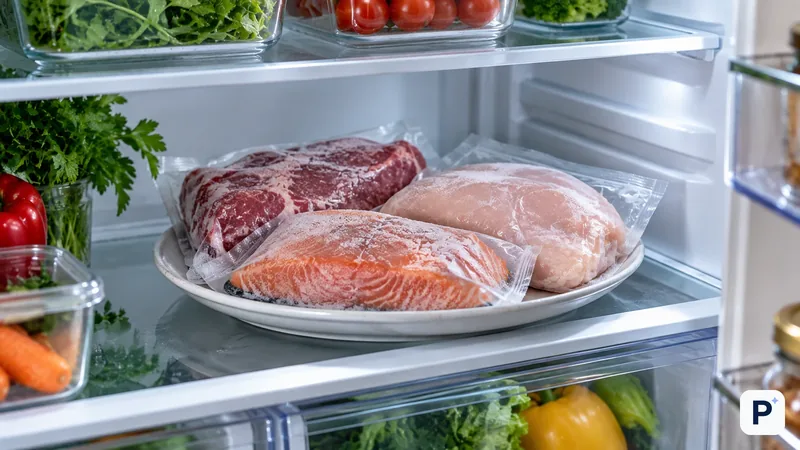
If you already know while cooking that part of the meal won't be eaten within a few days, you don't have to wait until the last minute. Freeze the portion early.
Soups and stews keep good quality in the freezer for roughly 2–3 months, and cooked meat and poultry for around 2–6 months. The freezer times given relate primarily to quality, because food kept continuously at around -18°C stays safe for much longer.
It's best to freeze food while it's still fresh and in good condition, rather than treating the freezer as a last resort for a four-day-old dinner. You'll find more rules in our guide to what you can and can't freeze.
A Practical Everyday Rule: Today, Tomorrow, Freezer
If you don't want to memorise the whole table, you can use a simpler system.
Today and tomorrow. Food you plan to use quickly stays in the fridge.
The next 2–4 days. You keep an eye on the date it was made and the appropriate limit for that particular dish.
Later. If you know from the outset you won't manage to eat a portion, you freeze it early.
Rice. You treat it separately. Cool it quickly and ideally use it the next day.
This approach is far easier than puzzling over every container afresh each week.
Most Leftovers Go Off Because We Forget About Them
The problem often isn't that someone doesn't know the difference between three and four days. The container simply disappears from view.
On Monday you put the soup away. On Tuesday you stand the new shopping in front of it. On Wednesday more boxes arrive. On Friday you rediscover the soup and can't remember whether it was from this Monday or the weekend before.
That is why the basic system is simple:
- label dates,
- put older items at the front,
- check the fridge before cooking the next meal.
You'll find more about this system in our guide to how to organise your fridge and pantry. If you regularly prepare several portions at once, see also batch cooking, or how to cook once and eat for several days.
PantryOS Helps You Remember Food Before It's Too Late
The biggest benefit of storing leftovers only comes when they're actually eaten.
PantryOS helps you keep your household supplies in one place and stay on top of the items that should be used first.
Instead of discovering a container only after several days, you can see in advance that something is already waiting in the fridge.