How to Store Dairy and Eggs to Keep Them Fresh for Longer
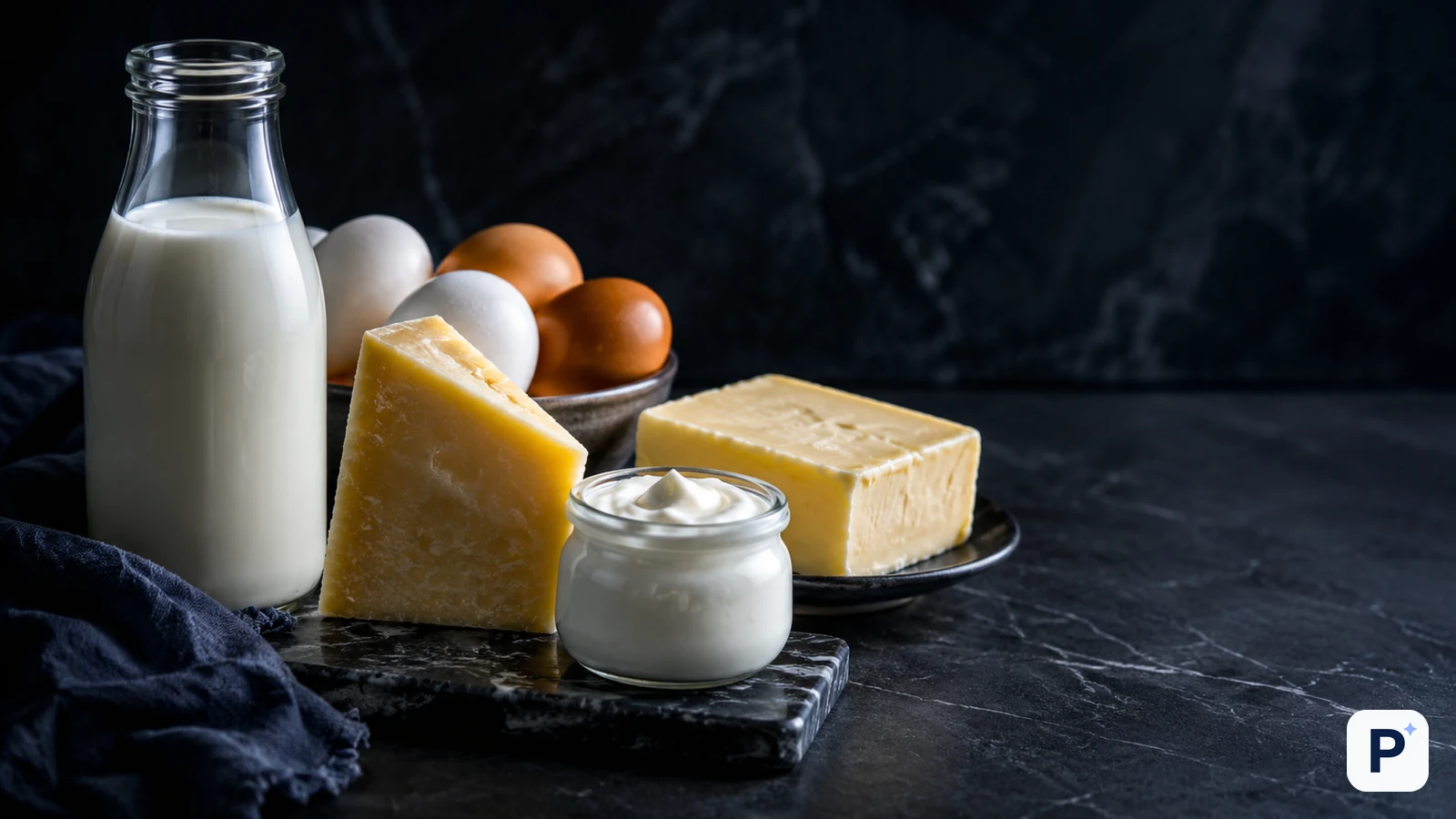
Milk, yoghurts, cheese, butter and eggs are products that regularly end up in most shopping baskets. And that is precisely why they are so easy to overlook.
You open a new yoghurt even though one is already sitting at the back of the fridge. You buy more eggs because you can't remember how many are left. The soured cream you opened for a sauce disappears behind the jars, and a few days later you find yourself wondering how long it has actually been there.
When it comes to dairy and eggs, a few simple rules make a big difference. What matters is the temperature, where you keep things in the fridge, how well you reseal the packaging and, above all, what the manufacturer has written on the label after the words "once opened".
This guide is part of our series on everyday food storage, alongside articles on storing bread, fresh herbs, fruit and vegetables, and meat, fish and cold cuts.
Store Eggs Somewhere Cool Once You Get Them Home
It's easy to come across conflicting advice here from different countries. In one shop eggs sit on an ordinary shelf, in another they are chilled, and the internet offers several different versions.
In the European Union, fresh Grade A eggs are, as a rule, not washed and, before being sold to the consumer, should not be kept constantly chilled below 5°C. This is partly to limit sudden changes in temperature and the condensation of moisture on the shell. Once you have bought them, however, the packaging is required to carry advice to store the eggs somewhere cool.
In the UK, the Food Standards Agency likewise recommends keeping eggs in the fridge once you get them home.
So the most practical rule is this: once you have brought the eggs home, put them in the fridge and then keep conditions as stable as you can. Don't take the whole box out for several hours only to put it back again later. If you need two eggs for breakfast, take out two.
Can Eggs Be Kept in the Fridge Door?
A popular piece of internet advice says: "never in the door". In practice, though, this isn't so clear-cut. UK guidance notes that eggs need only slight chilling and can be kept in a dedicated compartment in the fridge door, where the temperature may be around 10–15°C.
From an organisational point of view, however, you can leave them in their original box rather than transferring them to an open plastic tray. The box protects the shells from damage, limits contact with other foods and means you still have the best-before date and the rest of the packaging information to hand.
If your fridge has a very warm door or you open it frequently, you can choose a more stable shelf inside. More important than finding the one "perfect shelf" is keeping the eggs cool and not letting them move constantly from cold to warm and back again.
Nor should you store them right next to ready-to-eat foods if there is any risk of the shells coming into contact with that food. Food safety guidance recommends keeping raw foods, including eggs, separate from ready-to-eat foods.
Don't Wash Eggs Before Putting Them in the Fridge
Grade A eggs sold in the European Union are, as a rule, not washed. The natural cuticle on the shell is one of the barriers that makes it harder for microorganisms to get inside. EU rules state explicitly that washing can damage this layer.
So don't bring the box home from the shop and immediately wash all the eggs "to get it out of the way". If you want to clean the shell before using an egg, do it right before you crack it, not several days in advance.
After handling the shells, wash your hands and any surfaces they have touched. Even a clean, undamaged egg can be a source of salmonella, so when you are preparing food it's worth treating the shell as a raw ingredient rather than clean packaging.
How Long Can You Keep Eggs?
In the UK, the best-before date for eggs is a maximum of 28 days from laying. This is set out by the Food Standards Agency.
Online you may also come across the American recommendation of storing raw, in-shell eggs in the fridge for 3–5 weeks. I wouldn't, however, apply that figure directly to a British carton.
The simplest rule for a British kitchen is better: check the date on the box and follow the storage conditions given by the manufacturer. And don't throw the box away as soon as you've moved the eggs into the fridge. That box carries the most important piece of information, the date.
The Water Test Doesn't Tell You Whether an Egg Is Safe
You probably know the tip: put an egg in a glass of water. If it lies flat on the bottom, it's fresh. If it stands upright, it's older. If it floats, throw it away.
The first part has some basis. As an egg ages, the air cell inside it grows, which is why an older egg is more buoyant. The size of the air cell is indeed recognised as a feature linked to an egg's age.
But this is not a safety test. The UK's Food Standards Agency stresses that the float test assesses age, not the presence of dangerous bacteria. An egg does not become safe simply because it sinks to the bottom of the glass.
So treat this test as, at most, a curiosity about freshness, rather than a way of getting around dates and storage rules.
Keep Cooked Eggs for Less Time Than Raw Ones
Once an egg is cooked, the situation changes. FoodSafety.gov gives about a week in the fridge for hard-boiled eggs.
So there's no need to apply an automatic rule that a peeled egg must be thrown out the very next day. What matters most is cooling them quickly after cooking, keeping them in the fridge and protecting them from contamination.
If you are preparing eggs for several days ahead, label the container with the date you cooked them. After four days it's much easier to forget whether you made them on Monday or Thursday.
Dairy Needs the Right Temperature Above All
Store milk, yoghurt, kefir, soured cream, curd cheese, cheese and butter according to the information on the packaging. For milk and dairy products, guidance gives a range of around 4–8°C.
Don't assume, though, that every fridge has the same distribution of temperature. In some the coldest part is at the bottom, while in others the layout depends on the design and the cooling system. If a product needs 4–8°C, choose a spot where your fridge actually maintains that range. It's worth checking the appliance manual while you're at it, or putting a simple thermometer in the fridge.
The general principle matters more than the name of the shelf: products that need chilling must stay suitably cold from the shop all the way to the moment you eat them. So don't leave a bag of milk and yoghurts in the car or on the kitchen worktop for several hours after shopping.
UHT Before Opening Is the Exception
UHT milk behaves differently from fresh pasteurised milk sold from the chiller. An unopened UHT carton can be kept outside the fridge in line with the manufacturer's conditions, because the milk has been heat-treated at a high temperature and aseptically packaged.
Once opened, that advantage disappears. Food safety guidance recommends keeping opened UHT milk in the fridge and using it within about 48 hours.
The most important thing, though, is always what it says on the specific packaging. If the manufacturer writes "once opened, keep refrigerated and consume within 3 days", then that instruction takes precedence.
Once Opened, the Date on the Front of the Pack Is No Longer the Only Thing That Counts
This is one of the most common reasons dairy gets wasted. You look at a yoghurt and see a date that's still a week away. The thing is, you opened it four days ago.
The date on the packaging refers to a product stored under the conditions specified by the manufacturer. Once it's opened, an additional instruction applies, if one has been given. So look for the words: "once opened, consume within…"
There is no single honest figure for all dairy. Milk, soured cream, kefir, yoghurt, curd cheese and matured cheese all keep for different lengths of time. Products from different manufacturers also differ from one another.
With opened packaging it's also worth following a few simple rules. Use a clean spoon to serve yoghurt, soured cream or curd cheese. Reseal the packaging after use. Don't put back into the container any product that has already been on a plate. And if you can't remember when you opened something, write down the date you opened it.
The More Water a Cheese Contains, the More Care It Needs
"Cheese" is a very broad category. Hard Parmesan behaves quite differently from ricotta, mozzarella or curd cheese.
Soft, fresh cheeses contain more moisture and are more prone to deteriorating quickly. Hard, matured cheeses generally keep for longer. That's why it isn't worth applying a single rule like "cheese is good for a week once opened".
Check the packaging and store cheese well sealed, but in a way suited to the type. Curd cheese or mozzarella should be protected from contact with other foods and from drying out. Don't leave hard cheese uncovered on a plate either, because it will quickly dry out and pick up smells from the fridge.
"Use By" and "Best Before" Are Not the Same Thing
With dairy, this distinction is especially important.
"Use by" indicates the date up to which a food is safe to eat. It applies to highly perishable products that may pose a risk after the stated date. Once that date has passed, the food is considered unsafe.
"Best before" indicates the date of minimum durability. After this date a properly stored product may still be fit to eat, although its quality may deteriorate.
So don't use the "it smells fine" test on products past their use-by date. Appearance and smell can help you spot obvious spoilage, but they can't detect every dangerous microorganism. We explain the whole difference in more detail in our guide on how to read date labels.
What About Freezing Dairy?
The answer here is: you can freeze some products, but you have to expect a change in quality.
Butter freezes very well. You can also freeze hard cheeses, especially if you later use them grated on pizza, in a bake, a sauce or with pasta. After thawing, the cheese may be more crumbly than when fresh. Milk can be frozen, but after thawing it may change consistency and need thorough stirring.
Soured cream, yoghurt and some soft dairy products are trickier. After thawing they may separate or turn watery or grainy. The National Center for Home Food Preservation notes, among other things, that soured cream separates after freezing.
This doesn't automatically mean the product has to be thrown away. It is often still suitable for a sauce, a cake, a soup or another dish where a perfectly creamy texture doesn't matter.
The best rule is this: freeze dairy with a specific plan for using it, rather than expecting it to be identical to fresh once thawed. You'll find more examples in our guide to what you can and can't freeze.
Eggs Can Be Frozen Too, but Not in Their Shells
Don't put whole raw eggs in their shells into the freezer. As the contents freeze they expand, and the shell can crack.
If you have eggs you won't use, crack them out of their shells. You can beat whole eggs together or freeze the whites separately. FoodSafety.gov allows the freezing of beaten yolks and whites, but not eggs in their shells.
It's also best not to freeze hard-boiled eggs, because the white loses a lot of its texture after thawing.
Left with just egg whites after a recipe that used the yolks? Instead of throwing them away, see our guide on what to do with egg whites, where the ideas are matched to how many whites you have to use up.
Keep Opened Products and Ones Nearing Their Date at the Front
Even the best temperature won't help if you forget the product exists at all. Soured cream opened and hidden behind six jars. A yoghurt tucked under the new shopping. Curd cheese bought before a second, identical tub of curd cheese.
That's why it's worth setting aside one place in the fridge for dairy and using a simple rotation: older and opened products at the front, new ones at the back. You can also create a small "eat first" zone for products with the nearest dates. You'll find more about this sort of layout in our guide on how to organise your fridge and pantry.
And if you don't want to keep track of every product in your head, PantryOS lets you keep your supplies in one place and see what you already have at home, as well as what's worth using up sooner.
Don't Buy Another Pack Just Because You Can't Remember the Last One
Dairy is particularly easy to buy "just in case". Butter always comes in handy. Yoghurts get eaten quickly. It's better to have plenty of milk. The trouble starts when the actual rate at which you use things up is slower than the rate at which you keep adding new packs to the fridge.
So before you go shopping, check not only whether you have milk, but also how much is left and when it needs to be used. If there are four yoghurts in the fridge with a short date, a promotion on another six-pack is not a saving.
If several people do the shopping, duplication is an added problem. One person sees in the morning that the milk is running low, another buys some in the afternoon, and in the evening a third brings home yet another carton. In PantryOS, your supplies and a shared shopping list can be available to everyone in the household in the same place. Before you put something in your basket, you can check whether the product really has run out. You'll find more about the shopping process itself in our guide on how to write a shopping list so you don't buy too much.
The Most Important Rules in Brief
- Once you've bought eggs, keep them somewhere cool and ideally leave them in their original packaging.
- Don't wash a whole box of eggs before storing them.
- Don't treat the water test as a safety test.
- Store dairy in line with the temperature and instructions given by the manufacturer.
- Once opened, check for a separate "consume within X days" recommendation.
- Don't judge products past their use-by date by smell alone.
- Put opened products and those with the nearest dates at the front.
- In many cases you can freeze surpluses, but expect a change in texture.
- Before you buy more milk, yoghurt or eggs, check whether some is already waiting in the fridge.
The Fridge Works Better When You Know What's in It
Most food isn't wasted because someone doesn't know the ideal temperature for yoghurt. It's wasted because a product was bought, put away and forgotten.