How to Read Date Labels: "Use By" and "Best Before" Explained
You see a date on the packaging, notice it passed yesterday, and the product automatically lands in the bin. The problem is that this date does not always mean "from today, this must not be eaten".
Food packaging carries two basic markings: "use by" and "best before". They look similar, but they mean two completely different things. The first is about safety. The second is mainly about the quality of the product. The European Food Safety Authority (EFSA) and food safety bodies draw the distinction in exactly this way.
This is not a minor detail on the label. In one survey of households, 57% of people named passing the date as a reason for throwing food away, making it the most commonly cited cause of food waste at home.
So before you throw something away just because it is "past the date", first check which kind of date you are actually looking at.
"Use by" = safety
If you see "use by" on the packaging, take the date seriously.
This is the date used for products that spoil quickly and can become a health risk after a relatively short time. Once this date has passed, the food is considered unsafe.
You will often find this marking on:
- fresh meat and poultry,
- fresh fish,
- some dairy products,
- chilled ready meals,
- prepared salads and other quick-to-spoil products.
And here is a very important rule: do not check such a product with the "I'll give it a sniff and see" method.
A product can look normal and have no unpleasant smell, yet still contain harmful micro-organisms you cannot see or detect. That is why food past its "use by" date should not be eaten just because it "seems fine".
So if a yoghurt says "use by 16 August", do not treat 17 August as an extra day to test whether it will still do. You can read more about storing dairy and eggs in our dedicated guide.
"Best before" = quality
"Best before" works completely differently.
This is the minimum durability date, the point up to which the manufacturer guarantees certain properties of the product, provided it has been stored correctly. After this date the product may gradually lose aroma, flavour, crunch, colour or its proper texture, but that does not automatically mean it becomes unsafe the next day.
You will often see this marking on longer-life products, for example:
- pasta,
- rice and groats,
- tinned food,
- coffee and tea,
- breakfast cereals,
- snacks,
- frozen food,
- some dry products.
Interestingly, some very long-life products, including table salt, solid sugar and vinegar, are even exempt from the requirement to carry a best-before date.
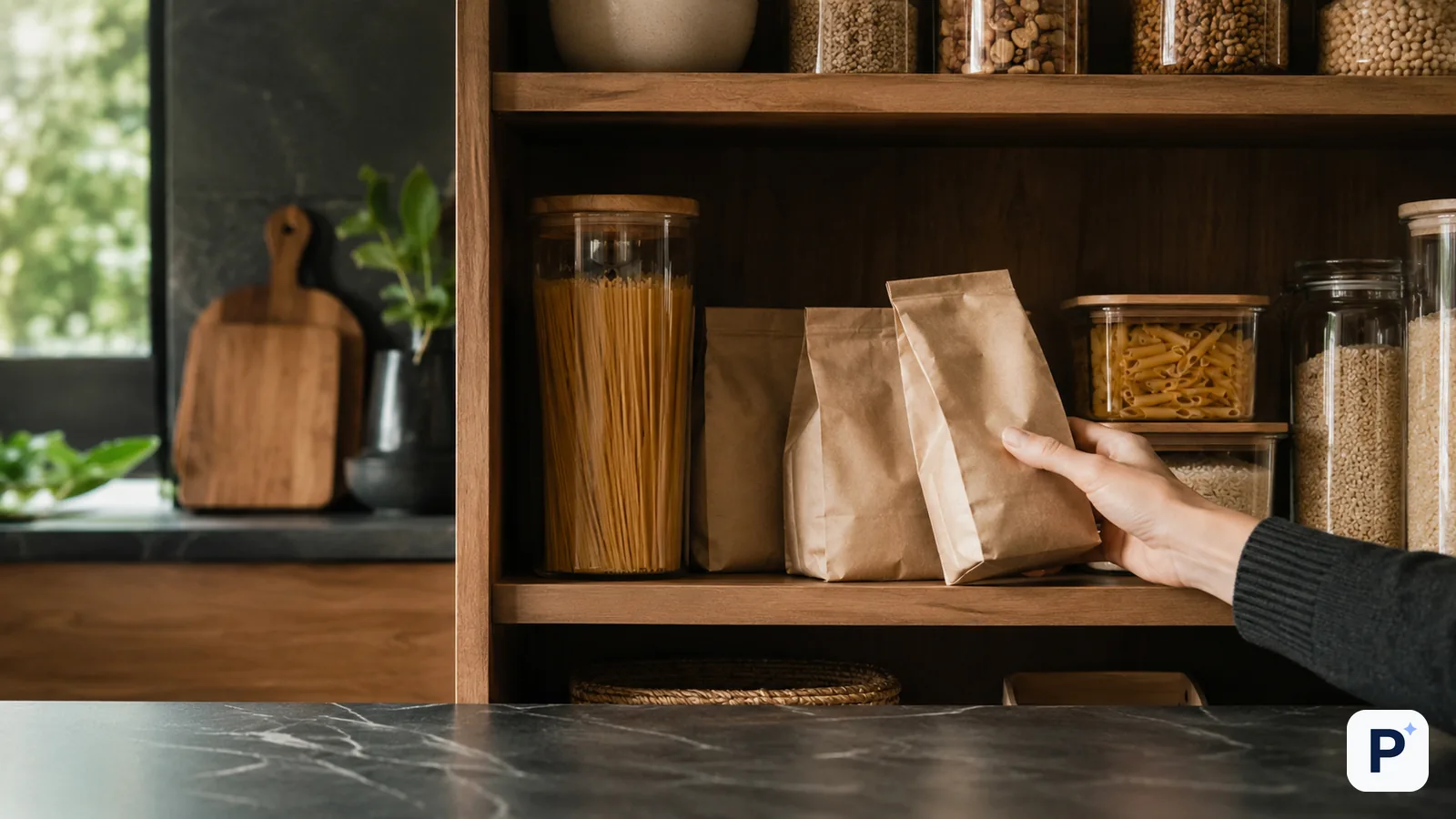
So if you find a sealed packet of pasta at the back of the cupboard with a "best before" date from a few weeks ago, the date alone is not yet a reason to throw it in the bin.
If the date does not settle the matter, look at the product itself to judge whether it has genuinely gone off and needs to be thrown away.
The simplest way to remember the difference
You can remember it like this:
"Use by" = the safety limit.
"Best before" = the limit of guaranteed quality.
Or even more simply:
USE BY = you have to watch the date.
BEST BEFORE = best eaten before the date, but after it, check the product first.
The second marking does not say: "throw me away tomorrow". It says rather: "up to this point the manufacturer guarantees my best properties".
Sometimes the best-before date is given to the nearest month or year. If the label says "best before end 08.2026", that means the end of August 2026. "Best before end 2026" indicates the end of December 2026. This kind of marking is used, among other things, on long-life products for which giving a specific day is not necessary.
How to check a product past its "best before" date
With a best-before date you can use your senses, but do it in the right order.
First check the packaging. If a tin is bulging, the packaging is leaking, the seal is damaged or the product has been stored in the wrong conditions, do not risk it.
Then look at the product. Look for mould, unusual discolouration, signs of insects or changes that were not there before.
Next, assess the smell. If it is sour, rancid, fermented or simply clearly different from normal, throw the product away.
For products marked "best before", EFSA points precisely to appearance, smell and taste as things that can help you judge their suitability after the minimum durability date. This rule does not, however, apply to products marked "use by".
Chocolate is a good example. A pale, greyish bloom on the surface can come from changes in the fat or sugar and mainly means a decline in appearance and texture. Clear, fluffy mould, an unusual smell or other signs of spoilage are something else entirely. A change in appearance alone does not always mean the same thing.
Most important: do not use the senses test to get around a "use by" date.
The date only works with proper storage
There is one more piece of information on the label that is easy to forget: the storage conditions.
The date given by the manufacturer assumes the product has been stored correctly. If the packaging says "store at 2 to 5°C" and the product spent half a day in a hot car, the date printed on the packaging will not undo what happened on the way home.
It works the other way too. Good storage helps you make use of a food's full shelf life.
That is why it is worth knowing where to keep particular products and how to rotate your supplies: the FIFO rule, where you put older products at the front and newer ones at the back, so you reach for what has the shorter date first. If you want to build a larger reserve deliberately, see how to build a food stockpile at home.
Once the packaging is open, a second rule applies
Have you got milk with a date two weeks away, but opened it a few days ago? The date on the front of the packaging may no longer be enough on its own.
Pay attention to additional information such as: "once opened, keep refrigerated and use within 3 days".
The date on the packaging applies to a product stored under the conditions the manufacturer intended. Once it is open, the storage conditions change and you should also follow the instructions about the time after opening. The European Commission states plainly that, once a product is open, you should follow guidance such as "use within three days of opening".
That is why it is worth writing down not just the date on the packaging, but also the day you opened the product.
What about food past its date in the shop?
Here an interesting detail comes up.
Food marked with both "use by" and "best before" dates may only be sold up to the relevant date. After it passes, the shop is obliged to withdraw the product from sale.
That does not mean, however, that both products then become equally dangerous at home.
With "use by", the point is safety, and after the date the product should not be eaten.
With "best before", the point is mainly about keeping quality. Food safety bodies make clear that such a product may still be fit to eat after the date if it has been stored properly and shows no signs of spoilage.
That is exactly why the date on the label and the decision "bin it or eat it" are not always the same question.
What to do before the date passes
The best approach to food past its date? Do not let it be forgotten in the first place.
Once or twice a week, check the fridge and find the products with the nearest dates. Plan your next meals around them. You can also set aside an "eat first" shelf or box, so products that need using quickly are always visible.
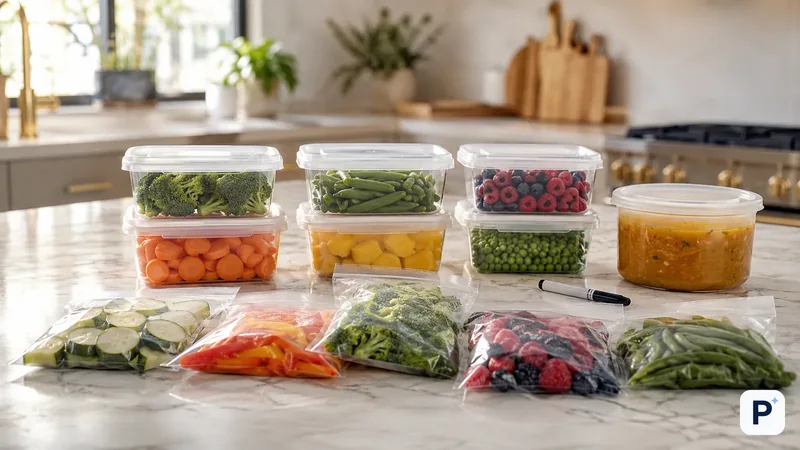
If you know you will not manage to use something in time, freeze it before the date passes, as long as it is suitable for freezing. You will find more examples in our guide on what you can and can't freeze.
For products with a "use by" date, EFSA also points to freezing before the date passes as one way to prevent waste.
Frequently asked questions about date labels
What does "use by" mean?
It is the date that relates to the safety of quick-to-spoil food, such as fresh meat, fish and some chilled products. After this date the product should not be eaten, even if it looks and smells normal.
What does "best before" mean?
It is the minimum durability date, which indicates how long the manufacturer guarantees the stated quality of the product when it is stored correctly. After this date the food is often still fit to eat, although its taste, smell or texture may change.
What is the difference between "use by" and "best before"?
"Use by" relates to food safety, while "best before" relates to quality. After the first date passes the product should not be eaten, while after the second you can judge its suitability, taking into account the type of food and the storage conditions.
What does "best before end" mean?
It is a minimum durability date given to the nearest month or year. "Best before end 08.2026" means the end of August 2026, and "best before end 2026" means the end of December 2026.
Can you eat a product after its "best before" date?
Often yes, especially with long-life products such as rice, pasta or groats, if they have been stored correctly and the packaging is not damaged. Check the condition of the product and the packaging, remembering that a normal look and smell do not always guarantee safety.
Can you eat a product after its "use by" date?
You should not eat a product after this date. It relates to food safety, and a normal appearance, smell or taste cannot reliably rule out the presence of dangerous micro-organisms.
What do "BBE" and "BB" mean on packaging?
They are abbreviations of "best before". "BBE" stands for "best before end" and is used with a month or year, for example "BBE 08.2026". "BB" is simply "best before". You will often see them on imported products. Both refer to quality rather than safety, so the product may still be fine after the date if it has been stored properly and shows no signs of spoilage.
Does "expiry date" mean the same as "use by"?
In everyday speech people use "expiry date" loosely for any date on the packaging, but what matters is the exact wording printed next to it. "Use by" is about safety and should not be exceeded. "Best before" is about quality, and after it a product is usually still fit to eat. Rather than relying on the general idea of an "expiry date", check which of the two phrases is on the label.
How do you read the date on the packaging?
You will most often find the date on the base, the lid, the seal or next to the barcode, sometimes with a note saying where to look. A full daily date, for example 15.11.2026, means a short shelf life and usually goes together with "use by". Just a month and year, for example "best before end 11.2026", means a longer, minimum durability. Do not confuse the batch number and production markings next to the date with the shelf-life date.
Don't throw the date away with the packaging
A date label is there to help you make decisions, not to make them for you.
If you see "use by", you watch safety and do not stretch the date.
If you see "best before", after the date you assess the product, how it was stored and its actual condition.
This one difference can mean dozens of products a year that, instead of going automatically into the bin, get used.
And if your biggest problem is simply remembering all the dates, you do not have to keep them in your head.