How to Store Fruit and Vegetables to Keep Them Fresh for Longer
You bring home a full bag of fruit and vegetables, and a few days later some of it is soft, wilted or starting to go mouldy. Often the problem isn't the quality of what you bought, but what happens to it once you get it home.
Tomatoes go in the fridge, potatoes end up next to onions, bananas sit beside cucumbers, and raspberries get washed straight away 'so they're ready'. Each of these small things can shorten how long your food stays fresh.
Good storage won't keep strawberries fresh for a month. It can, however, give you a few extra days to use up what you've already bought. And because fruit and vegetables are among the foods most often thrown away in British households, a few extra days means less food and money ending up in the bin.
We cover the scale of the problem in more detail in our article on how much food we really waste in British households. Here we focus on something more practical: where to put specific fruit and vegetables to give them the longest possible life.
Don't Wash Everything as Soon as You Get Home
One of the most common mistakes is washing all your shopping as soon as you get back from the shops.
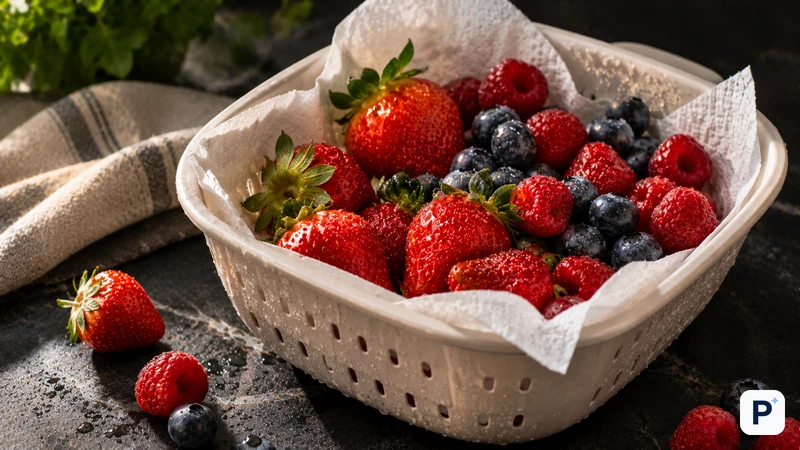
For many delicate foods, especially berries, extra moisture encourages quicker spoilage. That's why raspberries, strawberries and blueberries are best stored dry and washed only before eating. It's also worth leaving the green tops on strawberries until you use them.
So the rule is simple: if a food doesn't need to be prepared straight away, store it dry and wash it immediately before use.
An exception might be leafy vegetables that you want to prepare in advance for the next few days. You can wash lettuce, but it must be dried very thoroughly. Then put it in a container lined with a paper towel to absorb any excess moisture.
If you buy lettuce or other vegetables labelled as already washed and ready to eat, there's no need to wash them again. The Food Standards Agency notes that products labelled 'pre-washed' or 'ready to eat' can be used without additional rinsing.
And one more rule: don't wash fruit and vegetables with washing-up liquid or detergent. Clean running water is enough.
What to Keep in the Fridge and What to Keep Out
There is no single shelf that suits all fruit and vegetables. Some need the cold, some lose quality in it, and others should first ripen at room temperature before they can go in the fridge.
In the fridge, put leafy vegetables, broccoli, cauliflower, carrots, celery, most mushrooms, blueberries, raspberries, strawberries, grapes and other foods that spoil easily. All cut fruit and vegetables should go there too. This is no longer just a matter of quality, but also of food safety. Separate rules apply to dairy and eggs, which we cover in our guide to how to store dairy and eggs.
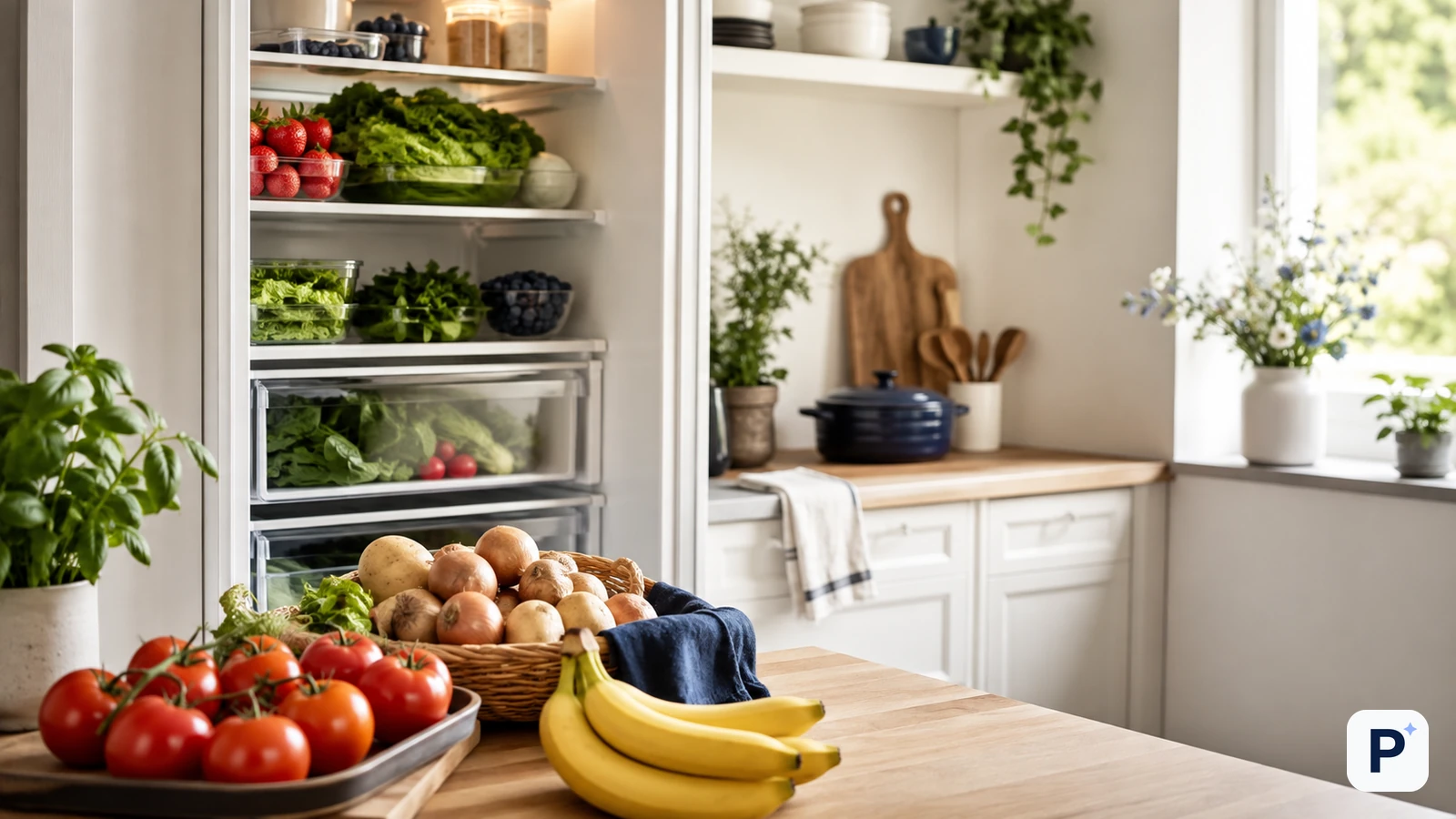
Tomatoes are best left at room temperature, especially if they are still ripening. Cold can spoil their flavour and texture. Research recommends keeping tomatoes on the worktop if you want the best flavour. Keep bananas at room temperature too.
Avocados, pears, peaches and kiwi can ripen outside the fridge. Once they reach the right ripeness, the cold can help slow further ripening. Citrus fruit is more flexible: if you'll eat oranges or lemons within a few days, they can sit in a cool spot outside the fridge, but if you want to keep them for longer, the fridge is the better choice.
Potatoes, onions and garlic don't need the fridge. What they do need is a dry, dark, airy place. With potatoes there's one more important rule: don't keep them together with onions, because storing the two side by side can shorten the shelf life of both. We've gathered more detail in a separate guide on how to store potatoes so they don't sprout or turn green.
Cucumbers Are Trickier Than They Look
Cucumbers often go straight into the salad drawer of the fridge, but it isn't quite that simple.
The optimal storage temperature for cucumbers is around 10 to 12.5°C. That's higher than the temperature of a typical home fridge. With longer storage below 10°C, chilling injury can appear, including watery patches, sunken areas on the surface and faster rotting.
In an ordinary kitchen you obviously don't have a separate cold store set to 11°C. So the practical compromise is simple: if you'll eat the cucumber soon, keep it somewhere as cool as possible. If you put it in the fridge, choose a warmer part, such as the salad drawer, and don't leave it there for weeks.
Just as importantly, cucumbers are very sensitive to ethylene, so keep them away from ripening bananas, tomatoes and other foods that give off a lot of this gas.
Ethylene: Why Some Foods Shouldn't Sit Next to Each Other
Fruit and vegetables look as though they simply sit on the shelf once picked. In reality, biological processes are still taking place inside them. One of the more important of these is ethylene, a natural plant hormone in the form of a gas that speeds up ripening.
Ripening apples, bananas, pears, avocados, peaches and tomatoes, among others, give off a lot of ethylene. It's not worth storing foods that are particularly sensitive to this gas next to them for long, such as broccoli, lettuce and other leafy vegetables, and cucumbers. With broccoli, contact with ethylene can noticeably speed up yellowing, and cucumbers can yellow and spoil more quickly.
That's why a bowl holding all your fruit and vegetables together looks good in a photo, but isn't necessarily the best storage system.
You can, however, use ethylene deliberately. Got a hard avocado you need for tomorrow? Put it in a paper bag together with an apple or a banana, as the higher concentration of ethylene will speed up ripening. The same property that can shorten the life of lettuce can therefore help you ripen an avocado more quickly.
It's Not About Keeping Everything as Dry as Possible
When storing fruit and vegetables, both too much moisture and losing it too quickly can be a problem.
Lettuce, carrots and broccoli wilt easily when they lose water. That's why they do well in the fridge in relatively high humidity. Broccoli keeps its quality best precisely at a low temperature and very high relative humidity. On the other hand, sealing wet produce in packaging with no air circulation can create good conditions for mould and rot.
So instead of applying a single 'no plastic' rule, match the packaging to the food. A container lined with a paper towel works well for lettuce. The original ventilated punnet is usually right for berries. A perforated bag can limit moisture loss while still allowing air exchange. But don't seal wet produce in an airtight bag and leave it like that for days.
Mushrooms Prefer Paper to Plastic
Store fresh mushrooms in the fridge. Once the packaging is open, a paper bag is a good option: paper lets some of the moisture escape, whereas sealed plastic can encourage it to build up and make the mushrooms deteriorate faster. You also don't need to soak mushrooms before putting them away. Clean them only before cooking.
How to Store the Most Commonly Bought Fruit and Vegetables
If you don't want to memorise all the rules, start with the foods that appear most often in your home.
Lettuce and leafy vegetables. In the fridge. If you wash them before storing, dry them very thoroughly and put them in a container lined with a paper towel.
Tomatoes. On the worktop, out of direct sunlight. Especially if they are still ripening.
Bananas. At room temperature. If you don't want to speed up the ripening of other foods, don't keep them right next to them.
Apples. If they're going to be kept for longer, the fridge will help slow their ripening. Keep them away from vegetables that are sensitive to ethylene.
Carrots. In the fridge. If you buy them with the tops on, remove them before storing, because the leaves keep drawing water from the root.
Cucumbers. They like neither heat nor long, very cold storage. At home, keep them briefly in a warmer part of the fridge and away from foods that give off a lot of ethylene.
Strawberries, raspberries and other delicate berries. In the fridge. Remove any damaged or mouldy fruit, keep the rest dry and wash it only before eating.
Broccoli and cauliflower. In the fridge. Don't keep them next to ripening apples or bananas.
Potatoes. Dark, cool and airy. Not in the fridge and not next to onions.
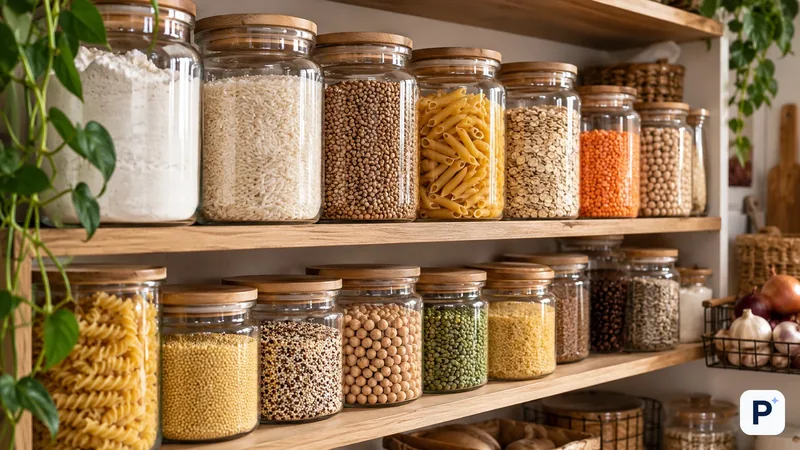
Onions and garlic. In a dry, dark, airy place. Don't seal them in an airtight plastic bag.
Mushrooms. In the fridge, ideally in their original packaging or a paper bag.
Lemons, oranges and mandarins. They can stay out of the fridge for a few days. If you want to keep them for longer, put them in the fridge.
And if you don't want to remember every time where and for how long to store a particular food, you can look it up in the PantryOS storage cheat-sheet.
Use Up What Spoils Fastest First
Even a perfectly organised fridge won't help if strawberries sit untouched for a week while you first eat the apples, which could easily have waited. That's why it's worth mentally dividing your food into two groups.
First you use up delicate berries, lettuce, herbs, ripe avocados, broccoli and other foods with a short shelf life. Only later do you reach for carrots, apples, potatoes and dry goods.
If you struggle to remember what's actually waiting in the fridge, PantryOS lets you keep your household supplies in one place. Instead of discovering vegetables only when you move something at the back of the shelf, you can see what you have and plan to use it sooner.
Buy Only as Much as You'll Actually Eat
The best storage won't save five kilograms of vegetables bought for two people with no plan. If you regularly throw away fruit and vegetables, the problem may start even before the fridge, at the supermarket shelf.
Buying smaller amounts of easily perishable foods more often can be more sensible than building up a huge stockpile 'for the whole week', especially if you eat some of your meals out. Before you shop, check what you already have, too.
With PantryOS you can keep your supplies and shopping list in one place. In the shop you can see that carrots, lemons or onions are already at home, so you don't buy another pack just because you can't remember what's in the fridge. You'll find more ways to cut down on impulse purchases in our guide on how to save money on your grocery shopping.
Before You Throw Something Away, Try Using It Differently
A vegetable doesn't have to look perfect to still be a good ingredient for dinner. A soft carrot can go into soup. A very ripe banana into porridge, pancakes or a smoothie. Tomatoes that have lost their firmness into sauce. Wilted herbs into pesto or a hot dish.
This is also the moment when recipes based on what you already have come in handy. PantryOS can suggest meals from the foods in your supplies, so that instead of starting with a new recipe and another shopping list, you start with the ingredients that need using up. If you've got a few random items left, see also our guide to dinner from whatever you have in.
Freeze the Surplus Before It's Too Late
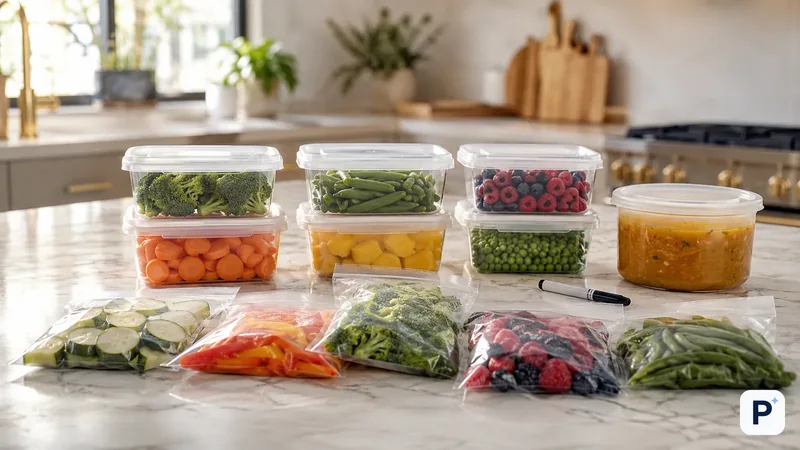
If you can see you won't manage to use something in time, don't wait until it starts to spoil. Many fruits can be frozen for later smoothies, porridge or baking, and many vegetables also freeze well, although some are worth blanching first.
This is an especially good option for foods you've bought in larger quantities or that have unexpectedly ripened at the same time. Not everything will keep the same texture as fresh produce after thawing, though. That's why we've set out a detailed list in our guide to what you can and can't freeze.
Longer Freshness Starts with a Few Simple Decisions
You don't need special containers for every vegetable or a perfectly organised fridge. A few basic rules make the biggest difference.
Don't wash delicate foods far in advance if you can't dry them thoroughly. Keep easily perishable fruit and vegetables in the fridge. Leave tomatoes and ripening fruit out of it. Separate foods that give off a lot of ethylene from those that are sensitive to it. Don't keep potatoes next to onions. Watch the moisture and use up what has the shortest shelf life first. And above all, check what you already have before you buy more.