What Can You Freeze and What Should You Avoid Freezing? A Practical Freezer Guide
You have half a loaf of bread, a portion of yesterday's dinner, a bunch of dill and some meat you won't be able to use today. Instead of watching everything approach its expiry date, you can do one of the simplest things to reduce food waste: freeze it.
Freezing significantly slows down the processes that cause food to spoil. At around -18°C, bacteria stop multiplying, although freezing does not kill most of them. Properly frozen food can remain safe for a very long time, but its flavour, aroma and texture gradually deteriorate. A freezer is not an indefinite pause button. It simply gives you more time.
However, not all foods behave the same way after thawing. Water content is one of the biggest factors. When water freezes, it forms ice crystals that can damage the structure of food. That is why a crunchy cucumber becomes soft after thawing, while cream may separate. This does not always mean the food cannot be frozen. Often, it simply means you need to use it differently once thawed.
Foods That Freeze Really Well
There are far more foods that freeze successfully than many people realise.
Bread and baked goods. Bread, rolls, baguettes and tortillas are best divided into portions before freezing. Slice a loaf so you can take out exactly as many slices as you need. Bread packed tightly can go straight into a toaster or oven after removal from the freezer. If you want to know why the freezer is a better option than the fridge, read our guide to storing bread.
Meat and fish. Raw meat, poultry and fish can be frozen as long as they are fresh and have been stored properly. Ideally, divide them into portions and seal them well before freezing. That way, you can thaw exactly the amount you need. For more information about where to store these products and when to freeze them, see our guide to storing meat, fish and cold cuts.
Prepared meals. Soups, stews, bigos (traditional Polish sauerkraut and meat stew), sauces, curry, leczo (a vegetable stew), pierogi and meatballs are all suitable for freezing. Freeze them in individual meal-sized portions. You can also freeze stock in ice cube trays and take out only as much as you need. If you want to prepare several meals at once, see our guide to batch cooking.
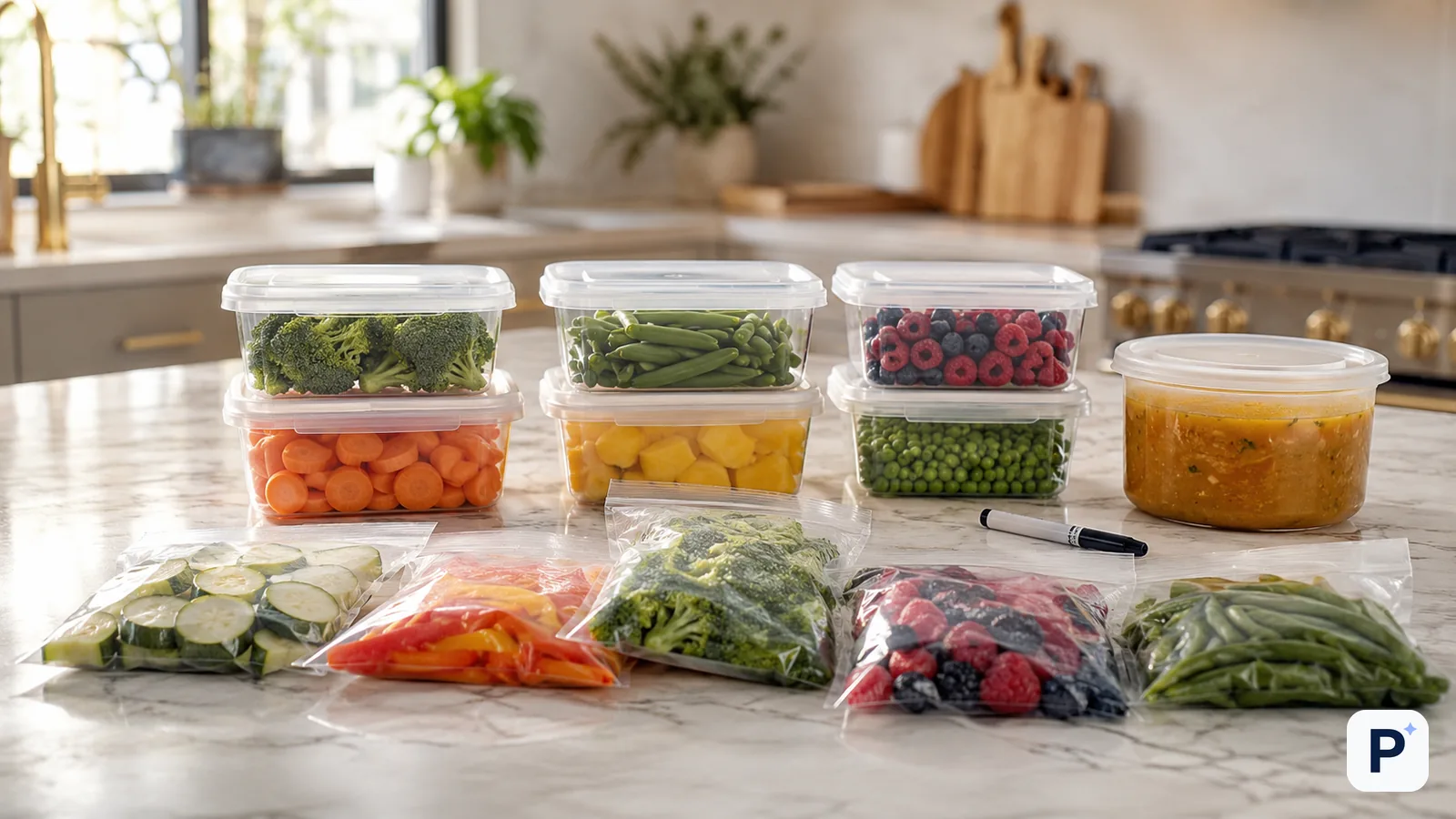
Vegetables. Peas, green beans, broccoli, cauliflower, carrots, spinach and many other vegetables freeze well. Most are best blanched first: briefly immersed in boiling water or exposed to steam, then cooled quickly. Blanching slows down the enzymes responsible for changes in colour, flavour and texture.
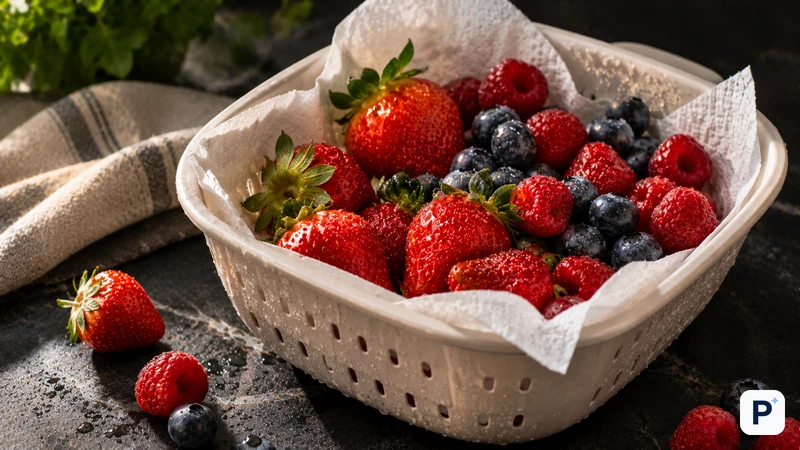
Fruit. Blueberries, raspberries, strawberries, cherries, mangoes and bananas are all suitable for freezing, especially if you plan to use them in smoothies, porridge, sauces or baked goods. Small fruits are best spread out in a single layer on a tray and frozen individually before being transferred to a freezer bag. This prevents them from freezing into one large clump.
Hard cheese. Hard cheese is best frozen grated or divided into portions. It may become more crumbly after thawing, but it will still work well on pizza, in casseroles or in sauces.
Fresh herbs. Parsley, dill, chives and coriander can be chopped and frozen in small portions. You can also make herb cubes with a little water or olive oil. They will no longer look like fresh herbs suitable for garnishing, but they work very well in soups, sauces and cooked dishes. See our guide to storing fresh herbs for more ideas.
Foods Best Avoided If You Want to Preserve Their Fresh Texture
It is worth changing how you think about lists of foods that supposedly should never be frozen. Many of these products do not become unsafe after freezing. Their texture simply deteriorates significantly once thawed.
This mainly applies to vegetables with a high water content, such as lettuce, cucumber, radishes and fresh tomatoes. If you want to eat them raw in a salad, the freezer is not a good choice. Tomatoes can still be frozen for use in sauces or soups, where their softer texture is not a problem. For other ways to keep these products fresh, see our guide to storing fruit and vegetables.
The same applies to some fruits. Watermelon, citrus fruits, kiwi and grapes may lose their firmness after thawing, but that does not mean they are always unsuitable for freezing. Frozen grapes can be eaten while still frozen, citrus fruits can be used in drinks, and softened fruit can go into smoothies or sauces. Official home-freezing recommendations include melons, grapes and citrus fruits.
Dairy products can also be tricky. Yoghurt, cream, ricotta, mascarpone and farmer's cheese (Polish twaróg) may separate or become grainy after thawing. They can often still be used in sauces, cakes or smoothies, but if you want a perfectly smooth, creamy texture, it is better not to freeze them.
Mayonnaise and other emulsion-based sauces are particularly unsuitable for freezing because their ingredients can separate after thawing. Be careful with carbonated drinks in sealed cans and bottles, too. Liquid expands as it freezes, which can cause the packaging to leak or burst. Regular fresh juice, on the other hand, can be frozen as long as you leave some room in the container for expansion.
Eggs: A Special Case
Do not freeze eggs in their shells. As the contents freeze, they expand and may cause the shells to crack. Hard-boiled eggs are not a good option either, because the whites become rubbery after thawing.
Raw eggs can be frozen once removed from their shells. The easiest method is to beat whole eggs and freeze them in small portions. Egg whites can also be frozen separately. Yolks are more complicated because they thicken during freezing and may become gel-like. If you want to freeze them separately, mix them with a small amount of salt or sugar first, depending on how you plan to use them later.
Pasta, Rice and Potatoes
These three foods are often grouped together, but they behave differently after freezing.
Cooked rice freezes well if you cool it quickly, divide it into portions and pack it tightly. Pasta is best cooked al dente. If it is too soft before freezing, it can become mushy after thawing, so freezing it with sauce is often a better option.
Potatoes cause the most problems. Raw potatoes usually change colour and texture after thawing. Cooked potatoes can also become watery or mealy, especially in soups. They freeze better as mashed potatoes, in a casserole or in dishes where their texture does not need to remain perfect. Potatoes are one of the ingredients that can noticeably affect the texture of soups after freezing.
How to Freeze Food Properly: 7 Simple Rules
- Freeze food while it is still fresh. A freezer cannot reverse spoilage.
- Divide food into portions. This means you only need to thaw as much as you actually need.
- Use airtight packaging. Freezer bags and tightly sealed containers help prevent moisture loss, odour transfer and freezer burn.
- Remove as much air as possible from bags. The less contact food has with air, the better its quality after thawing.
- Leave space in containers holding liquids. Soup, stock and juice expand as they freeze.
- Label everything with its contents and freezing date. After a month, all red sauces start to look alike, and "probably from February" is not a reliable system.
- Divide and cool prepared meals before freezing. Do not put a large pot of piping-hot food straight into the freezer. Smaller portions cool down more quickly and reach a safe temperature sooner.
Is It Really Unsafe to Refreeze Food That Has Already Thawed?
This is one of the most commonly repeated food rules, but stated this way, it is too absolute.
If food has been thawed in the refrigerator and has remained at a safe temperature throughout the process, it can be frozen again, although its quality may deteriorate. Raw meat thawed in the refrigerator can therefore be refrozen, either as it is or after being cooked and frozen as a prepared meal.
The situation is different when food has been thawed in cold water or in a microwave. In these cases, it is best to cook it immediately and only then consider freezing it again. If perishable food has been left on the kitchen counter for a long time, do not try to save it by putting it back in the freezer.
The most important rule is not "never refreeze food", but "pay attention to how the food was thawed".
How to Thaw Food Safely
The safest method is to thaw food in the refrigerator. It takes longer, but keeps food at a low temperature throughout the process. If you need something sooner, you can thaw it in cold water while sealed in an airtight package, or use a microwave if you cook the food immediately afterwards.
Do not leave meat, fish or prepared meals on the kitchen counter for several hours. The outside of the food warms up much faster than the centre and may reach a temperature that allows bacteria to multiply rapidly, even while the inside is still partly frozen.
How Long Can Food Stay in the Freezer?
There is no single time limit that applies to every food. Bread, minced meat, fish, prepared meals and vegetables all have different recommended storage times. These timeframes generally relate to the best quality rather than an exact point at which food becomes unsafe. Food kept continuously at around -18°C can remain safe for much longer, but its flavour, aroma and texture may deteriorate over time.
Instead of memorising dozens of different storage times, check the specific food in our storage guide. Select a product to see its estimated shelf life in the pantry, refrigerator and freezer.
If a product is approaching its expiry date and you know you will not use it in time, do not wait until the last minute. Freezing it early enough can save food that would otherwise end up in the bin. You can read more about the difference between "use by" and "best before" dates in our article on how much food we really waste in Polish households.
A Freezer Only Works If You Remember What Is Inside
Freezing is an excellent way to keep food out of the bin, but it is easy to turn your freezer into an archive of anonymous containers. After a few months, you may no longer remember what you froze or when.
That is why it is worth treating your freezer as part of your household food inventory, not as a black hole. Label items with dates, move older products to the front and regularly plan meals around what you already have.
PantryOS helps you keep track of your freezer contents, too, and reminds you which products should be used first. Instead of buying another ready-made meal, check whether you already have one waiting for you in the freezer.