How to Store Bread So It Doesn't Go Mouldy or Stale
Bread is one of the most commonly wasted foods in many households. Studies suggest that around 55 per cent of households throw it away, more than any other product, something we cover in more detail in our piece on how much food we waste. The scenario is usually the same: you buy a fresh, fragrant loaf, and two days later it is either hard as a rock or covered in mould. The reason is more interesting than it seems. Bread has two enemies at once, and they like completely opposite conditions, so there is no single perfect container and no one magic spot. What there is instead is a sensible compromise that keeps a loaf good for much longer. In this guide we explain what that compromise is and how to store bread step by step.
Bread's Two Enemies: Mould and Staling
To store bread well, you need to understand what spoils it, because two different processes are at work at once. The first is mould. It develops in warmth and moisture, especially when bread is sealed away with no access to air, for example in a tightly closed plastic bag where steam condenses. The second process is staling, meaning the crumb drying out and hardening. Despite appearances, this is not only about losing water. Staling is caused mainly by the crystallisation of starch, which progresses fastest at low temperatures and in dry air. The problem is that these two processes like opposite conditions. Mould is encouraged by moisture, while staling is encouraged by dryness and cold. So you cannot defeat both at once with a single trick. That is why storing bread well is always a compromise between keeping a little moisture and not letting it build up to excess, rather than a search for one perfect method.
Why the Fridge Is a Bad Idea
The most common instinct is to put bread in the fridge, and that is exactly the most common mistake. A temperature of around 2°C to 5°C does slow down mould, but at the same time it greatly speeds up staling, because starch crystallises far faster in the cold. As a result, bread in the fridge hardens within just a few hours and turns rubbery, even though there is no mould on it. For most bread, then, the fridge is the worst possible place. There are exceptions, however, where it is the lesser evil. During a heatwave, or in a very humid kitchen where mould appears almost instantly, the cold can save a loaf for a day or two. Sliced sandwich bread, which we usually warm up before eating anyway, also copes with it better. You will find quick, rough timings for different spots in our storage cheat-sheet.
Where to Keep Bread Day to Day
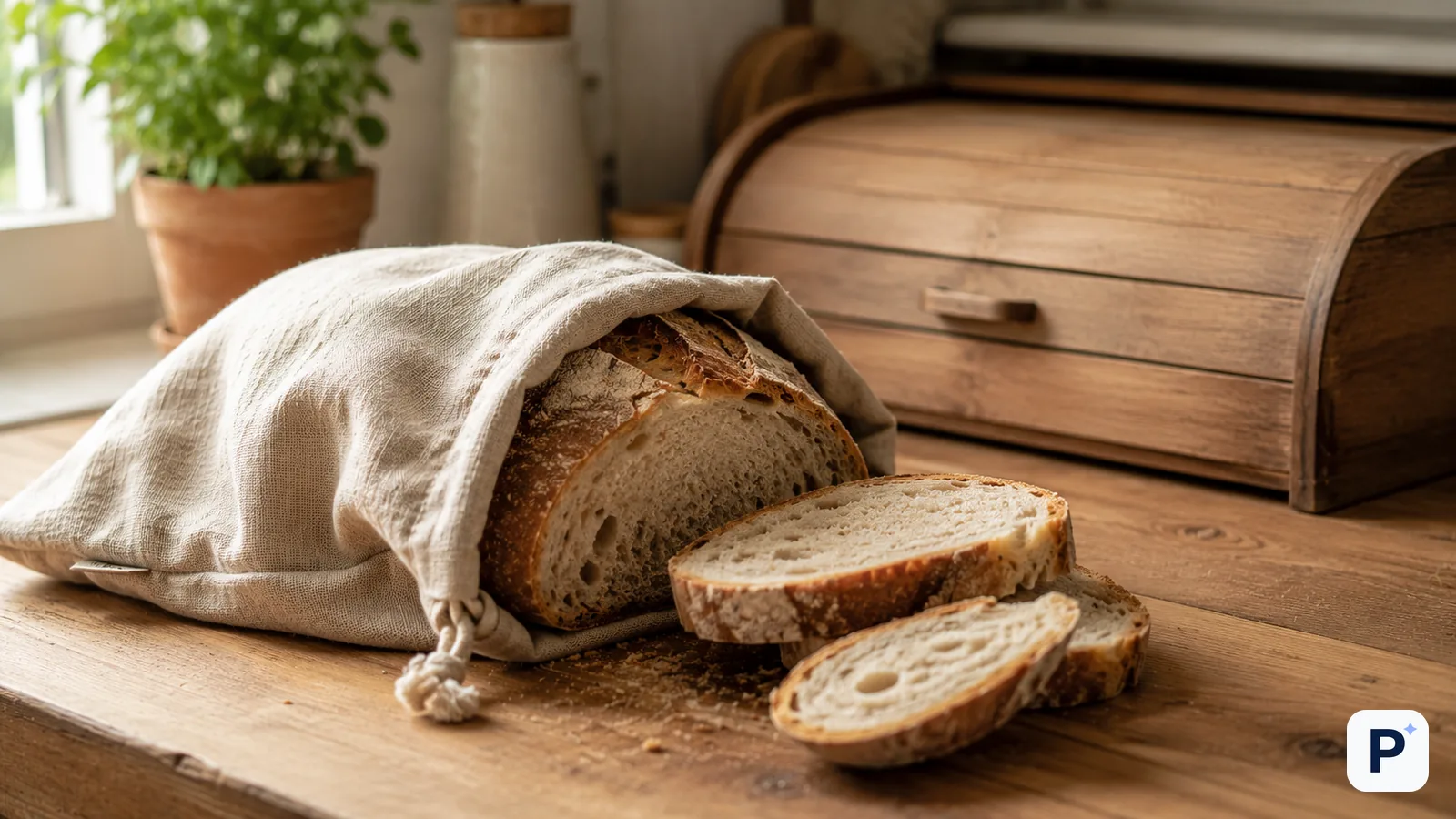
Day to day, a ventilated breadbin works best, meaning one with small holes, made of wood, metal or stoneware. It provides a cool temperature and gentle air circulation, so moisture does not condense inside. A good alternative is a linen or cotton bag, a paper bag, or simply wrapping the loaf in a clean tea towel. All of these methods have one thing in common: they let air through. By contrast, firmly avoid cling film, plastic bags and sealed plastic containers. These are moisture traps in which bread goes mouldy fastest, because the steam has no way to escape. The key is to combine two things: free air circulation and a cool, dry spot away from the radiator, the oven and a sunlit window. A warm, bright worktop right next to the hob is a much worse place for bread than it seems. It is also worth remembering that a breadbin alone will not work miracles if it stands in the warmest corner of the kitchen.
Two Things That Are Easy to Forget
There are two details that ruin even a good breadbin. The first is putting warm bread inside it. A freshly baked or just-reheated loaf that is still warm continues to give off steam, and once shut inside a breadbin it causes moisture to condense on the walls and on the crust, creating ideal conditions for mould. So only put bread inside once it has cooled completely. The second thing is the hygiene of the container itself. If you spot a mouldy piece, throw it away at once and do not simply cut off the visible patch, because mould spores spread deep into the crumb and throughout the whole breadbin. Wipe the breadbin dry from time to time, and wash linen or cotton bags at a high temperature. Leftover crumbs and old moisture in a neglected container can spoil a fresh loaf faster than the same spot would without a breadbin at all.
The Type of Bread Matters
Not every bread spoils at the same rate, and it is worth using this to your advantage when planning. Rye and wholemeal breads, especially those baked with sourdough, stay fresh the longest. They have a higher moisture content, and the natural acidity of the sourdough effectively holds back mould, which is why a good sourdough loaf can still taste good several days later. At the other end of the scale are wheat breads, white rolls and baguettes. They are light and fluffy, but that is precisely why they dry out fastest and are often only good on the day you buy them. The simple everyday takeaway is to eat whatever spoils fastest first. If you buy different breads at once, start with the white ones and the baguettes, and leave the sourdough for later, because it will happily wait for you. This simple order means you throw out dried-up rolls less often, because they disappear before they have a chance to go hard.
Freezing: The Best Way to Keep Bread Longer
If you buy a lot of bread or eat it slowly, the best solution is freezing. It is the only method that genuinely stops both processes at once and does nothing to harm good bread, which is why baking guides and advice on storing bread consistently recommend it as the way to keep bread for longer. The order matters, though. Slice the loaf before freezing, then pack it tightly in cling film or resealable bags and label it with the date. That way you do not have to defrost the whole loaf, and can simply take out as many slices as you need. Bread will happily keep in the freezer for about three months. Defrost it in a toaster or the oven, because that brings back the crispness, rather than in a microwave, which leaves it rubbery. Remember, too, not to refreeze bread once it has thawed, because it loses quality. The freezer turns surplus bread into a handy stash rather than a pang of guilt, and you will find more on what is worth freezing and what is better left alone in our guide to what you can and can't freeze.
Home Tricks and What to Do with Stale Bread
Finally, a few home tricks. For generations, grandmothers have put something into the breadbin that regulates moisture, such as an apple skin or a piece of celery stalk, so that the bread neither dries out nor goes mouldy too quickly. It also helps to store the loaf cut side down on a board, or slice against slice, because then the crumb is less exposed to air and dries out more slowly. Slightly stale bread is easy to revive: sprinkle it with a little water and put it in a hot oven for a few minutes, and the crust will turn crisp again. And when a loaf has gone completely dry, do not throw it away, because stale bread is a great base for a dish in its own right. We have gathered specific ideas, from croutons to a savoury bake, in our guide to what to do with stale bread, and you will find more on cooking with leftovers in our piece on how to make a meal from whatever you have.