Batch Cooking: Cook Once, Eat for Several Days
Cooking from scratch every day can eat up a large part of your evening. You come home from work, wonder what to make, check what ingredients you have, cook, clear up, and the next day the whole process starts all over again.
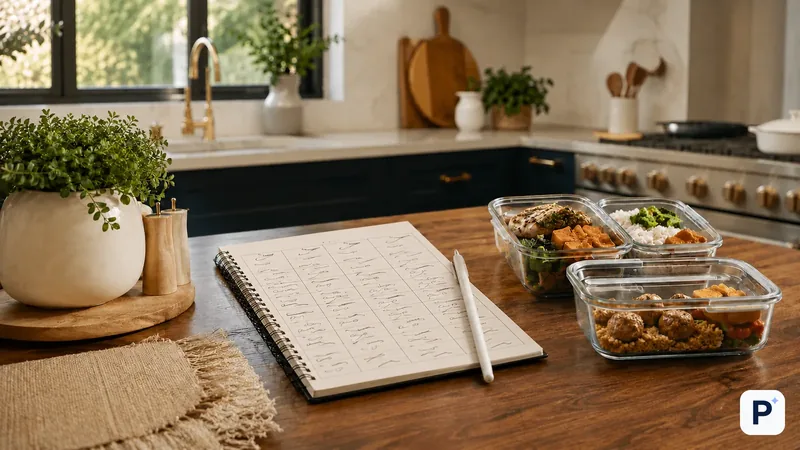
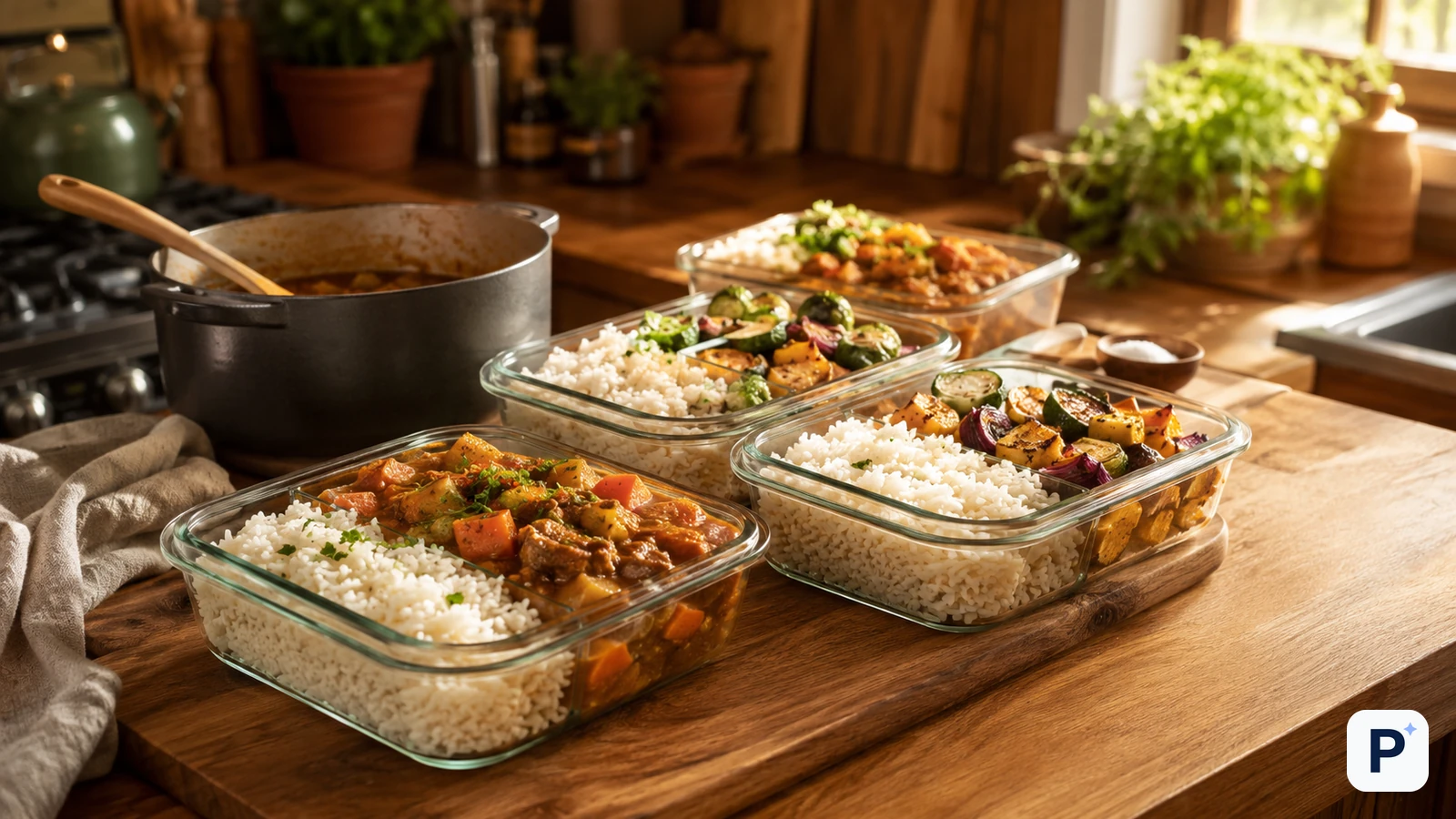
Batch cooking reverses that order. Instead of preparing every meal separately, you do part of the work on a single day. You cook a larger batch of soup, roast vegetables for several meals, prepare meat or pulses, make a sauce and portion out whatever can wait in the fridge or freezer.
This doesn't have to mean five identical containers lined up in a neat row. Done well, batch cooking is more flexible. You prepare a few bases, then over the following days you put together different meals from them.
You save time, cut down on ordering food on impulse and find it easier to use up the products you've bought. There is just one condition: you need to plan not only the cooking, but also how you will store what you prepare.
Start with a Plan, Not with the Pots
Batch cooking begins before you turn on the hob. First decide how many people you are cooking for and how many meals you want to prepare. You don't have to plan a whole week straight away. If you are just starting out, it is far easier to prepare food for three or four days and see how much you can actually eat.
Only then should you choose the dishes and ingredients. Let's say you are preparing dinners for two people. Instead of spontaneously cooking a huge pot of curry, a tray of vegetables, a soup and a kilo of rice, you decide in advance where each of these will be used.
The curry is enough for two meals. The soup for two more. You'll also use the roasted vegetables in wraps. Some portions go straight into the freezer. This way you cook a specific number of future meals, rather than simply a lot of food.
If you don't have a system like this yet, start with our guide on how to plan meals for the week, then build a shopping list that stops you buying too much around it.
Cook Components, Not Just Whole Dishes
One of the most convenient versions of batch cooking is preparing bases. Instead of making five complete dinners, you can cook a batch of grains, roast vegetables, prepare a portion of chicken or chickpeas and make two sauces, all in a single day. After that, you only change how you serve them.
On one day, the roasted vegetables go into a bowl with grains and feta. On the next, into a wrap. On the third, you can serve them with an egg or add them to a soup. The chickpeas can go into a curry, a salad or a tomato sauce. The chicken can be served with rice, in a wrap or with pasta.
This has two advantages. You cook faster, because you carry out several processes in bulk, but at the same time you aren't eating exactly the same thing for four days. Preparing components also makes it easier to change your plan. If you don't fancy a rice bowl on Wednesday, the ingredients can still be used in a different dish.
What Works Best for Batch Cooking
The most rewarding dishes are those whose structure changes little during storage and reheating. Soups, stews, chilli, curry, leczo (a vegetable stew), tomato sauces, pulse-based dishes, meatballs in sauce, roasted root vegetables and all kinds of bakes work very well. Some of them taste even better after a day, because the flavours have time to come together.
It is worth taking a slightly different approach to ingredients that easily lose their texture. Pasta is best cooked slightly al dente and, where possible, stored separately from a large amount of sauce. Lettuce and delicate fresh leaves are better prepared fresh, or stored separately and combined with the rest of the dish only just before eating. Likewise, don't add crunchy toppings to a wet sauce several days in advance.
Roast chicken can be cooked ahead, but its quality depends on how it is stored and later reheated. It copes far better over the following days in a curry, sauce or stew than as a thin fillet reheated several times.
Creamed soups are also suitable for preparing in advance. If they contain a lot of cream or other dairy, they may separate after freezing. Thorough stirring or blending again after reheating usually helps.
So the most important question is not "can this be cooked in advance?" but "will I still want to eat it after two days?"
The Most Important Rule: Cool Down Quickly Whatever You Don't Eat Straight Away
This part of batch cooking isn't about convenience, but about safety. Food-safety authorities recommend not leaving cooked food at room temperature for longer than two hours and chilling it in the fridge, below 5°C, as quickly as possible.
This does not mean, however, that a large pot of hot soup should sit on the worktop for two hours. It is far better to divide the food into smaller portions straight away and transfer it to shallow containers. A large amount of food shut inside one deep pot cools down far more slowly than several smaller portions.
Food-safety guidance states clearly that hot food can be placed in the fridge. With large amounts of soup, stew or meat, though, you should divide it into smaller portions so that it can cool down quickly.
In practice, then, it looks like this: once the food is cooked, you portion it out, you don't leave it on the kitchen worktop for half the evening, and you move it to the fridge or freezer as quickly as possible. Don't wait until a huge pot has gone completely cold.
How Many Days Can You Keep Cooked Food?
It is worth distinguishing between different foods here, because there is no single rule for all batch cooking. Food-safety authorities advise that most cooked leftovers, including cooked meat and poultry, soups and stews, should be used within about 3–4 days if they are stored correctly in the fridge at 4°C or below. You'll find a full table of times for different dishes in our guide on how long you can keep cooked food.
This doesn't mean, however, that all your batch cooking has to sit in the fridge for four days. If you cook on Sunday for Friday, it is far more sensible to freeze straight away the portion meant for the later part of the week, rather than waiting until Thursday and only then wondering whether it is still good.
In practice, then, you can make a simple split:
- meals for the next few days: the fridge
- meals for later: the freezer
Don't rely solely on smell and appearance, though. Food-safety authorities point out that food can contain harmful bacteria even though it looks and smells normal. Smell lets you notice obvious spoilage, but it is not a test of food safety. That is why time, temperature and the way food is stored are what matter.
Rice Needs Extra Care
Cooked rice is a special case because of Bacillus cereus. Its spores can survive cooking, and if cooked rice is left at room temperature for a long time, the bacteria can multiply and produce toxins. Reheating later does not always solve the problem.
Food-safety authorities recommend cooling rice as quickly as possible, ideally within an hour, keeping it in the fridge and using it within 24 hours. Rice should also not be reheated more than once.
So if you cook a large portion of rice for several days, the safest approach is simple: cool the portion for your next meal quickly and put it in the fridge, and freeze the portions for later days. Don't leave a whole pot of rice on the hob until the evening.
The Freezer Turns Batch Cooking into a System for Longer than Three Days
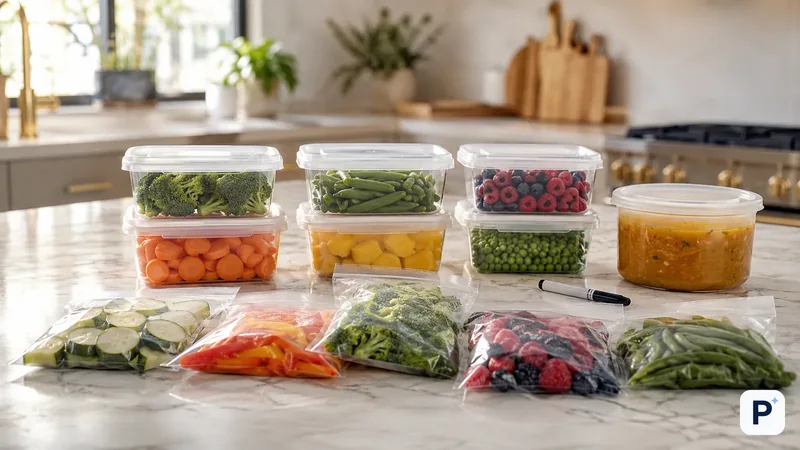
If you prepare more portions than you'll eat over the next few days, freezing is a natural extension of batch cooking. Don't wait until the food has spent three days in the fridge and only then freeze it "to the rescue". If you know from the start that a particular portion is meant for the following week, freeze it once it has been prepared and safely cooled.
Portion the food into single meals. That way you don't have to defrost a whole container for one person. Label the contents and the date it was prepared. "Curry 30 Aug" is far more useful than five anonymous red containers in the freezer.
At around -18°C, frozen food stays safe for a very long time, but its quality deteriorates over time. That is why the recommended freezer storage times relate mainly to flavour and texture. For example, food-safety authorities give around 2–3 months for soups and stews, and 2–6 months for cooked meat and poultry for the best quality.
You don't have to memorise dozens of timeframes, though. You can check specific products in the PantryOS storage cheat sheet, and we explain the rules on freezing itself in our guide on what you can and can't freeze.
Reheat Only the Portion You Intend to Eat
Batch cooking works best when a large container isn't taken out, heated and cooled again every day. Portion the food from the start so that you take out exactly as much as you need for a given meal.
Food-safety authorities recommend reheating leftovers to at least 74°C throughout the dish. With a microwave, pay particular attention to the middle of the dish. Food can be very hot at the edges and still cool in the centre, so it is worth stirring it while reheating.
From an organisational point of view, this is another argument for portioning straight after cooking. You take out one container, reheat one container, and the rest of your supply stays in the fridge or freezer.
Don't Batch Cook More than You Can Actually Eat
Batch cooking is easy to turn into another form of waste. Normally you throw away ingredients you didn't use. After badly planned batch cooking, you throw away ready meals that nobody fancies any more after four days.
So to begin with, don't prepare 15 portions just because, since you're already cooking, it "makes sense to do more". Check how many meals you actually eat at home. Take into account the days when you come home late, eat out or your plans might change.
If you don't know how much rice, grains, meat or vegetables to prepare for your number of people, you can use the PantryOS portion calculator. The right amount isn't the largest possible amount. It is the amount you'll manage to use up safely or freeze in time.
Label and Rotate, Because After Three Days All the Containers Look Alike
Batch cooking has one very mundane problem. On Sunday you remember perfectly well that one container holds curry, another pasta sauce, and a third roasted carrots. By Thursday they all look like "something from the start of the week".
So write down the name and the date it was prepared. Put the oldest portions at the front and the newest at the back. If you freeze something, date your frozen items too.
Use the same system for opened products left over after cooking. If you used half a tin of coconut milk or part of a bag of spinach in your curry, plan where you'll use the rest. With PantryOS you can keep track of your stock and stay on top of what's waiting in the kitchen, instead of discovering products and prepared portions only when they are already too old.
The Simplest Weekly Batch Cooking System
You don't need to cook all Sunday. To start with, it's enough to choose three or four bases. For example, one large one-pot dish, one portion of roasted vegetables, a source of protein and one sauce. You leave some of the food for the next few days and portion some straight into the freezer.
This way, during the week you don't start dinner from raw ingredients. The slowest elements are already prepared. On one day you put together a grain bowl. On the next, a wrap. On the third, you use a frozen portion of soup. The fourth day stays flexible.
That is exactly what sets convenient batch cooking apart from churning out containers for the sake of it.
Batch Cooking Works Best as Part of a Bigger System
Cooking large portions on its own doesn't solve the problem of organising your food. First you need to know what you have. Then you decide what to cook from it. A shopping list grows out of that. After cooking, some goes into the fridge and some into the freezer. And over the following days you still have to remember what to use first.
If each of these stages lives in a different place, it quickly turns into yet another system that relies on you remembering everything. PantryOS brings together your stock, your shopping list and planning what you can prepare from the products already in your home. This way batch cooking doesn't start with random shopping and doesn't end with a forgotten container at the back of the fridge.
First you check your stock. Then you plan. You buy what's missing. You cook the right amount. And you make sure the food you've prepared actually gets eaten.