How to Build a Food Stockpile at Home: A Practical Step-by-Step Guide
A home food stockpile helps you prepare for a power cut, a break in supplies or simply a week when there is no time for frequent shopping. A well-planned reserve does not mean buying everything in bulk, though. The most important thing is to gather the products you genuinely use, and to check their quantities and expiry dates regularly.
Why keep a food stockpile at home?
A food stockpile gives you greater independence from day-to-day shopping. You do not have to rush to the shop the moment you run out of a basic product, and a short-lived outage or supply disruption does not force you to change your plans completely. You have the ingredients you need to prepare meals at home, even if you cannot do your normal shopping for a few days.
This matters especially during power cuts, transport problems, heavy snowfall or other situations that can make it harder to reach the shops. It is not about assuming the worst-case scenario, but about reducing your daily dependence on everything running smoothly at any given moment.
A stockpile also helps you save money. Products bought regularly in larger, sensible pack sizes can cut down on shop visits and impulse purchases. You can take advantage of a promotion on long-life items if you know you will actually use them. You also avoid ordering takeaway or buying ready meals simply because you have run out of basic ingredients.
There is one condition, however. A stockpile has to be part of how you manage food day to day. Products tucked away in a cupboard and forgotten for several months do not make a well-managed reserve. Over time they lose quality, pass their expiry dates and may end up in the bin. That is why controlling and regularly using your food is just as important as gathering it.
How much of a stockpile should you keep at home?
There is no single amount that suits every household. The size of your stockpile depends on the number of people, the space available, your diet, health needs and your ability to prepare meals. A family with small children will need different products from someone living alone, and a household with pets will need something different again.
A sensible starting point is a stockpile that lets you get through at least three days without needing to shop. This is also the basic level set out in official preparedness guidance. You can gradually build it up to a week, and then to two weeks, if you have the space and the budget. You do not have to buy everything at once. It is enough to top up the missing products during your regular shopping and gradually increase your reserve.
When planning how much food to keep, do not just count packs. Think about how many complete meals you can prepare from the products you have. A few kilograms of dry pasta is not enough if you have no sauce, vegetables or other accompaniments. On the other hand, a large number of tins is not a good solution if nobody in the household eats them.
It is worth including two kinds of products. The first is food you can prepare hot, such as rice, groats, pasta or dried pulses. The second is ready-to-eat products that need no cooking or refrigeration. This second group is particularly important during a power cut, when an electric hob may not work.
Don't forget water
Water should be planned separately from your food stockpile. Allow around 3 to 4 litres per person per day as a practical amount for drinking and basic meal preparation. Official preparedness guidance suggests a minimum of 3 litres of water per person per day.
For one person this means roughly 9 to 12 litres for three days, 21 to 28 litres for a week and 42 to 56 litres for two weeks. With more people in the household, the amount grows proportionally. You may need an extra reserve in hot weather, with greater physical activity, for particular health needs, or if there are babies or pets in the home.
Remember that this amount does not cover everything you need for hygiene, cleaning or washing up. If you are preparing a reserve for a longer period, include water for these uses too. Store it in its original, tightly sealed packaging, away from heat sources and chemicals. Check the manufacturer's markings and replace your supply regularly.
What is worth keeping in a home pantry?
The best stockpiles consist of long-life products that can be used in many different dishes. You do not have to create a separate emergency pantry. It is enough to gradually increase the quantity of the basic ingredients you already use day to day.
Grains are a good starting point. Rice, groats, pasta, porridge oats and flour form the base of many meals. You can use them for breakfasts, dinners, side dishes and simple baking. It is worth keeping a few kinds rather than buying large amounts of a single product. This makes it easier to match meals to whatever is available.
The second group is dried and tinned pulses. Beans, lentils, peas and chickpeas provide protein and can replace some of the meat in your everyday diet. Dried pulses take up relatively little space but need soaking and cooking. That is why it is worth including ready-to-use tinned and jarred beans, chickpeas or lentils in your stockpile too. They can be used without lengthy preparation.
Tinned fish and meat, tinned vegetables, tinned tomatoes, purées, ready-made sauces and other products that do not need refrigeration before opening are also useful. Choose ones you can combine with rice, pasta, groats or bread. Look for packaging that is easy to open, but still keep a manual tin opener at home.
It is also worth keeping UHT milk, long-life plant-based drinks, oil, sugar, salt, honey, nuts, dried fruit, peanut butter, crackers and crispbread in the pantry. These products make it easy to put together quick meals and snacks. Oil, nuts and wholegrain products have their own shelf-life limits, so do not buy them in quantities you will not manage to use.
Plan for a few ready-to-eat products that need no cooking, too. These might be tins, tinned fruit, bars, nuts, dried fruit, crackers, crispbread or long-life ready meals. That way part of your stockpile will be usable even when there is no electricity.
The most important rule is: buy what you eat. If the household is not keen on beans, do not build a stockpile of a dozen tins of them. If you do not use UHT milk day to day, there is no reason to store large amounts of it. A reserve should reflect your actual eating habits, not an idea of a perfectly stocked pantry.
How to extend the shelf life of food
You can build a home stockpile in several ways. Not all of them need specialist equipment, but every method has its limitations. It is worth knowing the basic differences so you can choose the right solution for a given product.
Bottling and pasteurising
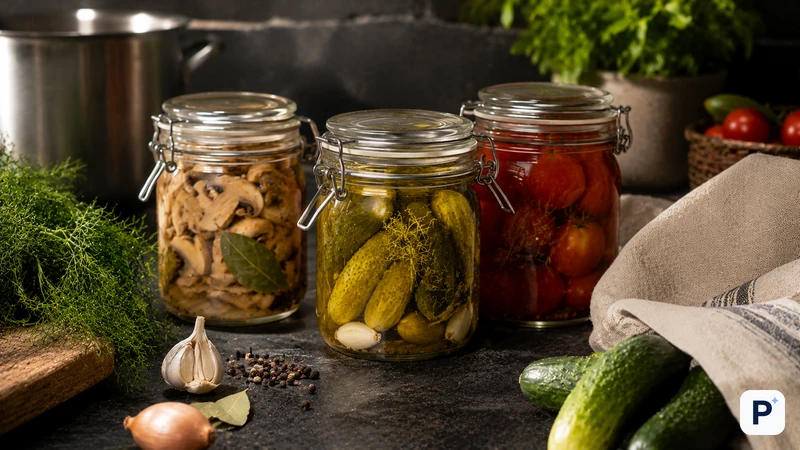
Bottling and pasteurising let you keep some home-made preserves for a long time without refrigeration. At home, the products best suited to classic pasteurising are mainly acidic ones, such as pickled cucumbers, jams, fruit preserves or tomatoes properly acidified according to a tested recipe. We explain how to carry out this process safely in our guide on how to preserve food in jars step by step.
Low-acid preserves require particular care, including meat, beans and vegetables without proper acidification. In a tightly sealed jar, conditions can develop that favour the growth of Clostridium botulinum bacteria, which produce botulinum toxin. Poisoning with this toxin, known as botulism, is a serious health risk.
You should not prepare such preserves by guesswork, change the proportions of the ingredients, or assume that boiling the jars for longer in an ordinary pot will solve the problem. Safely preserving low-acid products requires the right technology, pressure equipment and a tested procedure. If you are not sure how to carry out the process correctly, choose a different storage method.
Do not taste preserves from suspect jars either, even if they look and smell normal. Botulinum toxin cannot be reliably detected by taste, smell or appearance. Detailed instructions for preparing preserves are worth working out separately, taking into account the type of product and safe process parameters.
Fermenting
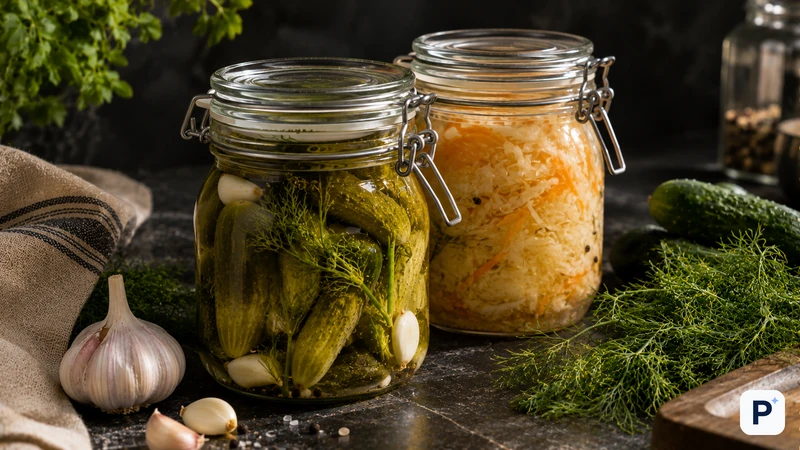
Fermenting is a method of preserving food based on fermentation. Micro-organisms convert the sugars present in vegetables into acids, which lower the pH and limit the growth of unwanted microbes. This is how you can prepare cucumbers, cabbage, beetroot and other vegetables, among other things. We show this step by step, with salt proportions and fermentation conditions, in our guide on how to ferment vegetables.
The basis is maintaining hygiene, the right salt proportions and the right fermentation conditions. It is not worth changing the amount of salt freely or shortening the time the process needs to proceed correctly. Finished ferments should be stored according to the preparation method, usually in a cool place or the fridge if storage conditions require it.
Drying
Drying involves removing a large part of the water from food, which limits the growth of microbes. You can preserve fruit, vegetables, mushrooms and herbs this way. Dried products are light, take up little space and can be stored without refrigeration.
It is important, however, to dry the product thoroughly. If too much moisture remains, mould can appear. After drying, store food in airtight packaging, away from moisture and light. Check regularly that no condensation or signs of spoilage appear inside the container.
Freezing
Freezing lets you extend the shelf life of meat, fish, vegetables, fruit, bread and ready meals. It is a convenient method, especially if you prepare larger portions of food and want to use them over the following weeks. We cover what the freezer handles well and what is better used another way in our guide on what you can and can't freeze.
Bear in mind, though, that a freezer depends on electricity. During a longer power cut it does not provide the same independence as products stored in the pantry. So do not base your whole reserve on frozen food. Treat it as a supplement to your stockpile, not its foundation.
Freeze-drying
Freeze-drying involves removing water from a frozen product under reduced pressure. It produces light food with a long shelf life that can regain part of its original texture once water is added.
At home, freeze-drying requires a special device, namely a freeze dryer. This is expensive equipment that is not the equivalent of an ordinary food dehydrator. You cannot carry out true freeze-drying in a sealed jar, nor replace it by simply freezing a product. If you are not planning to preserve larger amounts of food regularly, buying the device may not be worthwhile. Ready-made freeze-dried products, on the other hand, can be bought as a supplement to your stockpile. You will find more about how freeze-dried food works and when it is worth buying in a separate guide.
Storing dry products in airtight containers
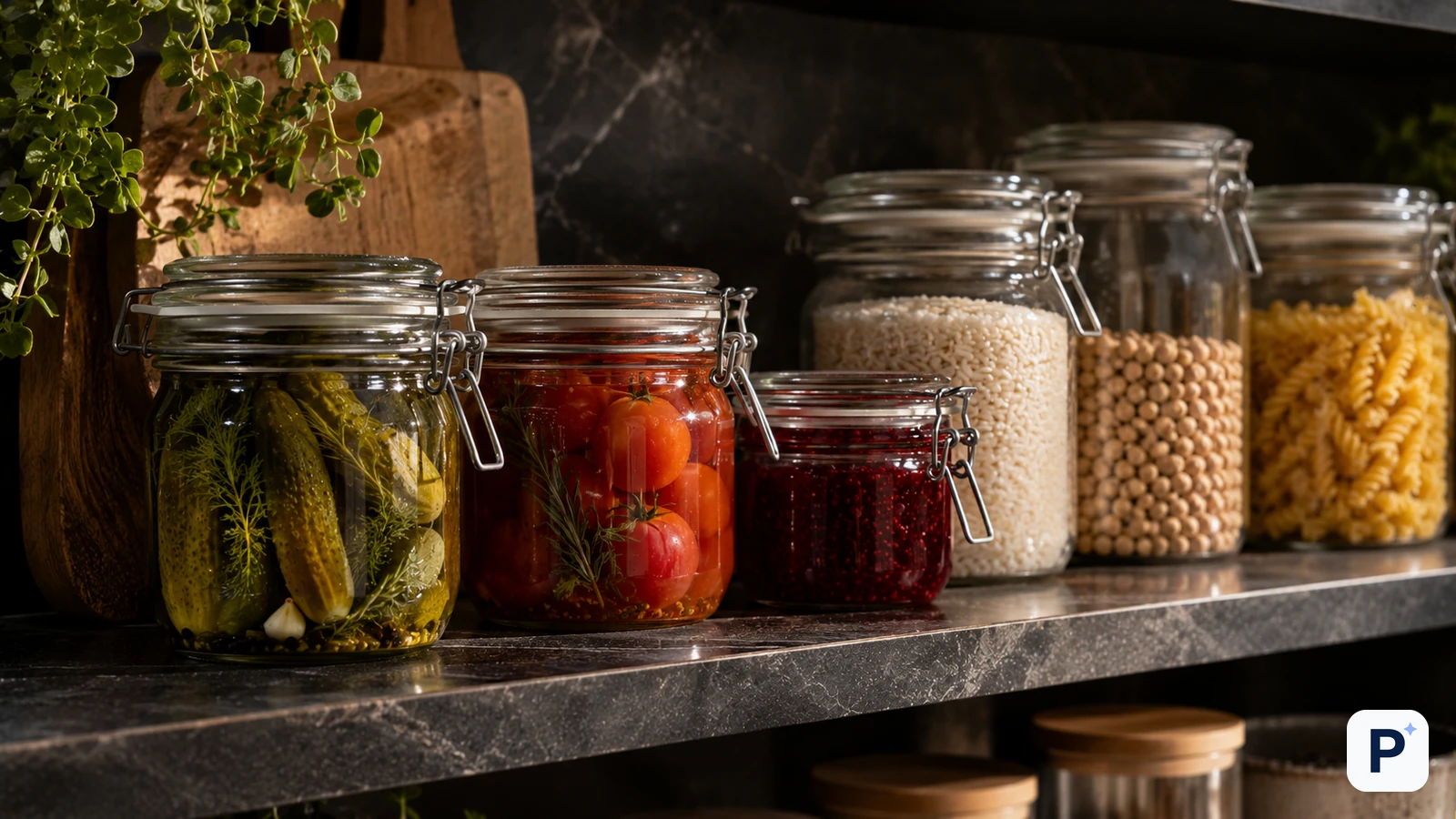
Not every method of extending shelf life involves processing food. For rice, groats, pasta, cereal, flour or dried pulses, proper storage is often enough.
After opening the packaging, transfer the product into an airtight container that limits access by moisture and pests. Keep a note of the product name and its expiry date. Do not automatically mix a new product with the remains of an old one, as this makes it harder to track dates and can mean the older batch is forgotten.
How to store a home stockpile properly
Even long-life products can lose quality if they are stored in the wrong conditions. The best place for a stockpile is a cool, dry, shaded cupboard, pantry or room where the temperature does not change sharply.
Avoid storing food next to the oven, a radiator, the hob, hot water pipes and in places exposed to direct sunlight. High temperatures can speed up the deterioration of products. Moisture encourages clumping, mould and damage to packaging.
Keep dry products in airtight containers. Store tins and jars where they will not be exposed to corrosion, damage or flooding. Do not place food directly on the floor, especially in a cellar or utility room. Shelves make it easier to keep track of your stockpile and reduce the risk of packaging coming into contact with water.
Take care to protect against pests as well. Regularly check packets of flour, groats, rice, pasta and nuts. Look out for small holes, webbing, larvae or signs of insects. If you find an infested product, do not transfer it into a shared container. Remove it and clean the storage area thoroughly.
Every opened product should be protected against moisture and contamination. If you transfer food into containers, label them with the product name and its best-before date. For home-made preserves, also note the month and year of preparation. Such labels make rotation easier and reduce the risk of mistakes.
Stock rotation: the most important rule
The biggest problem with a home stockpile is usually not a lack of space or money, but a lack of control over what is already in the cupboards. You can have enough food for two weeks and still buy more packs of the same products, because you do not remember what was tucked away at the back of the shelf.
That is why a stockpile needs rotation. The simplest rule is FIFO, or "first in, first out". Products bought earlier should be used before newer ones. In practice, though, it is worth paying attention above all to the expiry date. If a newer pack has a shorter date than an older one, priority should go to the one that needs using sooner.
When arranging products on shelves, place new packs at the back and older ones at the front. That way, during everyday cooking, you naturally reach for the ones that have been in the house longest. Do not hide short-dated products behind large packs, or keep several opened packets of the same ingredient without a specific reason.
Understanding the markings on packaging matters too. "Use by" relates to food safety, and the product should not be eaten after that date. "Best before" relates mainly to minimum shelf life and quality. For this second date, the assessment also depends on the type of food, the condition of the packaging and the storage conditions.
Keeping a simple calendar of dates is a good solution. Note down the products that need using soon, and check them when you plan your meals.
It is even more convenient to keep a single inventory of all the food in your home. In PantryOS you can track products and their dates, and then take your available stockpile into account when planning meals. This makes it easier to notice that you already have rice, tinned tomatoes and lentils you can turn into dinner, instead of buying more ingredients.
Stock rotation should be combined with meal planning. Once a week, check which products are worth using first and match your meals to them. This way your reserve is not a separate set of food, but part of your everyday menu.
What to do with your stockpile during a power cut
During a power cut, the most important thing is to limit the loss of food stored in the fridge and freezer. Do not open them unnecessarily. A closed fridge can keep a safe temperature for around four hours, and a full freezer for around 48 hours. A half-full freezer manages around 24 hours. These are approximate figures, depending among other things on the appliance, the ambient temperature and how often the door is opened.
If you expect a power cut, you can freeze cool packs or bottles of water in advance and use them to keep a cool box cold. A fridge and freezer thermometer is also useful. It lets you check the actual temperature instead of relying only on how long the outage has lasted.
Once the power is restored, do not judge whether products are safe by smell, appearance or taste alone. Perishable food that has stayed at the wrong temperature for too long can be dangerous even when there are no visible signs of spoilage. Do not taste it to check whether it is fit to eat.
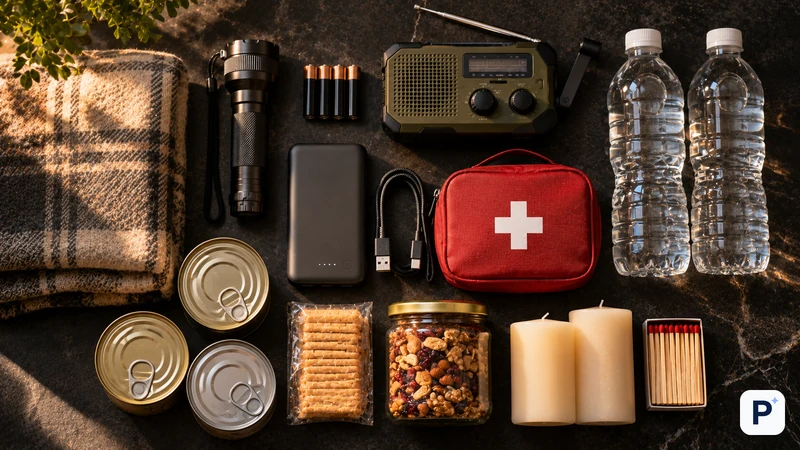
This is exactly why a stockpile of dry and ready-to-eat products matters so much. Rice, groats, pasta, tins, crispbread or UHT products let you prepare meals without using the fridge. Part of your stockpile should be fit to eat without cooking, because during an outage you may not be able to use an electric hob. We have gathered a full list of equipment, from water and a torch to a power bank and a first-aid kit, in our guide on what to keep at home for a power cut.
The most common mistakes when building a food stockpile
The first mistake is buying products the household does not eat. Large amounts of tins, groats or dried pulses make no sense if nobody reaches for them later. A stockpile should consist above all of food that is familiar and used day to day.
The second problem is buying too large an amount of shorter-life products. Oil, nuts, wholemeal flour and some dried products can also lose quality. A promotion is not a saving if the product you buy spoils before it is used.
Storing food without labels is another common mistake. After a few months it is hard to remember when a packet was opened or a home-made preserve was prepared. A lack of dates makes rotation harder and increases the risk of overlooking products that should be used sooner.
You should not base your whole stockpile on frozen food either. A freezer is useful in everyday food management, but during a power cut its capabilities are limited. Your reserve should also include products that need no refrigeration.
A particularly serious mistake is preparing home-made preserves incorrectly. For low-acid products, you cannot improvise with pasteurising time, temperature or the proportions of the ingredients. The risk associated with botulinum toxin cannot always be recognised from the appearance or smell of the food.
The last problem is a lack of regular review. Even a well-prepared pantry stops being useful over time if nobody checks its contents. It is worth going through all the shelves every few months, topping up what is missing, removing products no longer fit to eat and planning to use those whose date is approaching.
If you are not sure where to start, it helps to identify the ingredients that most often sit unused in your kitchen, so you can plan their purchase and use more carefully.
A home stockpile that genuinely comes in useful
A well-prepared pantry does not have to be large or expensive. The most important thing is that it contains products suited to the household's needs, lets you prepare a few simple meals and provides a reserve for when you cannot shop for a few days.
Start with three days, then gradually build up your reserve. Keep an eye on the amount of water, choose long-life products, store them in the right conditions and regularly use the oldest packs. Do not forget ready-to-eat food, either, which can be particularly useful during a power cut.
The most important thing, though, is to know what you have at home. PantryOS helps you keep track of your stockpile, watch expiry dates and plan meals around the products you have. This makes it easier to keep the pantry in order, cut unnecessary shopping and make sure the food you have gathered genuinely serves the household.