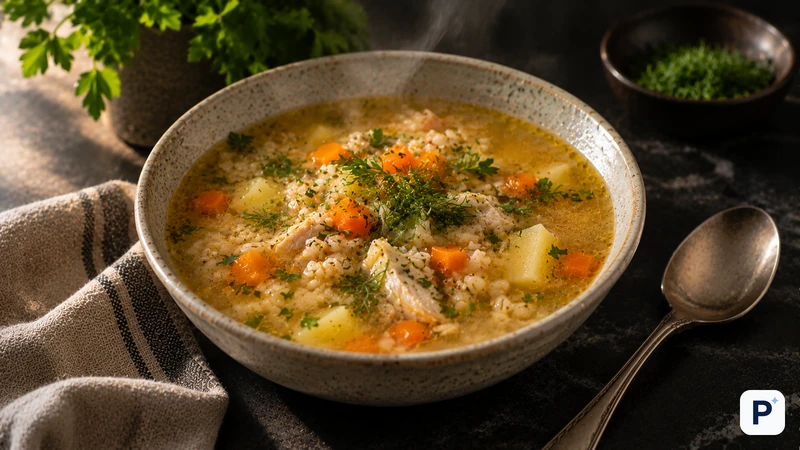
Polish Chicken Soup (Rosół)
The most classic Polish soup and, at the same time, one of the most versatile bases in the kitchen. Serve it with pasta for Sunday dinner, and from what is left cook tomato soup, a sauce or a risotto. The secret is meat on the bone, slow warming and very gentle cooking.
Ingredients
- about 1 kg of meat on the bone, ideally a combination of poultry (half a chicken, a carcass or legs) with a piece of beef on the bone (shin or brisket)
- 2 carrots
- 1 parsley root
- a piece of celeriac
- 1 leek, ideally the white and light green part
- 1 onion
- 2–3 bay leaves
- 4–5 allspice berries
- a few black peppercorns
- parsley or lovage
- salt
- about 2.5–3 litres of water
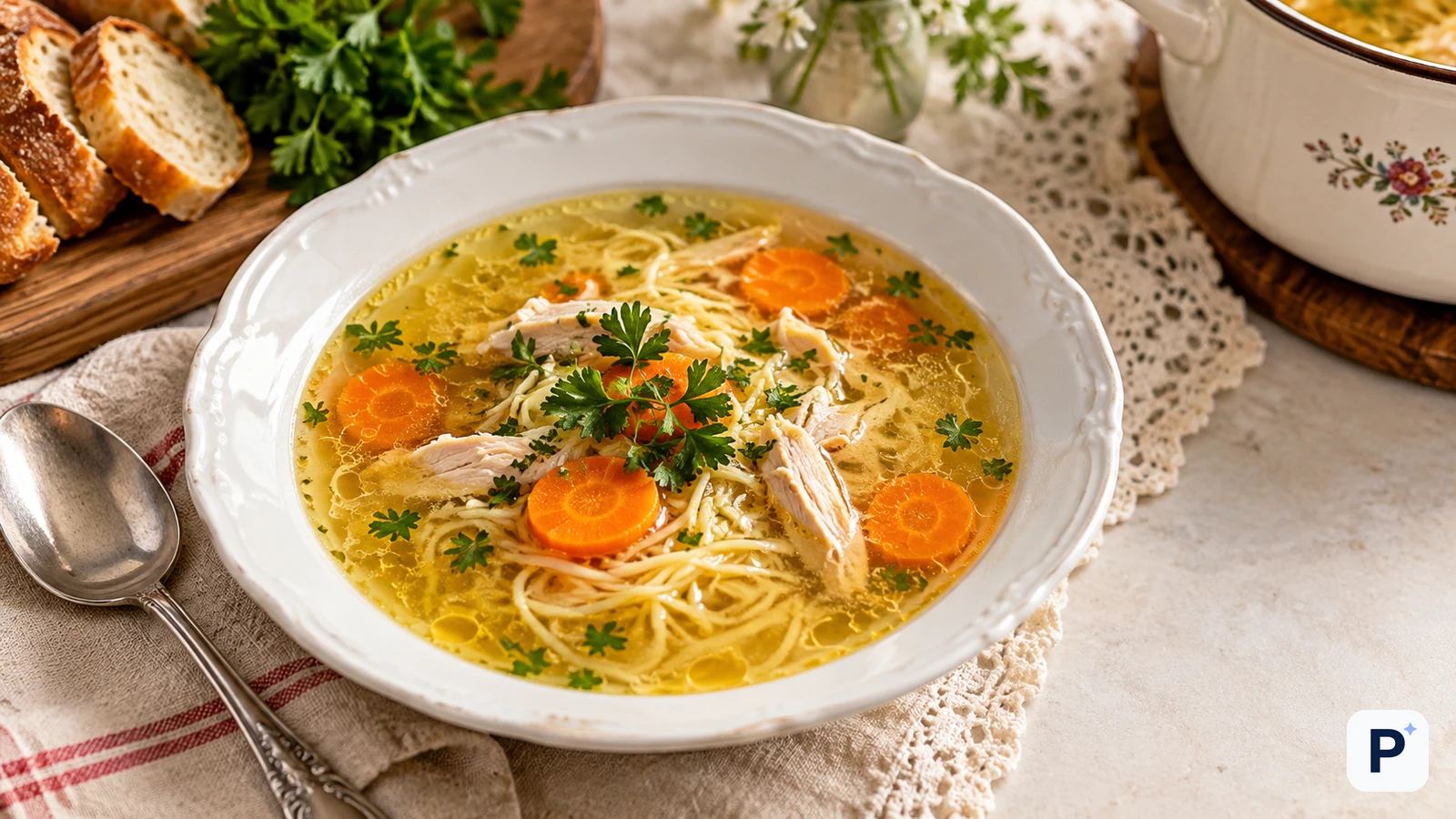
To serve: pasta, the cooked carrot from the broth, parsley.
Instructions
- Place the meat in a large pot and cover it with about 2.5–3 litres of cold water. There should be enough water to cover the meat completely, but the broth should not be overly diluted.
- Set the pot over medium heat and warm it slowly, uncovered. Do not try to speed up this stage by turning the burner to its maximum setting.
- When a greyish foam appears on the surface, gently skim it off with a spoon or a fine sieve. You do not need to remove every last speck, but skimming off most of the foam helps you achieve a clearer broth.
- Cut the onion in half. Place the halves cut side down on a dry, very hot frying pan and char them until the surface is deeply browned in places. The charred onion gives the broth a more intense aroma and a golden colour.
- When the broth approaches boiling point, reduce the heat to the lowest setting. From this point on the broth should only simmer very gently. A few small bubbles may appear on the surface, but the broth should not boil vigorously.
- After about 30–40 minutes, add the peeled carrots, parsley root, celeriac, leek and the charred onion. Add the bay leaves, allspice and peppercorns as well.
- Cook very slowly for another 2–2.5 hours. Do not stir unnecessarily. If some of the water evaporates and the meat or vegetables are no longer submerged, top up with a small amount of hot water.
- Towards the end of cooking, add the parsley or lovage. Season the broth with salt, taste it and add more if needed.
- Strain the finished broth through a fine sieve. Set the meat and vegetables aside, as you can use them later.
- Serve the broth with separately cooked pasta, pieces of carrot and freshly chopped parsley.
Why Do We Start Rosół with Cold Water?
Covering the meat with cold water and heating it gradually is the classic method for preparing broth. It gives the ingredients plenty of time to release their flavour into the water and makes it easier to control the first stage of cooking.
This does not mean, however, that meat dropped into hot water will automatically make a cloudy broth. Clarity is influenced far more by the intensity of cooking, stirring the broth and the way you skim off the foam.
Cold water is therefore a good starting point mainly because the whole process runs slowly and is easy to keep under control.
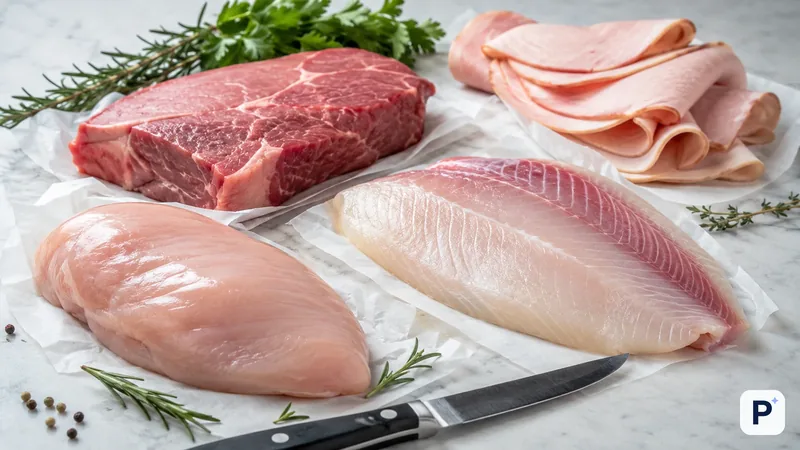
Which Meat Is Best for Rosół?
The most aromatic broth usually comes from a combination of several kinds of meat. Chicken breast fillet alone gives far less flavour than cuts containing bones, skin and connective tissue. Good choices include:
- chicken carcass
- chicken legs or quarters
- wings
- turkey neck
- a piece of stewing hen
- beef shin
- beef brisket
- beef bones with meat
You do not have to use them all at once. A good home mix is, for example, about 700 g of poultry and 300–400 g of beef on the bone. If you want to match the amount of meat and pasta to the number of people, our guide to how much food to cook per person will help.
If you want a more delicate broth, cook it with poultry only. If you want a stronger, deeper flavour, add beef.
Why Does Meat on the Bone Make a Better Broth?
Bones and the connective tissue around them release flavour compounds and gelatine during long cooking. As a result, a well-cooked broth may become slightly jelly-like once chilled. This is normal and usually means the broth is concentrated.
This does not mean, however, that more bones are always better. The broth should also contain a suitable amount of meat and vegetables, which build its flavour.
What Is the Scum (Foam)?
The scum is the foam that appears on the surface of the broth during the first stage of heating the meat. It forms partly from coagulating proteins. It does not mean the broth has gone off or that the meat was of poor quality.
If you want a clear broth, gently skim off the larger clusters of foam with a spoon or a fine sieve. Do this without vigorously stirring the pot.
Why Shouldn't Rosół Boil Hard?
This is one of the most important parts of preparing a clear broth. During vigorous boiling, fat, proteins and small particles of the ingredients are intensively mixed with the water. The broth becomes cloudier and the flavour can be less delicate.
That is why you should reduce the heat after the first warm-up. The broth should only simmer gently for a few hours.
You also do not need to stand by the pot the whole time. Once the temperature has stabilised, you only need to check from time to time that the broth is still cooking gently.
Does Rosół Have to Be Cooked Uncovered?
It is best to leave the pot uncovered or cover it only partially. It is then easier to control the temperature, and some of the water can slowly evaporate, which concentrates the flavour.
If, however, the broth is evaporating too quickly, you can partially cover the pot or add a small amount of hot water.
Will Adding Cold Water Ruin the Broth?
No. Simply adding cold water will not suddenly turn a clear broth cloudy.
Hot water is more practical, however, because it does not sharply lower the temperature of the whole pot and lets you keep a steady cooking rhythm. Above all, it is best to choose the amount of water at the start so that any later topping up is minimal.
When Should You Salt Rosół?
There is no need to wait until the very last minute to add salt. You can lightly salt the broth earlier.
It is worth leaving the final seasoning until the end, though. During several hours of cooking some of the water evaporates, so the broth becomes more concentrated. A broth that seemed properly salted at the start may turn out over-salted by the end.
The safest approach is a small amount of salt during cooking and the final seasoning after tasting the finished broth.
What to Do If the Broth Turns Out Cloudy
First of all, this does not mean it is no good. If the flavour is right, you can simply serve it.
First, try straining the broth through a very fine sieve or a sieve lined with muslin.
If you want a very clear broth, you can use the classic clarification with egg white. It is easiest to do this once the meat and vegetables have been removed. Add lightly beaten egg white to the cool or lukewarm broth, roughly one per litre of broth. Heat it slowly, stirring gently only at the start. The coagulating egg white will begin to bind the small particles responsible for the cloudiness.
Once a crust of coagulated egg white has formed, stop stirring and let the broth heat gently. Then very carefully strain the broth through a dense sieve or muslin.
For an ordinary Sunday broth there is usually no need to carry out this extra step. It is a technique that comes in handy when you particularly want a very clear broth.
Why Does Rosół Sometimes Have No Flavour?
The most common cause is too much water in relation to the meat and vegetables. If you cover 1 kg of meat with five litres of water, even three hours of cooking will not create an intense broth. Start with about 2.5–3 litres.
The meat itself matters too. Boneless chicken breast will not give the same effect as a carcass, wings, legs or beef on the bone.
If the finished broth is too delicate, after removing the ingredients you can cook the broth on its own for another dozen minutes or so, uncovered, so that some of the water evaporates.
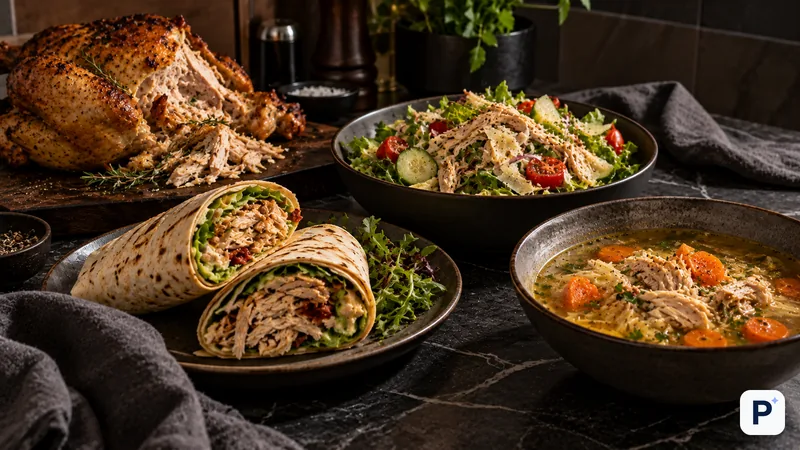
What to Do with the Meat from the Broth
Do not throw it away just because it has given up some of its flavour to the broth. You can use the meat from the broth for:
- croquettes
- pierogi
- pancakes
- a fricassee
- tortilla filling
- pâté
- salad
- a bake
- sandwiches
If the meat is dry, it is best to combine it with something moist, for example fried onion, a sauce, yoghurt, a soft cheese spread or vegetables.
What to Do with the Vegetables from the Broth
You can serve the carrot straight with the soup or use it in a vegetable salad.
The parsley root, celeriac and carrot can also go into a vegetable spread, a filling, a purée or a creamy soup. Not all of them have to end up in the bin after you strain the broth.
It is with dishes like these that it is easiest to see the difference between "I cooked a broth" and "I prepared a base for several meals".
Rosół as a Base for Further Dinners
A large pot of broth can be the start of several different dishes, not just a single dinner.
Tomato soup. The most classic option. Add passata, tomato purée and cream to the broth, and the next day you have a completely different soup.
Other soups. You can use the broth as a base for cucumber soup, barley soup, vegetable soup, mushroom soup or a cream soup. And if you fancy something sour, make a traditional żurek on a rye sourdough starter.
Risotto and kaszotto. Instead of water, gradually add hot broth to the rice or groats. The flavour will be much fuller.
Sauce. You can use a small amount of broth to loosen and enrich a roast, mushroom or vegetable sauce.
Cooking rice and groats. Cooking them in broth instead of water is one of the simplest ways to use up a small portion of broth.
So one base can look like this: broth on the first day, tomato soup on the second, a risotto or a sauce from what is left.
How to Store Rosół
If you do not intend to eat all the broth at once, do not leave a large pot at room temperature for many hours.
Chill the broth and transfer it to airtight containers. In the fridge it is best used within about 2–3 days.
Store the pasta separately. If you leave it in the pot with the broth, it will absorb the liquid and quickly become very soft.
Dividing the broth into smaller portions straight away is also a good idea. One stays for the next dinner, and the rest can go into the freezer.
Can You Freeze Rosół?
Yes. Broth is one of the best foods for freezing. Once chilled, pour it into airtight containers or freezer bags. Do not fill a rigid container right to the brim, as liquid expands as it freezes.
It is most convenient to prepare various portions:
- a larger portion for soup
- about 500 ml for risotto
- small portions for sauces
- small cubes of concentrated broth
This way you do not have to defrost a litre of broth just because you need one ladleful for a sauce.
How to Make a More Concentrated Stock for Freezing
If you are short of space in the freezer, you can cook the strained broth for longer, uncovered. The more water evaporates, the more concentrated the flavour.
After defrosting, you can dilute such a broth with water again. This is a good way to store a homemade base for soups and sauces without taking up half the freezer with containers of liquid.
Substitutions
No beef? Cook the broth with poultry only.
No whole chicken? Use a carcass, wings, legs or quarters.
No leek? You can leave it out.
No fresh lovage? Use parsley or cook the broth without it.
No parsley root? Add a little more celeriac or carrot. The flavour will be slightly different, but the broth will still turn out well.
No pasta? Serve the broth with egg-drop noodles, rice, semolina or simply on its own.