Polish Barley Soup (Krupnik)
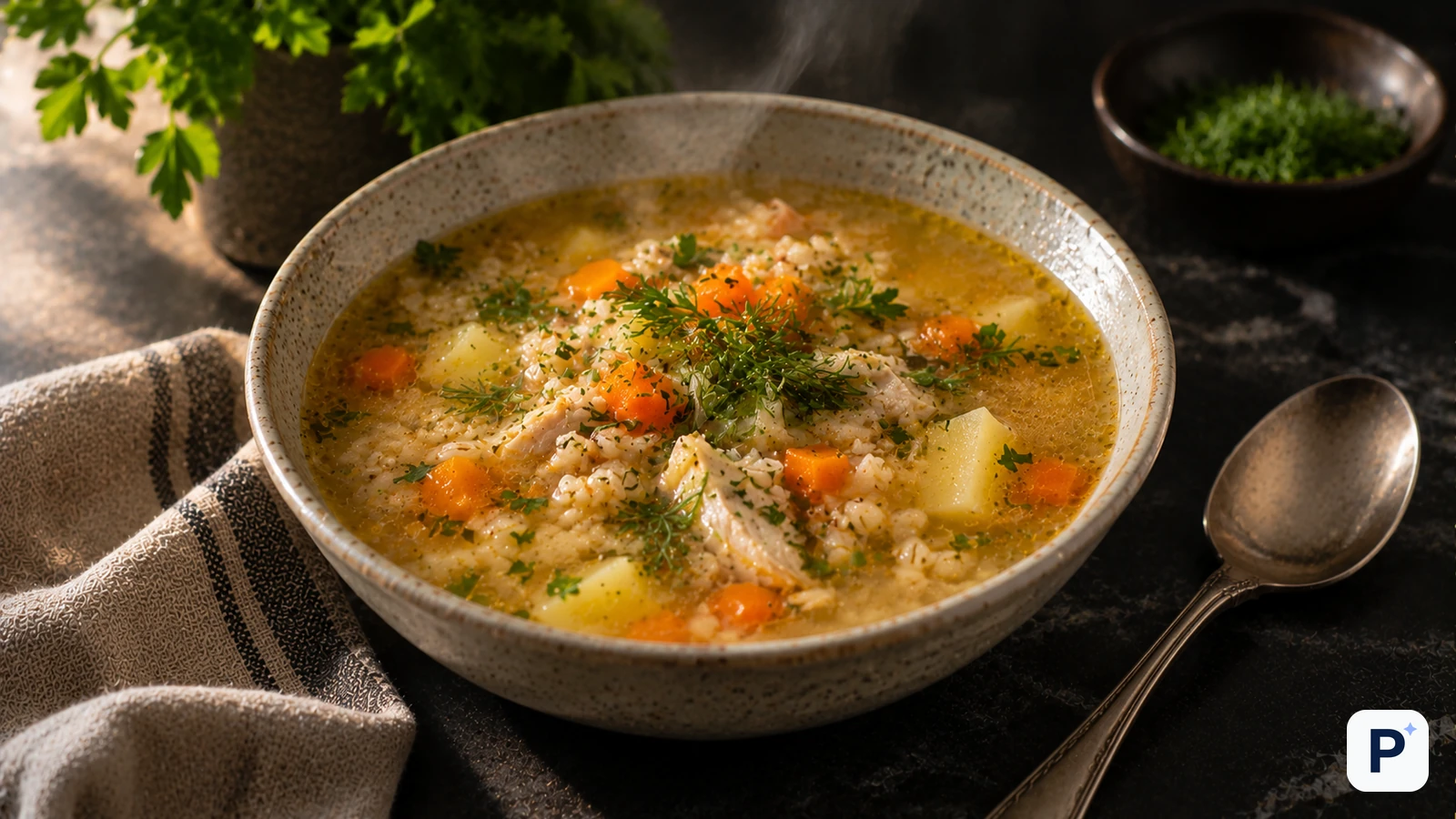
Krupnik is a traditional, filling soup made with pearl barley, soup vegetables and potatoes. When well made it should be thick and hearty, yet still have enough stock, while the barley and potatoes keep their texture.
Ingredients
Stock:
- 500 g bone-in, skinless chicken thighs
- 2.2 l cold water
- 2 bay leaves
- 4 allspice berries
- 8 g salt
Vegetables and barley:
- 100 g pearl barley
- 180 g carrot
- 100 g parsley root
- 80 g celeriac
- 100 g leek
- 100 g onion
- 450 g potatoes
- 20 g butter
- 2 g pepper
- 10 g fresh parsley
Instructions
- Prepare the meat and stock. Put the chicken thighs into a large pot and cover with cold water. Add the bay leaves, allspice and salt. Slowly bring to the boil. When scum rises to the surface, skim it off with a spoon.
- Cook the stock. Reduce the heat and cook the meat, covered, for about 30 minutes. The stock should only simmer gently, without boiling vigorously.
- Prepare the vegetables. Peel the carrot, parsley root and celeriac, then cut them into a small dice or half-slices. Wash the leek thoroughly and slice it. Peel and finely chop the onion. Cut the potatoes into cubes about 2 cm in size.
- Add the barley. Rinse the pearl barley in a sieve under cold water and add it to the stock after about 30 minutes of cooking the meat. Cook for about 15 minutes over low heat.
- Add the vegetables. Add the carrot, parsley root, celeriac, leek and onion to the pot. Cook for about 10 minutes.
- Add the potatoes. Add the diced potatoes and cook for a further 15–20 minutes, until the barley is soft and the potatoes are cooked but not falling apart.
- Finish the soup. Remove the thighs from the pot, separate the meat from the bones and cut it into smaller pieces. Return the meat to the soup. Add the butter, pepper and chopped parsley. Taste and season with salt if needed.
- Serve the krupnik. Serve the soup hot, ideally straight after cooking. If it stands for a while before serving, check its consistency and add a little hot water or stock if needed.
Practical Tips for Making Krupnik
Add the barley before the potatoes, because it needs more time to cook. Potatoes added too early may overcook before the barley is soft.
Don't cook the soup over high heat. Krupnik should bubble gently. Vigorous boiling can overcook the vegetables and make the stock less clear.
Don't overdo the barley. 100 g of dry barley to 2.2 l of water gives a hearty but still soup-like krupnik. During cooking, barley increases significantly in volume and absorbs liquid.
Check the consistency towards the end of cooking. If the soup is already very thick before cooking is finished, add a little hot water. Don't wait until the next day to do this.
Remember that krupnik thickens. The barley continues to absorb liquid after cooking, so the next day the soup will be noticeably thicker than when freshly cooked.
Which Barley for Krupnik?
The most classic choice is pearl barley. It softens well during cooking, thickens the soup and gives krupnik its characteristic texture.
You can also use pot barley. It is less processed and stays firmer after cooking, so the krupnik will have a slightly different consistency.
If you want a classic, home-style krupnik, choose pearl barley.
Can You Make Krupnik Without Meat?
Yes. Krupnik also works very well in a meat-free version. In that case, skip the chicken and make the soup with a vegetable stock.
The vegetarian version will be lighter, so it is worth taking care to season it well. Butter added at the end of cooking will improve the flavour and give the soup a fuller consistency.
You can also make a larger batch of vegetable stock and use it as a base for several different soups. This makes it easier to use up the vegetables you already have at home.
How to Make Krupnik That Isn't Too Thick
The most important thing is the amount of barley. Barley increases greatly in volume during cooking and absorbs a significant part of the liquid.
With the given ratio of 100 g of barley to 2.2 l of water you will get a hearty soup, but if you prefer a thinner krupnik, you can add hot water or extra stock towards the end of cooking.
Don't add cold water directly to the hot soup. It is better to use a hot liquid so that you don't halt the cooking.
Why Is Krupnik Even Thicker the Next Day?
This is normal. The barley continues to absorb liquid as it cools and is stored, so after a night in the fridge krupnik can resemble a thick stew more than a soup.
Before reheating, add a small amount of water or stock. Reheat the soup over low heat and stir until you reach the right consistency.
It is best not to thin the whole pot at once. Add liquid gradually, because the amount needed to restore the right consistency depends on how much liquid the barley has absorbed.
What to Serve with Krupnik
Krupnik is a complete and filling soup, so it doesn't need many accompaniments. Usually fresh parsley is enough.
You can also serve it with a slice of fresh bread. If you are making the meat-free version, bread can make the meal even more filling.
How to Store Krupnik
Cool the cooked krupnik, then transfer it to an airtight container and put it in the fridge. It is best stored for a maximum of 3 days.
If you know you won't eat the whole batch within that time, it is better to freeze part of the soup in advance.
Don't keep krupnik for several days in a pot left at room temperature. Once cooled, it should go into the fridge as quickly as possible.
Can You Freeze Krupnik?
Yes, krupnik can be frozen, but keep in mind that after thawing the barley and potatoes will have a softer texture.
It is best to freeze the soup in single portions, in airtight containers. Leave a little free space, because liquid increases in volume as it freezes.
If you want to prepare soups with freezing in mind, it is also worth checking the guide to what you can and can't freeze, which helps you assess which ingredients freeze well.
After thawing, reheat krupnik slowly over low heat. If it is too thick, add hot water or stock.
Common Mistakes When Making Krupnik
Too much barley. Barley swells considerably and absorbs liquid. Too much of it can turn the soup into a very thick dish.
Overcooked potatoes. The potatoes should be added later than the barley so that they cook at the same time and keep their shape.
Boiling too hard. Krupnik should cook gently. High heat won't speed up cooking significantly, but it can worsen the texture of the vegetables.
Not letting the stock reduce. If the stock is too watery towards the end of cooking, don't try to make up for it with a large amount of barley. It is better to let the soup gently reduce some of the liquid.
No adjustment after cooking. Krupnik may need extra salt or pepper once all the ingredients have been added. The flavour of the barley and potatoes softens the intensity of the stock.
Too little liquid on the second day. This is a natural effect of the barley absorbing liquid. Before reheating, add hot water or stock and only then judge the consistency.