Weekly Meal Planning to Save Money on Food
Planning your meals for the week is one of the simplest ways to cut your spending on food. It means you only buy what you need, use up the supplies already in your kitchen and throw away less food that has had time to go off.
Why Does Meal Planning Help You Save Money?
Without a plan, it is easy to buy on impulse. In the shop, products that look useful end up in your trolley, but after a few days it turns out you have no idea what to do with them. Some of them sit in the fridge and later end up in the bin. In the meantime, you have to do another shop and spend more money.
Planning turns this order around. First you check what you already have, then you decide what to cook from it, and only at the end do you buy the missing ingredients. You don't pay twice for products that are already at home, and you cut back on buying unnecessary extras.
Savings also come from making better use of your products. If you buy a larger pack of vegetables, meat or dairy, you can plan several meals around it straight away. That way, you are less likely to be left with single ingredients that have no particular use.
The plan doesn't have to be complicated. It isn't about preparing a detailed menu for every single meal, but about making a few decisions in advance. This is especially useful when you want to cut your spending on the grocery shopping. You'll find more practical ideas in our guide to how to spend less on food.
Start with What You Already Have at Home
Before you open a recipe app or start putting together a menu, look in the fridge, the freezer and the cupboards. This is the most important stage of planning, because it lets you work out which meals you can prepare without any extra shopping.
Start by checking the products with a short shelf life. Pay attention to opened packs of dairy, vegetables, fruit, cold cuts, cooked rice, pasta and leftovers from earlier meals. Then check your dry goods, such as grains, rice, pasta, tinned food, pulses and flour. Don't skip the freezer. Frozen vegetables, meat, bread or ready-made portions of dinner can replace part of your planned shopping. If you want supplies like these to be a permanent feature of your kitchen, see how to build up a food stock at home.
You don't have to create a detailed inventory of your whole kitchen. It's enough to note down the products worth using up first. If you have half a pot of cream, a few carrots and an opened piece of cheese, include them in your plan for the next few days.
A good habit is to build your meals around the products you already have, rather than hunting for recipes and buying all the ingredients from scratch. That way, planning starts with your supplies rather than with a shopping list.
How to Plan Your Meals for the Week in 20 to 30 Minutes
Choose one regular time in the week to plan your meals. It could be a Saturday or a Sunday, before a bigger shop. In time, the whole process becomes a routine and no longer requires you to think it through from scratch.
Spend the first few minutes checking your supplies. Note down the products that need using up first, along with those that can serve as a base for several dishes. Don't look for new recipes yet. First work out what you can make from the ingredients you already have.
Next, check the household's diary. Think about which days everyone eats at home, when someone gets back late, and when you're planning to go out or order a takeaway. There's no point planning a big dinner for a day when most of the household won't be there to eat it. Factor in cooking time, too. On busier days, plan simple dishes, and leave the more time-consuming recipes for when you have more time.
The next step is choosing your meals. Start with dinners, as they usually need the most ingredients and account for a large share of your food spending. You don't have to plan seven different dishes. A few specific dinners, one day for using up leftovers and one more flexible slot are enough. If you cook larger portions, some meals can stretch to the next day as well.
Finally, check the ingredients needed for each dish and compare them with your supplies. Only then do you write down the products you are genuinely short of. The whole thing should take around 20 to 30 minutes. If planning takes considerably longer, you are probably trying to plan too much detail.
The 'One Ingredient, Several Dishes' Rule
One of the simplest ways to cut waste is to use the same products across several different meals. This doesn't mean eating the same thing all week. It's about arranging your menu so that the ingredients bought for one dish have another use as well.
For example, if you buy a kilogram of carrots, you can use some of it for soup, roast some with other vegetables and grate the rest into a slaw. One pack of spinach can go into pasta, an omelette and a filling for pancakes. Roast chicken can be dinner on the first day, a filling for a wrap the next day and an ingredient in a salad.
You can plan the use of dry goods in the same way. Cooked rice works as a side for dinner, a base for fried rice with vegetables or an ingredient in a bake. Cooked potatoes can be used the next day for potato cakes or a salad.
The most important thing is to plan the order. Use the products with a shorter shelf life first, and leave those that can wait for later days. That way, you don't buy several different ingredients for every recipe, and you keep down the number of opened packs.
A Shopping List You'll Actually Stick To
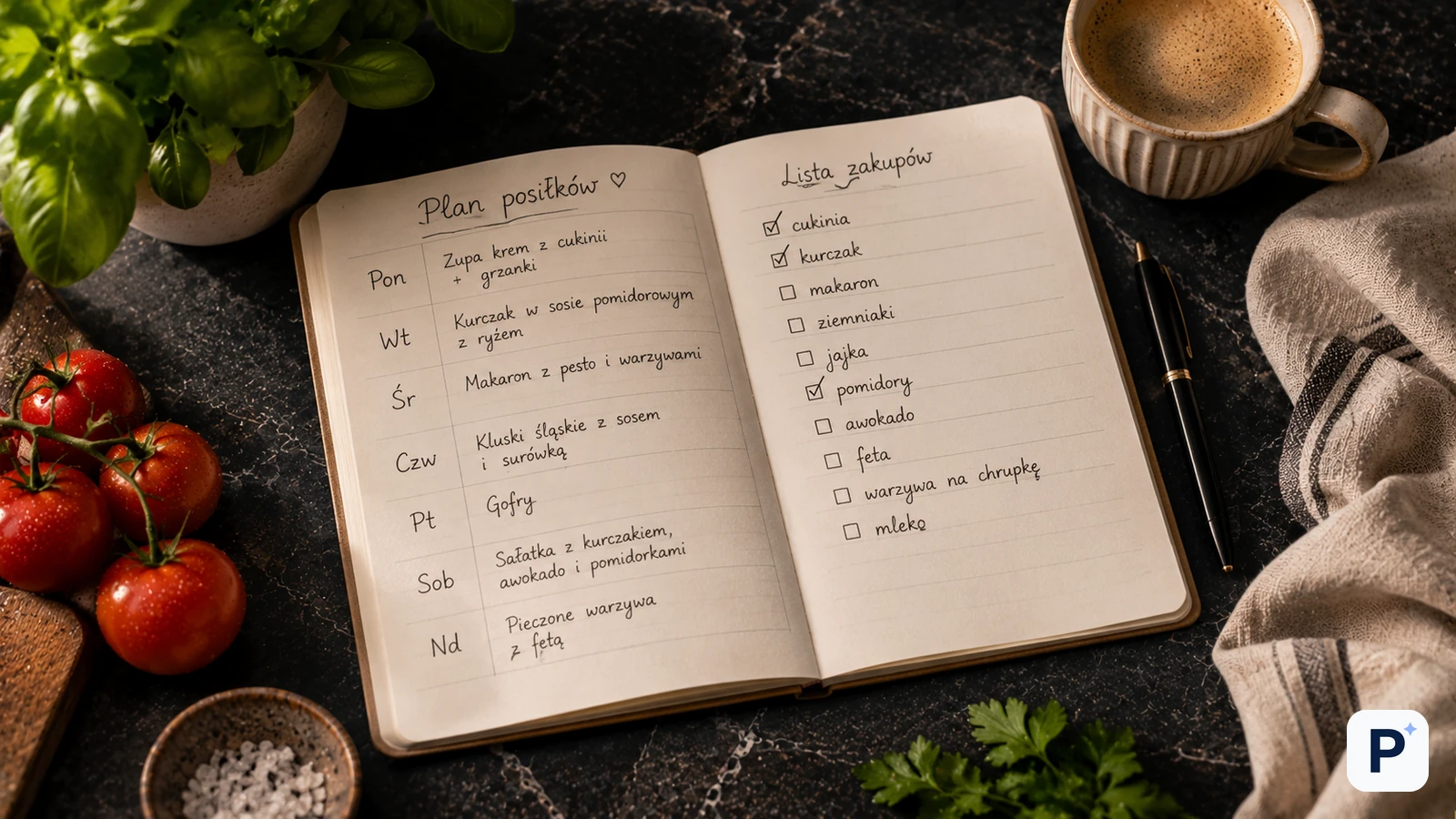
Your shopping list should come from your planned meals, not from general ideas about what might come in handy. Write down only the products needed to make specific dishes, along with the staples that are genuinely running low.
Before you shop, check whether an ingredient isn't already at home. Pay attention to quantities. If a recipe calls for 200 grams of cheese and you already have an opened pack, don't buy another one just because it's on the list of ingredients.
It's also worth grouping products together. Write down fruit and vegetables, dairy, meat, dry goods and everything else separately. This makes shopping easier and cuts down on tossing things you don't need into the trolley by chance.
While you shop, stick to the list you've set. A special offer doesn't mean a saving if you're buying a product you don't need or won't manage to use in time. Be particularly careful with larger packs of food that have a short shelf life. A lower price per kilogram is no real benefit if part of the product ends up in the bin.
Leave Room for a Day Without Cooking
A good plan shouldn't assume that every day you'll find the time and the inclination to prepare a new meal. It's worth leaving one day for using up leftovers, frozen portions or a simple dinner made from the products you already have.
You can plan a day without cooking, or a day when you don't make anything from scratch. Use up any remaining portions of dinner, pasta cooked earlier, vegetables, bread or ingredients left over from other dishes. If you have a frozen portion of soup or sauce, you just need to thaw it and prepare a side.
A buffer like this also matters when your plan for the week unexpectedly changes. If you don't manage to cook a planned dish, you can move it to the next day instead of buying food in a hurry.
Remember to store leftovers in the right conditions and not to put them aside for later without keeping track. If you know you won't use something within the next few days, consider freezing the product or the finished dish, as long as it is suitable for freezing.
The Most Common Meal-Planning Mistakes
The biggest mistake is planning too many different dishes. Seven dinners that each need completely different ingredients means a long shopping list, more opened packs and a greater risk that some of the products will go to waste. It's better to plan a few meals that share common ingredients.
The second problem is putting together a menu without checking your supplies. Even the best plan won't save you money if you buy products you already have in the fridge or freezer. That's why you should always start by looking through the kitchen.
Don't plan portions by eye, either. Amounts that are too large often end up as uneaten leftovers, while amounts that are too small mean you have to buy extra products. When working out ingredient amounts and portions, you can use a portion calculator, which helps you match the amount of food to the number of people.
Another mistake is a lack of flexibility. The plan should make everyday decisions easier, not force you to cook a particular dish despite a change of plans. Leave room to move a meal, use up leftovers or swap the order of dishes.
It's also worth regularly checking which products are most often left unused. If the same ingredients keep coming up, buy less of them or find extra uses for them. You'll find more tips in our guide to the most commonly wasted foods.
Meal Planning That Really Pays Off
You don't need a complicated menu or several hours of preparation to start saving money on food. All it takes is to check your supplies once a week, take the household's plans into account, choose a few meals and shop on the basis of what you actually need.
The most important thing is that the plan fits your lifestyle and is actually achievable. It's better to put together a simple menu for a few days and follow it consistently than to create a perfect plan for the whole week that you can't keep up.
Start with the next seven days. Check what you have at home, plan how to use your products and buy only the ingredients you're missing. After a few weeks, you'll find it easier to spot which purchases you can cut back on and how much food you manage to use rather than throw away.