The Most Commonly Wasted Foods and How to Save Them
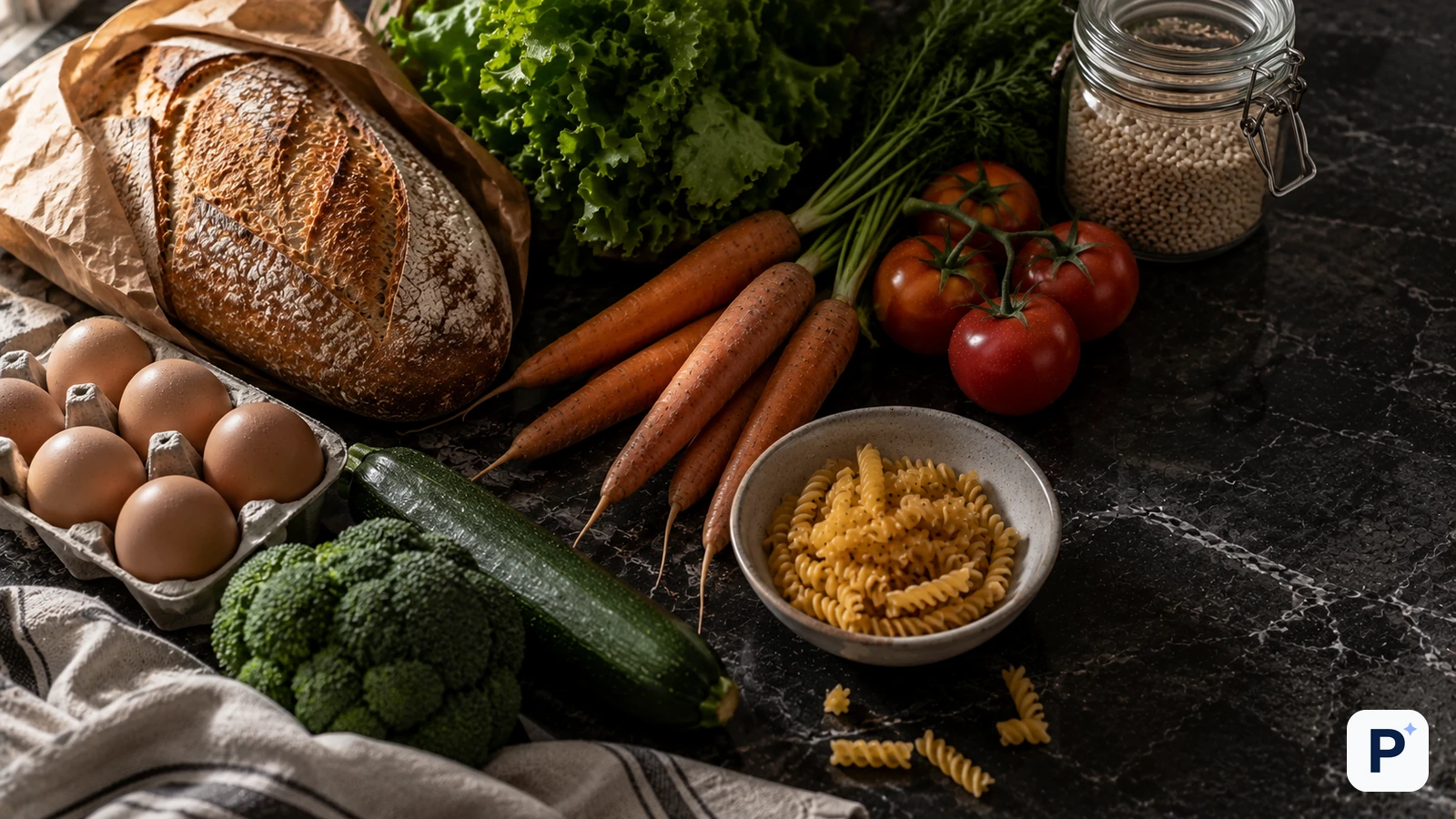
Food waste isn't spread evenly. Some groups of products end up in the bin particularly often, and that is exactly where it is easiest to find real savings.
Bread, fruit and vegetables, dairy, meat and cooked food all share one problem: we often throw them away not because they were unnecessary in the first place, but because we didn't manage to use them in time.
If you know which products need the most attention and what you can do with them before they lose quality, you can cut waste without overhauling your everyday habits.
We cover the scale of the problem in more detail in our guide How Much Food Do We Waste?
Bread
Bread loses its freshness very easily, especially when it is stored in the wrong conditions. Stale bread does not mean you have to throw it away, though. The problem only begins once mould appears.
The best solution is proper storage from the very first day, plus freezing some of the bread quickly if you know you won't eat it soon.
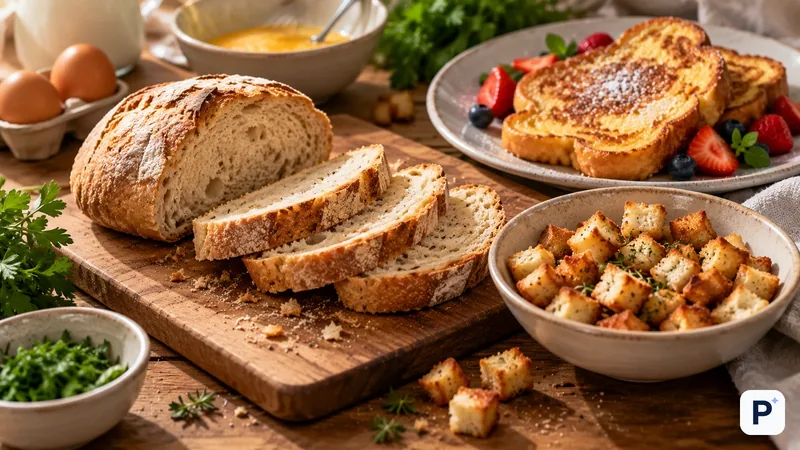
Stale but not mouldy bread can become the base for croutons, breadcrumbs, toast, bakes and other dishes.
You'll find the details in our guides How to Store Bread? and What to Do with Stale Bread?
Fruit and Vegetables
Fruit and vegetables often lose quality before we manage to use them. They wilt, go soft, dry out or start to spoil. The cause can be both buying too much and storing them incorrectly.
Not everything should go in the fridge, and some products are better stored separately. The order in which you use them matters too. Reach first for the products that are already soft or starting to lose their freshness.
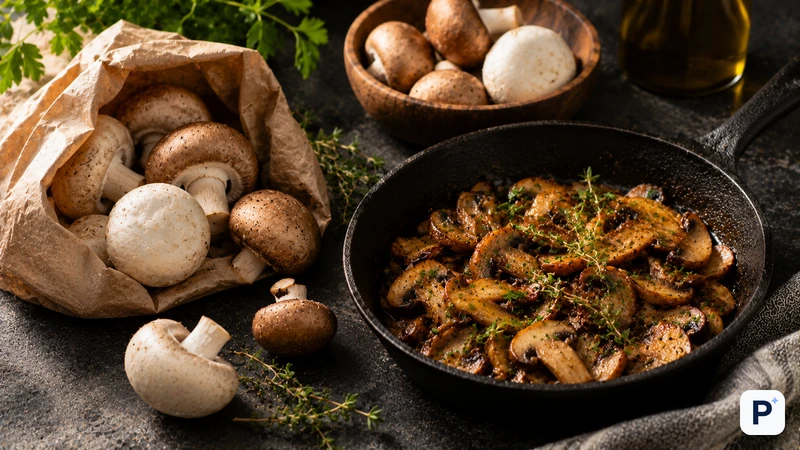
Slightly wilted vegetables, as long as they are not mouldy or slimy and don't have an unpleasant smell, can often still be used in a soup, sauce, bake or fritters. The same goes for mushrooms, which quickly turn slimy, so it is worth knowing what to do with mushrooms before they spoil.
You'll find the basics in our guide How to Store Fruit and Vegetables?
There are also separate guides on potatoes: How to Store Potatoes? and What to Do with Potatoes?, as well as courgettes: What to Do with Courgettes?
Dairy and Eggs
Yoghurt, cream, farmer's cheese (Polish twaróg) and other dairy products are easy to overlook, especially when they are tucked away at the back of the fridge. Eggs can also be forgotten if you don't get into the habit of checking your supplies regularly.
In this case, it is important to distinguish between two labels. "Use by" relates to safety, and the product should not be eaten after that date. "Best before" relates mainly to quality. A product may still be fine to eat after this date if it has been stored correctly and shows no signs of spoilage.
It is also worth planning to use products together. If a recipe calls for yolks, that doesn't mean the whites have to sit in the fridge with no plan. You can use them in another dish or freeze them.
See How to Store Dairy and Eggs?, How to Read Date Labels?, What to Do with Egg Yolks? and What to Do with Egg Whites?
Meat, Fish and Cold Cuts
These are products where it is particularly important to combine saving money with safety. It is not worth trying to "rescue" meat that already looks doubtful. It is better to plan how you'll use it, freeze it early enough, or cook it before it starts to lose quality.
Store raw meat and fish in the fridge in line with the product's requirements, ideally in a sealed container, separately from ready-to-eat food. If you don't plan to use them soon, freezing may be a better option than waiting until the last minute.
Safe thawing is also important. Don't leave meat or fish on the counter at room temperature. Safe methods include thawing in the fridge, in cold water or in the microwave, although after thawing in water or the microwave the product should be cooked straight away.
Leftover roast or boiled chicken is a separate issue. Instead of throwing away a small amount of meat, you can use it in a wrap, salad, pasta dish, bake or soup.
You'll find more information in our guides How to Store Meat, Fish and Cold Cuts?, How to Thaw Food Safely? and What to Do with Chicken?
Cooked Food and Leftovers
One of the simplest ways to cut waste is to cook the right amount of food.
The problem arises when you cook too much, put the leftovers in the fridge and have no specific plan for using them. After a few days, you no longer remember exactly when they were made, and the food ends up in the bin instead of on a plate.
A simple system helps: as soon as you've cooked, decide straight away what stays for the next meal, what can be frozen and what is worth using as an ingredient in another dish.
The point isn't to eat exactly the same dinner three times either. Cooked rice can become the base for a new dish, potatoes can be used for fritters, and meat from dinner can be added to a wrap, pasta dish or salad.
The best rule for leftovers is: change the format, don't reheat the same thing over and over.
You'll find more in our guides How Long Can You Keep Cooked Food? and What to Do with Dinner Leftovers?
Dry Goods
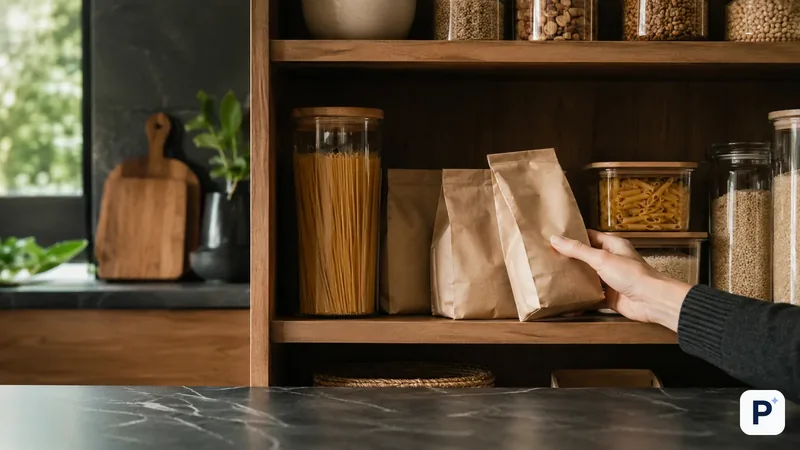
Pasta, rice, grains, flour and spices seem like products you can forget about for a long time. That is exactly why it is so easy to end up with a cupboard full of supplies that nobody uses.
Here the problem often isn't products spoiling quickly, but a lack of rotation, forgotten packets and pantry pests. New purchases go in front of the old ones, and the products at the back of the cupboard stay untouched.
It helps to store products in a dry, cool and dark place, to seal opened packets tightly, and to follow the rule "use what you already have first".
You also don't need to buy another packet just because it is on your shopping list. Check first whether you already have it at home.
You'll find more practical rules in our guide How to Store Dry Goods?
Where to Start
Don't try to fix your whole kitchen at once.
For a week, pay attention to what actually ends up in the bin. Don't just note down the products, but try to find the cause: did you buy too much, was the product stored badly, did you forget about it, or did you cook too large a portion? When cooking, a portion calculator helps, suggesting how much to prepare for a given number of people.
If you throw away bread most often, start with how you store and freeze it. If it's vegetables, check which ones regularly lose their freshness. If it's dinner leftovers, the problem may be the portion size or the lack of a plan for the next meal. Weekly meal planning helps with the last one, so you buy and cook only as much as you'll actually eat.
You can also work out how much food waste is costing you using the waste calculator. We show the yearly picture in our guide How Much Does Food Waste Cost?
The most important thing, though, is not to start with yet another to-do list.
Start with the one product you throw away most often. If you stop wasting it regularly, you've already made a concrete saving.
And once you know what you have at home, what needs using up and what you really need, it is much easier to cut back on the purchases that end up in the bin. That is exactly what PantryOS is for: it helps you keep visibility of your supplies, plan meals and build shopping lists based on what you actually need.