How to Store Strawberries and Berries to Prevent Mould
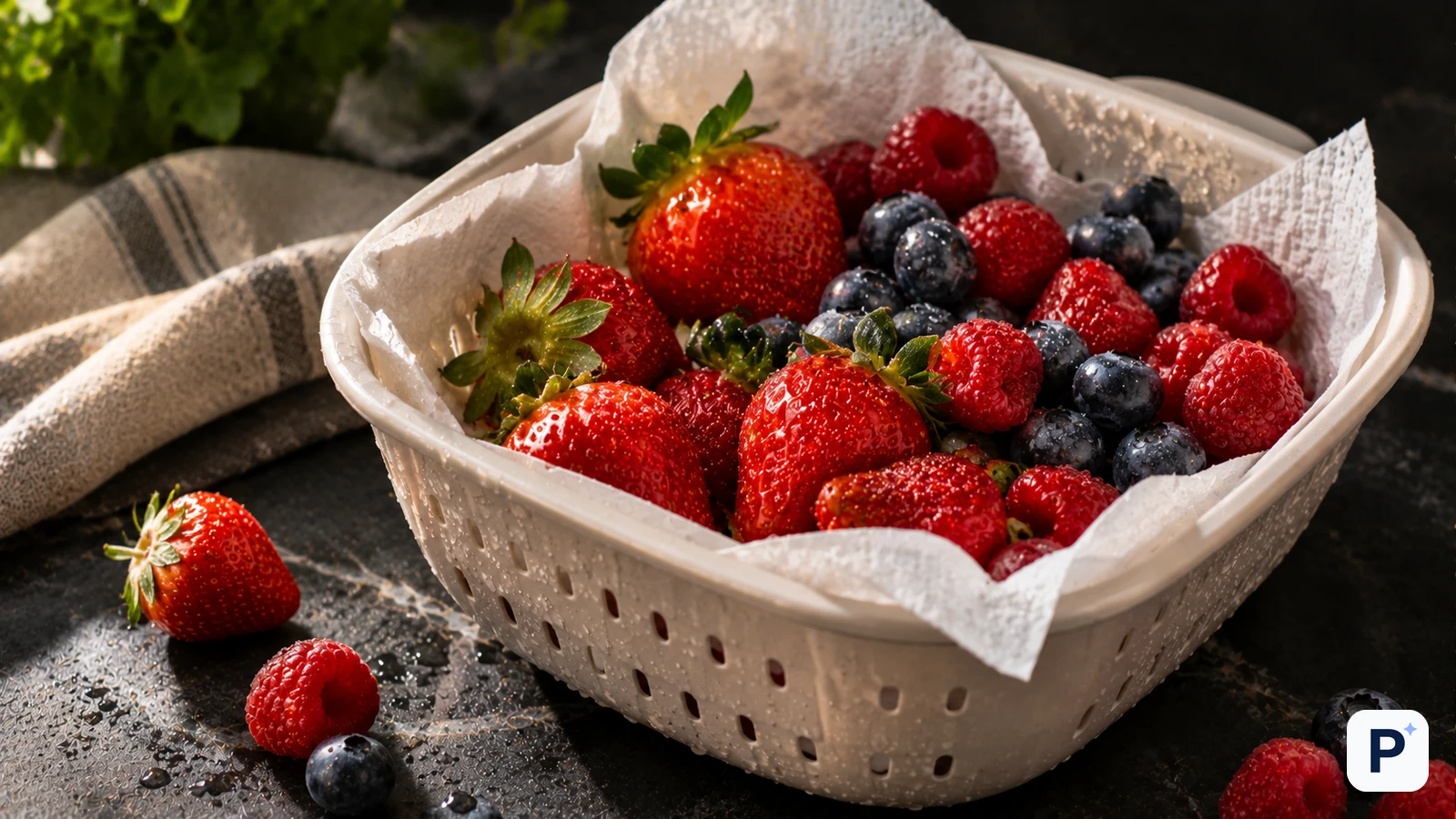
Strawberries, raspberries, blueberries and blackberries can develop mould surprisingly quickly. Sometimes just one day in the fridge is enough for a few berries to develop a white coating while the rest of the pack starts to soften. This doesn't necessarily mean you bought poor-quality fruit. Its freshness when purchased, the amount of moisture and the way you store it all make a difference.
The most important rule is simple: don't wash berries before putting them in the fridge. Remove damaged fruit, keep the berries cold and make sure they have access to air. This helps reduce the risk of mould and increases the chances of using the entire pack.
Why Do Strawberries and Other Berries Spoil So Quickly?
Berries have delicate skins, high water content and soft flesh. They are easily damaged during transport, when transferring them between containers or even when taking them out of the packaging. Even a small bruise can cause a berry to spoil more quickly.
Moisture is another problem. Wet berries, condensation inside the packaging and insufficient ventilation all encourage mould growth. When berries are packed tightly together, one damaged piece of fruit can speed up spoilage in the berries around it.
Temperature matters too. Strawberries, raspberries, blueberries and blackberries should ideally be stored in the fridge. When left on the kitchen counter, they soften more quickly, lose their firmness and become more susceptible to mould.
The Most Important Rule: Don't Wash Berries Before Storing Them
Although it's tempting to wash all your fruit as soon as you get home from the shops, it's better not to do this with strawberries and other berries. Water left on their surfaces and trapped between the fruit can speed up spoilage.
Store berries dry in the fridge and wash them only immediately before eating or using them in a recipe.
How should you wash berries? Place the portion you need in a colander and gently rinse it under cool running water. Don't leave the berries soaking in a bowl for a long time, as their soft flesh can easily absorb water and lose its firmness. It's best to wash strawberries with their green tops still attached and remove the tops only after rinsing.
Can you wash berries and put them back in the fridge? Yes, but you need to dry them very thoroughly. In practice, it's easier and safer to wash only the amount you plan to eat or use straight away.
How to Store Strawberries, Raspberries and Blueberries in the Fridge
Simply putting the entire pack in the fridge isn't always enough. It's worth taking a moment to inspect the fruit and prepare a suitable container.
- Remove damaged berries. Check the entire pack and take out any fruit with visible mould, leaking juice or significant bruising. Don't leave damaged berries together with healthy ones.
- Choose a shallow container. A container with ventilation holes works best. You can also use the original packaging if it provides adequate airflow. Avoid transferring the berries to a deep container where they will be tightly packed.
- Line the bottom with a paper towel. It helps absorb excess moisture. If the paper towel becomes wet, replace it with a dry one. However, it should not be treated as a substitute for proper ventilation.
- Arrange the berries in a single layer. Raspberries and blackberries are particularly easy to crush. If you have a large quantity, use two shallow containers rather than stacking the berries on top of each other.
- Don't seal the container completely. Berries need access to air. Use a container with ventilation holes or leave the lid slightly ajar. An airtight seal can encourage moisture to build up inside.
- Put the berries in the fridge. Ideally, store them at around 4°C or below, but don't let them freeze accidentally. Avoid taking them out of the fridge frequently and leaving them on the counter.
Vinegar Wash: Can It Help Prevent Mould?
One popular home method for keeping berries fresh for longer is soaking them in a mixture of water and vinegar. Vinegar may help reduce some microorganisms on the surface of the fruit, but this method does not guarantee a longer storage life.
If you want to try it, you can prepare a solution using one part vinegar and three parts water.
How to give berries a vinegar wash: Prepare a clean bowl, pour in the solution and briefly submerge healthy, undamaged berries. Then rinse them with clean water and dry them very thoroughly using a clean paper towel or kitchen towel. Only transfer the berries to a ventilated container and put them in the fridge once they are completely dry.
Should you use this method for all berries? Not necessarily. Raspberries and blackberries are particularly delicate and can easily be damaged during soaking. For these berries, it's safest to store them dry and wash them immediately before eating.
Remember that a vinegar wash won't fix fruit that already has mould. It also doesn't replace refrigeration or thorough drying. If the berries remain wet after washing, the result may be the opposite of what you intended.
How Long Do Strawberries and Other Berries Stay Fresh?
There isn't one storage period that applies to every pack of berries. Fruit that was recently picked and properly chilled may stay in good condition longer than berries that were already soft or damp when purchased.
Here are some approximate storage times in the fridge:
| Type of fruit | Approximate storage time |
|---|---|
| Raspberries | 1–2 days |
| Strawberries | 2–3 days |
| Blackberries | 2–3 days |
| Blueberries | 5–7 days |
These are estimates, not guarantees of safety. Check the condition of your berries every day, especially if you buy them in large packs.
Blueberries usually stay fresh longer than raspberries because they are firmer and less prone to damage. Raspberries have a very delicate structure, so it's best to plan to use them soon after buying them.
If you know you won't be able to eat the entire pack in time, don't wait until the berries start to soften. You can freeze them in advance.
How to Choose Fresh Berries When Shopping
Storage matters, but so does the condition of the fruit when it arrives in your kitchen. Even the best container won't restore the freshness of berries that were already damaged or kept in warm conditions for too long.
Check the bottom of the pack. Juice from crushed or damaged berries often collects at the bottom. A wet base, stains or pieces of fruit stuck to the packaging may indicate that spoilage has already started.
Look for firm fruit. Strawberries should be firm, brightly coloured and have fresh green tops. Blueberries should be plump, dry and free from wrinkled skin. Raspberries and blackberries should hold their shape rather than fall apart when you gently move the pack.
Avoid damp berries. Water droplets, wet patches and condensation inside the packaging may indicate that the fruit has been stored in unsuitable conditions.
Don't buy packs with visible mould. Even if mould appears on just one berry, the others may have been in direct contact with it.
Buy an amount you can realistically use. A large pack may seem like better value, but if half the fruit goes to waste, the saving is only an illusion.
Can You Freeze Strawberries and Other Berries?
Yes. Strawberries, blueberries, raspberries, blackberries and many other berries are suitable for freezing. It's a good way to use a larger pack, especially when the fruit is still fresh but you know you won't be able to eat it all in time.
Prepare the berries. Remove the green tops from strawberries, take out damaged fruit and separate any berries that have become too soft. Only use healthy fruit with no signs of mould. If you wash the berries, dry them thoroughly before freezing.
Freeze them individually first. Arrange the berries in a single layer on a tray or board lined with baking paper, making sure they don't touch each other. Place the tray in the freezer. Once the berries are firm, transfer them to a freezer-safe bag or container.
Divide them into portions. This makes it easy to take out only the amount you need for a smoothie, porridge, cake or dessert. You won't have to defrost the entire pack.
After thawing, berries may become softer and release juice. However, they are still excellent for smoothies, fruit purées, compotes, baking and porridge.
For more tips on freezing different foods, read our guide to what you can and can't freeze.
What to Do When Berries Start to Spoil
The most important thing is to distinguish between fruit that is simply very ripe and fruit that has developed mould.
If mould has appeared. Throw away the mouldy berry and any berries that were in direct contact with it. Don't cut off the mouldy part and eat the rest of the same berry. Because berries have soft flesh, mould can also develop below the surface, beyond the area where the visible coating appears.
Inspect the remaining berries carefully. If they are firm and have no mould, slime or unpleasant smell, you can rinse them immediately before eating and use them as soon as possible. If mould appears in several places, the berries are very soft or the pack is full of juice, it's safer to discard most or all of the pack.
If the berries are simply very ripe. If there is no mould, slime or other sign of spoilage, you can still use them that day. Soft strawberries work well in smoothies, purées, fruit sauces and cakes. Blueberries and raspberries can be added to porridge, pancakes or baked goods.
If you won't have time to use them. Healthy, very ripe berries can be washed, dried thoroughly and frozen. However, don't freeze mouldy fruit or berries whose condition is questionable. Freezing does not make them safe again.
Common Mistakes When Storing Strawberries and Berries
Even fresh berries can quickly lose their quality if they are put in the wrong place after shopping or prepared incorrectly for storage.
Washing the entire pack immediately after buying it. Residual moisture encourages spoilage. Wash only the portion you plan to eat or use.
Storing berries in an airtight container. A lack of ventilation encourages moisture to build up. Choose containers with holes or leave the lid slightly ajar.
Stacking berries in several tightly packed layers. The weight of the fruit on top can crush the berries underneath. Raspberries and blackberries are particularly vulnerable.
Leaving damaged berries in the pack. One mouldy or crushed strawberry can speed up spoilage in the fruit around it.
Keeping berries outside the fridge. Leaving them on the counter for too long, especially in a warm kitchen, shortens their fresh storage life.
Believing vinegar will solve every problem. A vinegar wash does not replace proper storage and won't make mouldy berries safe to eat again.
How to Reduce Berry Waste
The best way to prevent mould is to buy an appropriate quantity and decide quickly what you'll do with the fruit. You don't have to use the entire pack fresh. You can eat some with yoghurt or porridge and freeze the rest for later.
It's also worth checking the contents of your fridge regularly. Products that need to be used first should be easy to see. This helps prevent you from forgetting about berries hidden behind other groceries.
Planning your shopping and storage can help reduce waste beyond just fruit. For more practical advice, read our guide on how to build a food stockpile at home.
Strawberries and other berries are delicate, but they don't have to end up in the bin after two days. Keeping them dry, providing proper ventilation, refrigerating them and reacting quickly to the first signs of spoilage all help you get more out of every purchase.