How to Store Flour, Rice, Grains and Other Dry Goods
Flour, rice, grains, pasta, cereal and pulses seem almost indestructible. They don't wilt after three days and you don't need to make room for them in the fridge straight away, so it's easy to forget that they too have specific storage requirements.
They are also foods that are exceptionally easy to buy twice.
“I thought I was out of rice” ends with a third packet in the cupboard. You open a new bag of flour even though the previous one is sitting behind the pasta. You buy grains on special offer, only to discover two more packs once you get home.
Dry goods can sit for months, but they aren't immune to everything. Their biggest enemies are moisture, heat, light, exposure to air and pantry pests. Foods containing more natural fat, such as wholemeal flours, brown rice, nuts and seeds, also have a problem with going rancid.
That's why a good pantry isn't just about matching jars lined up on a shelf. The point is for your food to genuinely keep its quality and for you to know what you have before you buy another pack.
The Essentials: Dry, Cool and Out of the Light
Official food storage guidance recommends keeping shelf-stable foods in a cool, dry place, away from the cooker, the sink, damp cellars and anywhere exposed to large swings in temperature.
You don't, however, need to maintain a perfect 10°C in your kitchen cupboard. In an ordinary home, the most important thing is to find a spot that:
- doesn't heat up from the oven,
- isn't located above the cooker,
- isn't damp,
- isn't in full sunlight,
- has as stable a temperature as possible.
So the cupboard above the oven might look like the perfect place for flour and pasta, but if it gets very hot every time you bake, it's better to use a different one.
Moisture matters especially. Dry goods keep well partly because they contain little available water. If they start to absorb it from their surroundings, they can clump together, lose quality and, in some conditions, develop mould.
Light also speeds up the deterioration of some foods, which is why clear containers are best kept inside a closed cupboard rather than on a sunny shelf as decoration.
Do You Have to Decant Everything into Containers?
No.
If a pack is sealed as it left the factory, undamaged and stored in good conditions, it can stay in its original packaging.
Once opened, the situation changes. A paper flour bag or a thin bag of grains often won't reseal tightly and offers poor protection against moisture and pests.
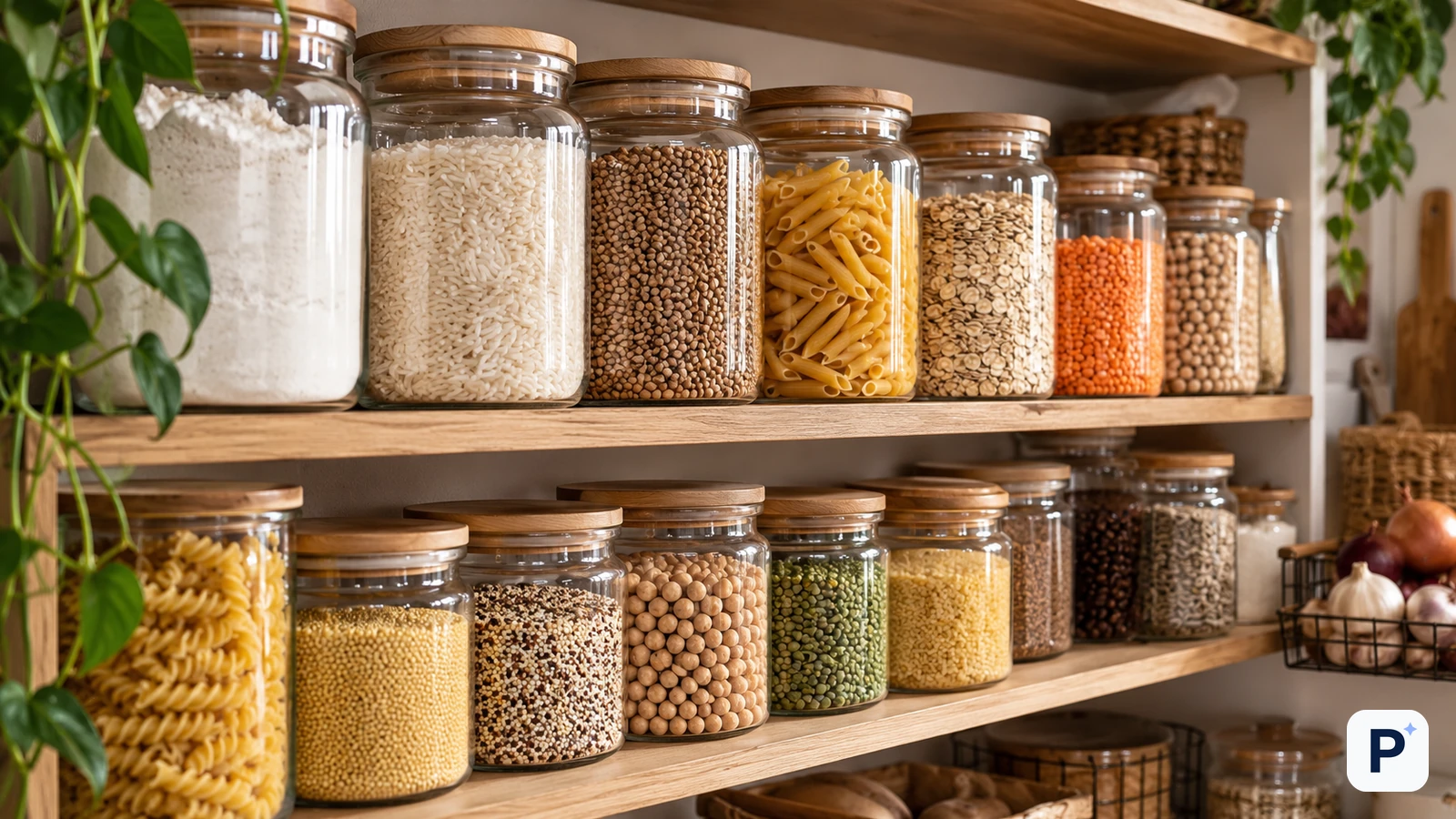
You then have two good options. You can decant the food into a clean, dry, airtight container. Or you can put the whole original pack inside a larger sealable container.
The second method even has one advantage: you don't lose the manufacturer's label, the batch number, the storage instructions or the “best before” date.
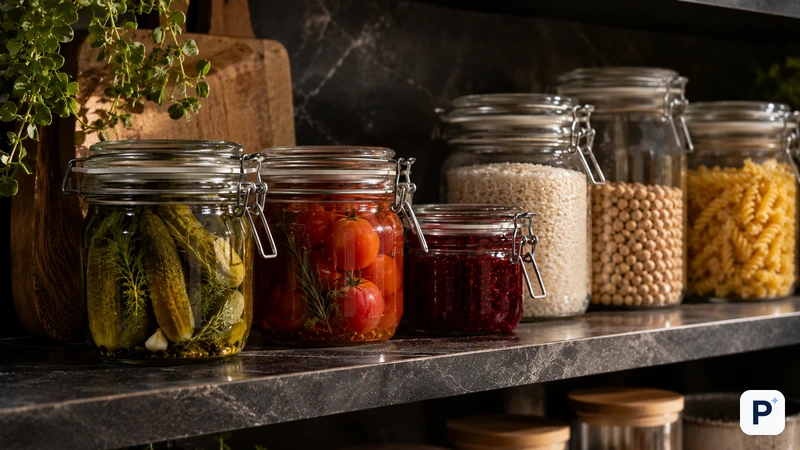
Food storage guidance recommends airtight containers made of glass, metal or sturdy plastic for dry goods. Thin bags don't form as good a barrier against insects.
Clear Containers Are Convenient, but Not Because They're “Healthier”
Glass and suitable food-grade containers work well. There's no need, though, to build a hierarchy in which glass is always right and plastic always worse. What matters most is:
- an airtight seal,
- cleanliness,
- dryness,
- a material intended for contact with food.
A clear container has a big practical advantage: you can see how much is left. You don't have to open five jars before you go shopping. You can see at a glance that the pasta is running low but there's half a container of rice left.
There's just one condition. If the container lets light through, tuck it away in a cupboard.
Pantry Moths Can Come Home with the Shopping
Pantry moths and other stored-product pests aren't automatically a sign of a dirty kitchen. The problem can begin before the food even reaches your home. Guidance on pantry pests notes that dry goods can become infested at various stages of distribution, and that pests may already be present in the packs you bring back from the shop.
It isn't only flour and grains that are affected. Pests can also turn up in:
- rice,
- pasta,
- cereal,
- nuts,
- seeds,
- dried beans,
- spices,
- dried foods,
- chocolate,
- tea,
- and even pet food.
Worse still, some insects can get through thin cardboard, plastic film or gaps in packaging. That's why sealable containers aren't just a matter of how tidy your pantry looks. They limit the chance of an infestation spreading from one pack to the next.
How to Spot Moths or Other Pests
Keep an eye out for:
- tiny larvae,
- fine webbing inside the food,
- compacted lumps held together by delicate threads,
- small beetles,
- little holes in the packaging,
- moths flying around the cupboards,
- larvae appearing on the walls or ceiling.
If you spot a single moth, it doesn't automatically mean you have to throw out the whole pantry. You do, however, need to find the source.
Take out all the vulnerable foods and inspect them closely. Check sealed packs as well. Pantry pest guidance points out that pests can also be present in apparently unopened packaging.
Foods that are clearly infested are best thrown away. Then vacuum the shelves, crevices and corners thoroughly. Clear away any spilt flour, grains and crumbs.
There's no need, on the other hand, to spray the inside of the cupboard with a household insecticide. Guidance does not recommend insecticides as a solution to the problem in food cupboards. The most important thing is to find and remove the source.
What About the Trick of Putting Flour in the Freezer?
There's something to it, but it's worth doing properly.
Guidance suggests that a food you're unsure about can be placed in the freezer at around minus 18°C for at least 4 days. This kills eggs and insects. More conservative guidance gives a range of 4–7 days.
I wouldn't limit this to 48–72 hours. Nor would I quarantine every packet of pasta brought home from the shop as a matter of course. It makes the most sense:
- when you've had a problem with moths before,
- when buying foods loose,
- with larger stocks intended for long-term storage,
- when a food looks suspicious but there's no clear infestation visible yet.
If you can already see larvae, webbing and insect droppings, freezing won't make the contaminated food appetising again. In that case, the simplest thing is to throw it away.
After Freezing, Don't Open the Pack Straight Away
This is a very important detail.
If you take cold flour out of the freezer and immediately open the pack in a warm kitchen, moisture can start to condense on it. And moisture is exactly what we want to avoid with dry goods.
So after taking it out, leave the container sealed until the food reaches room temperature. Only then should you open it.
The same rule applies to flour, nuts, seeds and other foods kept in the cold.
How Long Can You Store Dry Goods?
I wouldn't create a single table suggesting that millet is good for exactly eight months and no longer come the ninth. With dry goods, the periods quoted relate above all to best quality, and the specific conditions and composition make a big difference. As a rough point of reference, you can assume:
| Food | Approximate time at good quality | Worth knowing |
|---|---|---|
| White flour | about 1 year | Keep it airtight, dry and away from strong smells |
| Wholemeal flour | noticeably less than white | Its natural oils go rancid faster; cold prolongs quality |
| Dry white rice | about 2 years | Very long-lasting when stored dry and airtight |
| Brown rice | less than white | The bran layer contains more fat |
| Dried pasta | about 2 years | The main problems are moisture and pests |
| Cereal and dry breakfast foods | usually a few months | For some products, guidance gives 6–12 months before opening and less once opened |
| Groats and other grains | depending on the type | The more natural fat, the faster quality declines |
| Dried pulses | very long-lasting | Over time they may need longer cooking |
| Nuts, kernels and seeds | less than typical grains | A high fat content means a greater risk of going rancid |
| Sugar and salt | very long-lasting | The biggest problem is moisture and clumping |
Guidance gives about 2 years for dry rice and pasta, and around a year for white flour stored in an airtight container at room temperature.
For cereal and similar products, guidance indicates roughly 6–12 months for unopened packs and about 3 months once opened.
Most important, though: if the manufacturer gives a specific date and storage method, start with the information on the packaging.
The More Fat, the Shorter the Shelf Life
This is a very good rule to remember. White flour has had much of the germ and bran removed. Wholemeal flour contains more natural oils. It's the same with white and brown rice. The same group includes:
- nuts,
- kernels,
- seeds,
- some nut and seed flours,
- wholegrain products.
Over time, fat can oxidise and go rancid, particularly when exposed to heat, oxygen and light. Some guidance even recommends keeping wholemeal flour in the fridge all year round, and cold can also noticeably prolong the quality of other fat-rich foods.
So a kilogram of nuts bought on special offer shouldn't necessarily sit next to the pasta for the next six months. If you know you'll use them slowly, the fridge or freezer may be a better place.
“Best Before” Doesn't Mean “Throw It Out the Next Day”
Most typical dry goods carry a best before date, that is, a “best before” or “best before end” label.
The Food Standards Agency explains that it marks the date up to which a properly stored food keeps its particular qualities. After it has passed, the food may still be fit to eat, provided it has been stored correctly and shows no signs of deterioration.
This matters especially in the pantry. A packet of dried pasta doesn't automatically become unsafe the day after its best before date. With a food like this, you check:
- whether the packaging was airtight,
- whether any moisture got in,
- whether there's any mould,
- whether there are any pests,
- whether the smell is normal,
- whether the food has clearly changed in character.
You'll find more about this distinction in our guide to how to read date labels.
Sugar and Salt Are Special Cases
An interesting point: under UK food labelling rules, table salt and sugar in solid form are among the foods that don't require a best before date.
That doesn't mean you can store them in any conditions you like. Moisture can cause sugar and salt to clump, and contamination can make them unusable.
But with proper dry storage, they are among the longest-lasting foods in the pantry.
Don't Mindlessly Top Up an Old Pack with a New One
You have a handful of rice at the bottom of the container, so you buy a new pack and tip it in on top. A week later you do the same. After a few months, part of the first purchase may still be sitting at the bottom.
This makes rotation harder and means you lose track of the dates. An even more serious problem arises when the old batch had moisture or the beginnings of an infestation. By topping it up with a new pack, you immediately combine the two stocks.
That's why it's best to use up the old batch first. Empty the container, wash it and dry it very thoroughly. Only then add the new one. Don't pour or tip a dry food into a container that is still damp after washing.
Keep the Date from the Packaging
After decanting flour into an identical glass container, it's very easy to lose track of where it came from and until when the manufacturer guaranteed its best quality. So you can:
- cut out the part of the label with the date,
- take a photo of the packaging,
- write the name and date on the container,
- or enter the date into an inventory system.
It isn't enough to write just: “flour, decanted 7 September”. If the flour had already been sitting in its packaging for eight months, the decanting date doesn't tell you how old the food really is.
A better note is: wheat flour, best before 03.2027.
What's Worth Keeping in the Fridge or Freezer
Most rice, pasta and white flour doesn't need the fridge. Cold makes the most sense for foods containing more fat. For example:
- wholemeal flours,
- nuts,
- kernels,
- seeds,
- some speciality flours.
Guidance points out that wholemeal flour contains natural oils that can go rancid quickly at room temperature, and recommends cold storage.
Keep foods in the fridge and freezer airtight too. Flour absorbs smells very easily. And after taking something out of the freezer, always let the sealed pack come up to room temperature first. Only then open it.
Rotation Works in the Pantry Just as It Does in the Fridge
The simplest rule is: use up what you bought earlier first.
Put new pasta behind the older pasta. New flour behind the opened bag. Don't open a second packet of grains until the first one is used up.
To prevent pest problems, guidance recommends exactly this: using the oldest foods first and opened packs before sealed ones.
The same rule also cuts waste. Because the problem usually isn't a single packet of pasta bought one too many. The problem is five such small surpluses spread across the whole pantry.
You'll find more about this kind of system in our guide to how to organise your fridge and pantry.
Before You Buy More, Check Not Just “Do I Have It?” but “How Much Do I Have?”
With fresh fish it's easy to notice the problem, because you know you have to use it quickly. Rice can sit at the back of the cupboard for months. That's exactly why dry goods are so easy to buy over and over again. We describe how to build a sensible base of foods that you actually use in our guide to what to keep in your pantry.
You have one opened pack of rice. A second one sealed. A bit of rice in a container. But while you're shopping, all you remember is: “I think I'm running low”. And you buy a fourth.
PantryOS helps you keep track of your pantry contents alongside the rest of your household supplies. That way, before you go to the shop, you can check not only whether you have pasta, flour or grains, but also how much is left and whether you really need to buy more. It's especially useful for shared shopping, when several people draw on the same supplies.
The Key Rules in Brief
- Keep dry goods somewhere cool, dry and dark.
- Don't place them near the oven, the cooker or in a damp cupboard.
- Once opened, protect the food well from air, moisture and insects.
- You don't have to decant everything. The original pack can sit inside an airtight container.
- If you use clear jars, keep them out of direct light.
- Check your foods regularly for webbing, larvae and insects.
- If you suspect pests, cold can be effective, but use at least about 4 days in the freezer, not just a day or two.
- Don't mix an old batch of a food with a new one without emptying and drying the container.
- Consider keeping wholemeal flours, nuts and seeds in the cold.
- And don't automatically throw out a dry food the day after its “best before” date.
A Pantry Works Best When You Know What's in It
You can have perfect containers and perfectly dry shelves and still waste food because of the simplest problem: you can't remember what you've already bought.