How to Save Food Before It Spoils
Most food doesn't end up in the bin because it suddenly went off. More often, we simply notice it too late. The bananas have turned deeply brown, the yoghurt has been sitting in the fridge for a few days, the vegetables have wilted at the bottom of the drawer, and half a loaf of bread is still waiting its turn.
Yet often it is enough to act a day or two earlier. To freeze something, cook a dish that uses it up, turn it into a sauce or prepare portions for later.
That moment is the most important one: the product is still good, but you know you might not use it up soon.
This isn't about checking whether food has already gone off. We cover how to spot the signs of spoilage separately in our guide to how to tell if food has gone off. Nor is it about cooking with ready-made leftovers. It is about acting one step earlier: you notice the problem and do something before the food ends up in the bin.
Rule Number One: Act Before It's Too Late
The biggest difference comes not from knowing dozens of tricks, but from the moment at which you use them.
If you know you won't eat a whole loaf this week, freeze part of it now. If the bananas are already very ripe, don't wait until they go completely soft. If you know you won't use the meat in time, plan to freeze it in line with the information on the packaging.
A simple rule helps: don't just ask "what do I have in the fridge?", but also "what do I need to use up first?".
In practice, it is worth creating a small "eat me first" zone in the fridge. Put products with a shorter date at the front and tuck new purchases behind them. That way, older products don't disappear behind the new ones for weeks.
Every few days, a quick look through the fridge and pantry is enough too. You don't need a big clear-out. Just check what should be used up over the next few days.
Ripe Bananas: Freeze Them or Turn Them into Something Sweet
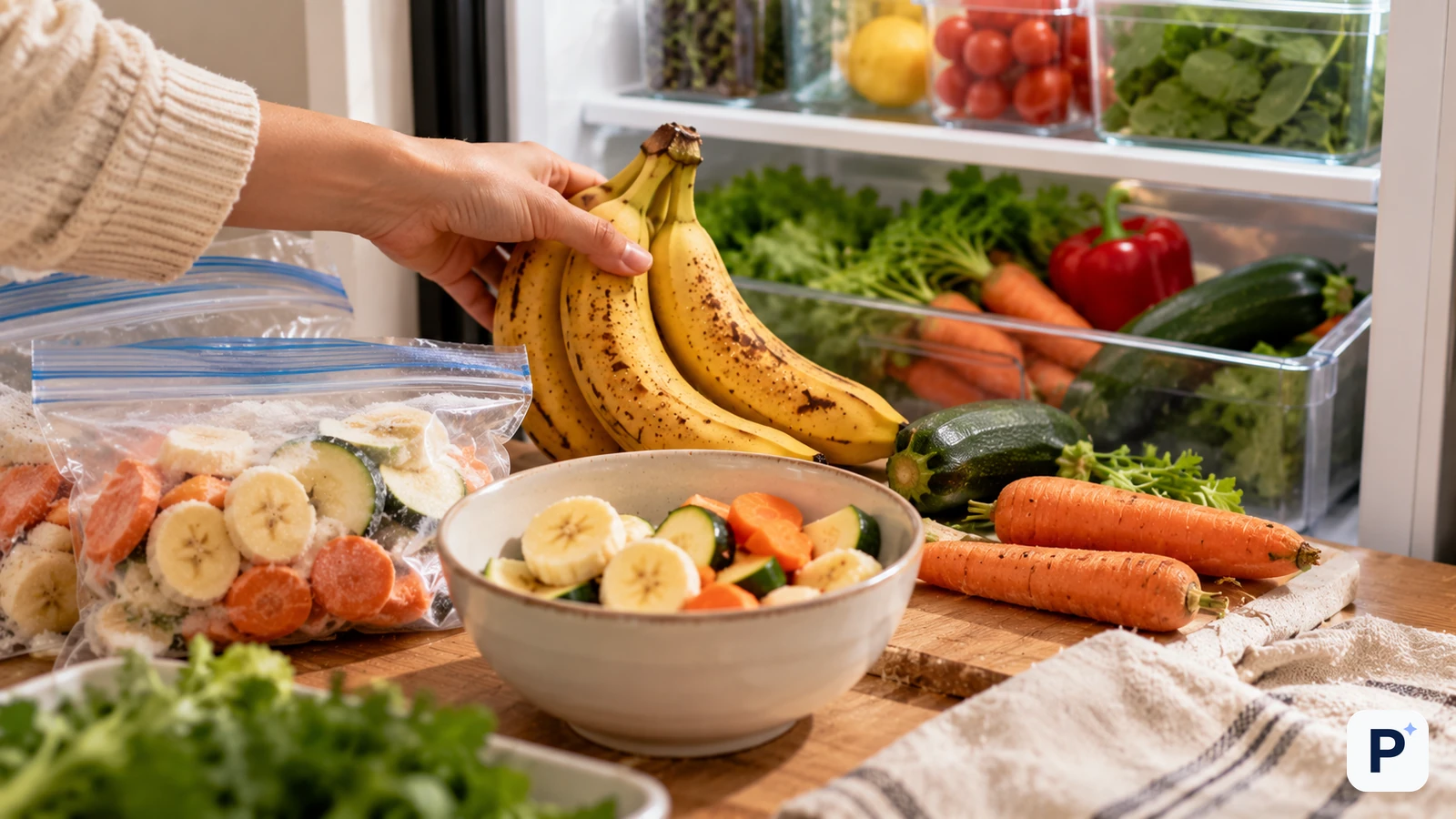
Bananas ripen quickly, especially when they sit in a warm kitchen. When the skin starts to turn deeply brown but the flesh is still fine, it is a good moment to act.
The simplest method is freezing. Peel the bananas, cut them into pieces and put them in a container or freezer bag. Later, you can use them in a smoothie, porridge, fritters or homemade banana ice cream.
You can also freeze a banana in its skin. After thawing, the skin will be very dark and soft, but it comes off easily. It is more convenient, though, to peel and divide the fruit beforehand.
Very ripe bananas are also excellent for baking. They are sweeter and softer, so they work well in:
- banana bread,
- fritters,
- muffins,
- pancakes,
- porridge,
- smoothies.
If the bananas are only just starting to ripen, you can also slow the pace of ripening by separating them from one another and limiting the contact of their stems with air. The popular trick of wrapping the stems in cling film may slow ripening a little, but it is not a way to keep bananas for many extra days.
Soft Tomatoes and Vegetables That Lose Their Firmness
Not every vegetable has to be perfectly firm to be worth eating.
If a tomato is soft but has no mould, no unpleasant smell and no slimy, disintegrating surface, you can use it where texture doesn't matter much.
Soft tomatoes work well as a base for:
- tomato sauce,
- soup,
- shakshuka,
- pasta sauce,
- a vegetable stew.
You can use vegetables that are starting to wilt in the same way. Carrots, celery, leeks and peppers don't have to be thrown away just because they have lost some of their firmness. You can add them to a soup, sauce, stock or braised dish.
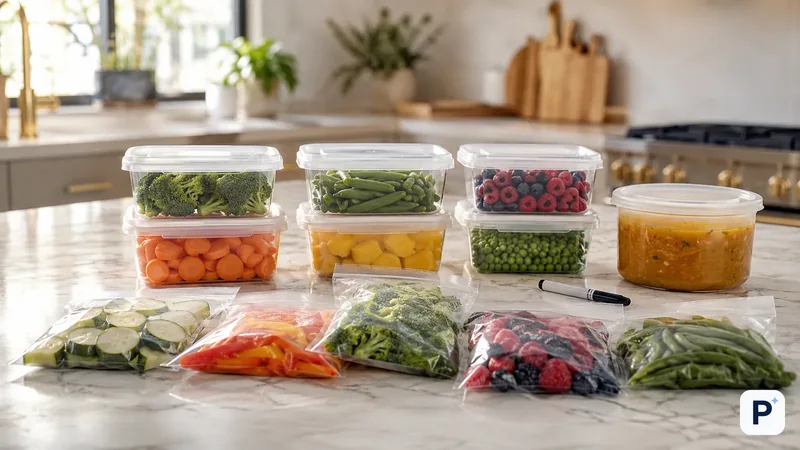
For vegetables you plan to freeze later, it is often worth blanching them first. This means briefly exposing them to boiling water and then cooling them quickly. It helps preserve the quality of some vegetables while they are stored in the freezer.
Not all vegetables need the same treatment, though, so when freezing it is worth following the rules for the specific product.
What About Wilted Herbs?
Herbs, too, can often be saved before they lose their quality completely.
If they are only wilted, you can try to revive them by trimming the ends of the stems and standing them in a small amount of water. Some herbs also keep well in the fridge, loosely covered.
If you know you won't manage to use them, chop them and freeze them. You can transfer them to an ice cube tray and top them up with a little olive oil or water, depending on how you plan to use them. These portions are easy to use later in a sauce, soup or pan-fried dish.
Dairy Close to Its Date: Plan How to Use It First
With dairy, you need above all to distinguish the type of date label and the condition of the product.
If the packaging says "use by", this is a date related to safety. After it has passed, the product should not be eaten. So it isn't worth planning to "save" such a product after its date.
If the product is still within its date and has been stored correctly, you can plan to use it earlier.
You can use yoghurt in:
- fritters,
- muffins,
- cake,
- a smoothie,
- a sauce,
- a dip.
Cream works well in a soup, sauce or baked goods.
You can use milk for pancakes, custard, porridge or cake. It can also be frozen, although after thawing it may change texture and separate. Once thawed, it needs to be stirred or shaken well. It may be less pleasant to drink, but it is often still fine for cooking or baking.
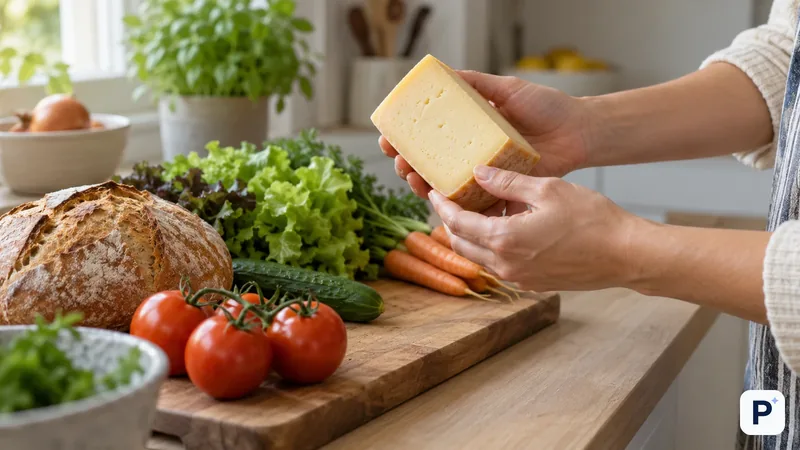
Hard cheeses are far more forgiving when it comes to freezing. If they start to dry out, you can grate them and use them in a bake, pasta dish, pizza or sauce. Grated hard cheese can also be frozen in portions.
Yoghurt, cream and some soft cheeses, on the other hand, can change texture noticeably after thawing. So if you know you'll use them up over the next few days, it is often better to use them straight away in a particular dish than to freeze them.
Bread: Freeze It Before It Starts to Go Stale
Bread is one of those products that are very easy to save ahead of time.
If you know you won't eat a whole loaf, don't wait until it starts to go stale. Slice it and freeze it in portions. That way, you can later take out only as much as you need. The slices can then be used for toast or simply reheated.
If the bread has already gone stale but still has no mould, it doesn't have to end up in the bin either. You can make croutons, French toast, breadcrumbs, a bake or another dish from it. You'll find more ideas in our article on what to do with stale bread.
The most important rule, though, is simple: stale bread can be used, mouldy bread cannot. It isn't enough to cut off the part with visible mould, because its invisible structures may reach deeper into the product.
Meat and Fish: Don't Leave It to the Last Minute
Meat and fish call for more caution than most of the products described above.
If the product has been stored correctly and is still within its date, but you know you won't manage to use it, plan to cook or freeze it in line with the manufacturer's information. It is best not to wait until the last minute.
You can:
- freeze the product early enough, if the packaging and its condition allow,
- or cook it earlier and then store the finished dish in line with the rules for storing cooked food.
It is worth remembering that freezing does not reverse the process of spoilage. The freezer halts the growth of many microorganisms, but it does not make a product that has already been stored incorrectly, or that raises doubts, safe.
So don't treat the freezer as a way of rescuing meat or fish that are already on the verge of going off. You'll find more information in our guide to how to defrost food safely.
Got a Little Cooked Vegetable Left Over? Don't Wait for a Better Moment
Food is often wasted not because there is a lot of it, but because a small portion is left over that nobody knows what to do with.
A few spoonfuls of cooked vegetables can go into:
- an omelette,
- scrambled eggs,
- a sauce,
- a soup,
- a bake,
- a filling,
- a one-pan dish.
A few spoonfuls of rice can become the base for a quick fried rice. Cooked potatoes can be used for potato dumplings, fritters or a bake. Pasta can be combined with a sauce, vegetables and cheese.
It is exactly these small amounts that are worth using straight away rather than putting off until later. The longer they sit in the fridge, the greater the chance you'll forget about them.
What to Freeze and What Is Better Not to Freeze?
Freezing is one of the best ways to cut food waste, but not every product keeps the same quality after thawing.
Foods that freeze well include:
- fruit,
- bread,
- meat and fish, if they are fresh and properly packaged,
- soups,
- sauces,
- some prepared meals,
- most vegetables once properly prepared,
- grated hard cheese.
Products with a high water content, or emulsions and dairy products whose structure changes during freezing, may fare less well. This applies to lettuce, fresh cucumber and radishes meant to be eaten raw, as well as some yoghurts, creams and soft cheeses.
This doesn't automatically mean that such a product is unsafe after thawing, though. The problem is mainly texture and quality.
So before freezing, ask yourself one question: once it's thawed, will I still want to use this product?
If the answer is "yes", freezing makes sense. If the product will be unappetising after thawing, it is better to use it now in a cooked or baked dish. You'll find the full rules in our guide to what you can and can't freeze.
Products You Don't Need to Save by Freezing
Sometimes the best way to cut waste isn't the freezer, but using the product up quickly.
You can add yoghurt to a cake. Soft tomatoes to a sauce. Wilted carrots to a soup. Herbs to a sauce. Hard cheese to a bake. Ripe bananas to fritters.
This is an important rule, because freezing shouldn't be the automatic solution for every product. If you know you can eat or cook something today, that is often simpler than freezing it, labelling the container and remembering its contents later.
Don't Wait Until a Product Looks Bad
The biggest mistake in cutting food waste is very simple: we only react once a product starts to look spoiled. Yet the best moment to act is earlier. For an overview of what gets wasted most often and what to do about it, see our guide to the most commonly wasted foods and how to save them.
- Bananas already very ripe? Freeze them.
- Won't eat a whole loaf? Freeze part of it.
- Vegetables starting to wilt? Add them to a soup or sauce.
- Know you won't use the meat in time? Plan to cook it or freeze it early enough.
- Opened dairy you won't manage to eat? Work it into your next meal.
These are small decisions, but they are exactly what builds a system that cuts down on throwing food away.
The Best Rescue Is Noticing a Product in Time
All these methods have one thing in common: you need to know what needs using up in the first place. If a product has been at the back of the fridge for two weeks, even the best rescue recipe won't help much.
That is why it is worth doing a quick review every few days. It isn't about a big tidy-up. It is enough to check what needs eating first and decide straight away: use it now, freeze it or plan a particular meal.
This is exactly where PantryOS can help. In the app, you can keep information about the products you have at home, and with the Premium version use reminders about approaching dates. That way, a product doesn't have to wait at the bottom of the fridge until you happen to remember it.
Because the cheapest way to cut food waste is very simple: notice it a day earlier, not a day too late.