How Much Pasta Per Person? Dry and Cooked Pasta Portions
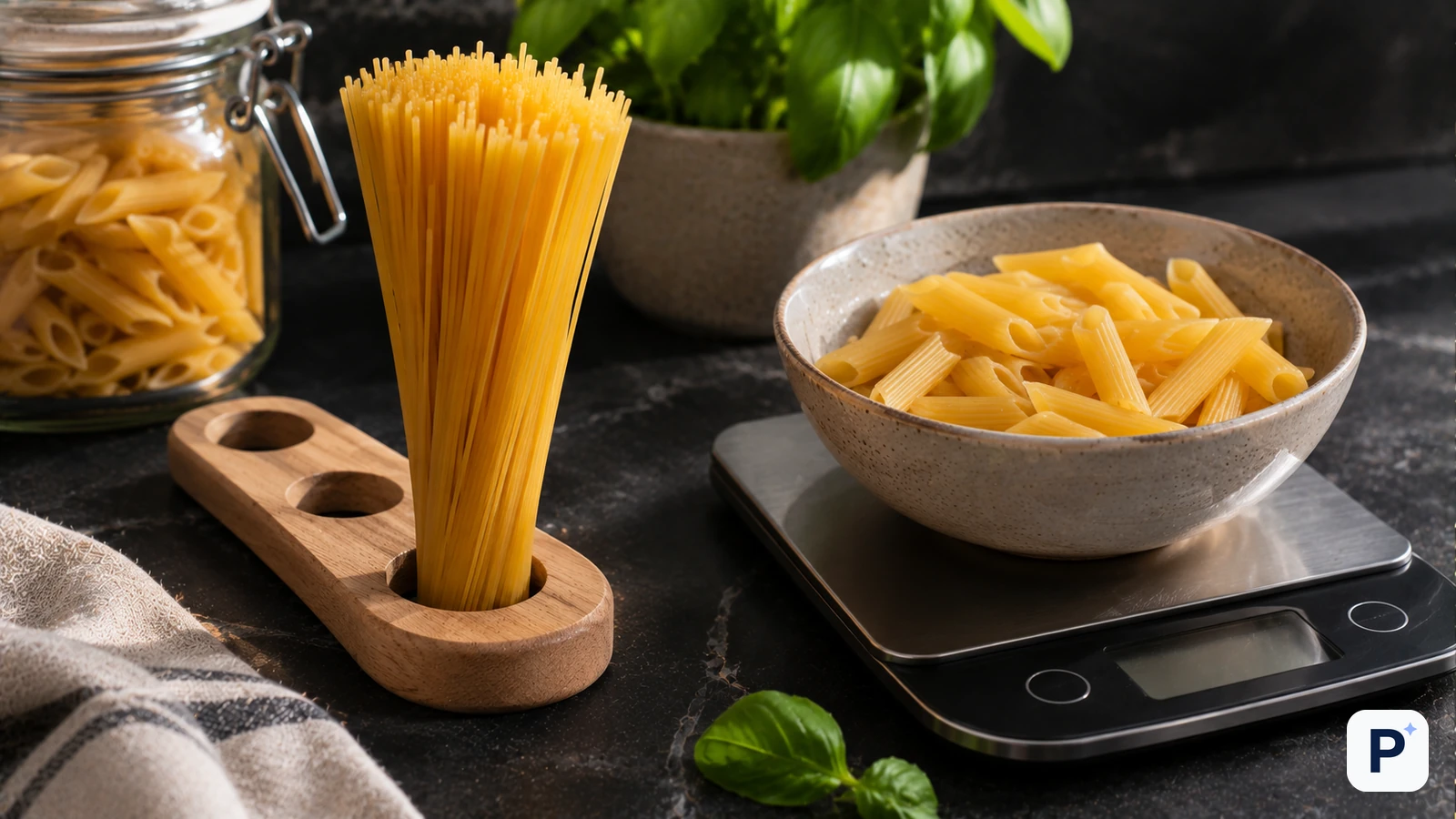
How much pasta should you cook for dinner so everyone gets the right portion without leaving half a pot for the next day? A good rule of thumb is 80–100 g of dry pasta per person for a main course. Around 90 g is a useful starting point, which usually gives you approximately 200 g of cooked pasta.
The right amount depends on the type of meal, your household's appetite and the other ingredients. A dish with a rich sauce and meat calls for a different portion than a pasta salad, while soup requires much less.
If you want to calculate ingredient quantities for a specific number of people, use the portion calculator. Below, you'll also find practical portion sizes, a dry-to-cooked pasta conversion chart and tips for measuring pasta without kitchen scales.
How Much Pasta Should You Cook Per Person?
For a standard main course, allow 80–100 g of dry pasta per person. Around 90 g is usually enough. Once cooked, this portion typically weighs approximately 180–225 g, depending on the type of pasta and how long it is cooked.
Here are some general guidelines for dry pasta portions:
Main course: 80–100 g per person. This is a standard portion when pasta is the main part of the meal and is served with sauce, vegetables, meat or other additions.
Pasta as a side dish: 50–70 g per person. This is usually enough when pasta is just one part of the meal, served alongside meat and vegetables, for example.
Pasta for soup: 20–30 g per person. Pasta is an addition to the soup, so you don't need as much as you would for a main course.
Pasta salad: 50–70 g per person when the pasta is combined with vegetables, cheese, eggs or other ingredients. If the salad is meant to be a filling main meal, you can increase the portion to around 80 g.
A child's portion: approximately 40–70 g of dry pasta. Younger children usually need less, while older children may eat portions closer to those of adults. Adjust the amount to the child's age, appetite and the other ingredients in the meal.
These amounts are guidelines rather than strict rules. If you're making pasta with a rich sauce, plenty of vegetables or a source of protein, a smaller pasta portion may be enough.
Dry or Cooked Pasta? How to Convert Portions
The weight shown on a pasta package refers to the dry product. During cooking, pasta absorbs water, increasing both its volume and weight. That's why 90 g of dry pasta does not mean 90 g on your plate.
As a general rule, cooked pasta weighs around 2–2.5 times as much as dry pasta. The exact result depends on its shape, ingredients, cooking time and how much water it absorbs.
Here's an approximate conversion chart:
| Dry pasta | Approximate weight after cooking |
|---|---|
| 50 g | 100–125 g |
| 80 g | 160–200 g |
| 90 g | 180–225 g |
| 100 g | 200–250 g |
| 150 g | 300–375 g |
| 200 g | 400–500 g |
If a recipe calls for 200 g of cooked pasta, you'll need approximately 80–100 g of dry pasta. If you measure out 200 g of dry pasta instead, you'll end up with around 400–500 g once it's cooked.
Keep in mind that these figures are approximate. Pasta cooked al dente may weigh less than pasta cooked for longer, and different shapes and varieties do not always absorb the same amount of water.
How Much Pasta Do You Need for 2, 3 or 4 People?
If you use a standard portion of 90 g of dry pasta per person, it's easy to calculate how much you need for a meal shared by several people.
| Number of people | Dry pasta | Approximate weight after cooking |
|---|---|---|
| 1 | 90 g | 180–225 g |
| 2 | 180 g | 360–450 g |
| 3 | 270 g | 540–675 g |
| 4 | 360 g | 720–900 g |
| 5 | 450 g | 900–1,125 g |
| 6 | 540 g | 1,080–1,350 g |
If people in your household eat smaller portions, you can allow 80 g per person. For bigger appetites or dishes where pasta is the main ingredient, increase the amount to 100 g.
Example for two people. Prepare around 180 g of dry pasta for dinner. If you're serving it with plenty of sauce, meat and vegetables, you could start with 160 g instead.
Example for four people. A standard amount is around 360 g of dry pasta. For smaller portions, 320 g should be enough, while bigger appetites may call for 400 g.
How Much Pasta Should You Use for Different Dishes?
Not every dish needs the same amount of pasta. Consider whether pasta will be the main ingredient or just one part of a meal with several other components.
Pasta with sauce. Allow 80–100 g of dry pasta per person. If the sauce contains meat, vegetables, cheese or legumes, a portion closer to 80 g may be enough.
Pasta for soup. Use 20–30 g of dry pasta per person. For a thick soup with plenty of vegetables, you can use the smaller amount.
Pasta salad. Allow 50–70 g of dry pasta per person. If the salad is replacing a full meal, increase the portion and consider additions such as eggs, cheese, chicken or beans.
Baked pasta casserole. Usually, 70–90 g of dry pasta per person is enough. A casserole also contains other ingredients, such as sauce, vegetables, meat and cheese, so pasta does not need to make up the entire meal.
Pasta as a side dish. If you're serving it with meat, fish or a generous portion of vegetables, 50–70 g of dry pasta per person should be sufficient.
How to Measure Pasta Without Scales
Don't have kitchen scales? You can estimate a pasta portion using a glass, a spaghetti measurer or a handful. However, these methods are less accurate. The result depends on the pasta shape, the size of the container and how the pasta is measured.
A 250 ml glass. For short, dry pasta, one glass may hold approximately 90–110 g. This is only a rough estimate. Penne, fusilli, shells and small tubes can vary in volume.
A spaghetti measurer. This is one of the most convenient options if you often cook long pasta. The holes in the measuring tool help you measure portions for a specific number of people. Check the markings on your particular measurer, as sizes can vary between products.
A handful of pasta. One full adult handful of short pasta is approximately 30–40 g, although this is only a rough estimate. A standard portion will therefore usually require two to three handfuls. Hand size and the way you scoop the pasta can make a significant difference.
A packet of pasta. If you have a 500 g packet and are preparing dinner for four people, you can use a little over two-thirds of the packet, assuming standard portions of 90 g per person.
If you want to measure portions consistently, weigh the amount you usually cook once and see how it looks in your favourite glass or measuring tool. It will be easier to estimate the same quantity without scales next time.
How to Avoid Cooking Too Much Pasta
The most common reason for cooking too much pasta is measuring it by eye. Dry pasta takes up much less space than cooked pasta, so it's easy to put more into the pot than you actually need.
Calculate portions before cooking. Multiply the number of people by your chosen portion size. If you're cooking for three adults and allow 90 g per person, prepare 270 g of dry pasta.
Take the other ingredients into account. A generous amount of sauce, meat, vegetables or cheese may mean that a smaller pasta portion is enough. You don't always need to use the maximum recommended amount.
Consider the type of meal. Soup and pasta salad don't require as much pasta as a traditional main course. Decide what you're making first, then measure out the ingredients.
Use a portion calculator. Instead of calculating quantities from scratch every time, try the portion calculator. It's a simple way to adjust ingredient quantities to the number of people and reduce food waste.
Plan your next meals. If you buy pasta in larger packets, include it in your meal plan for the next few days. Our guide to weekly meal planning explains how to match your shopping to your household's actual needs.
What to Do If You Have Too Much Cooked Pasta Left Over
If you end up cooking too much pasta despite measuring your portions, you don't have to throw it away. You can use it the next day to make a completely different meal.
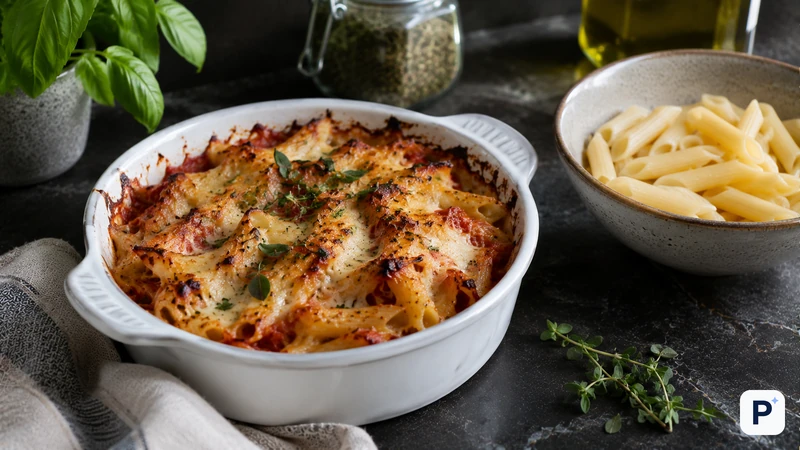
Pasta casserole. Combine the pasta with sauce, vegetables and cheese, then bake it in the oven.
Pasta salad. Add fresh vegetables, eggs, cheese or chicken to make a quick cold meal.
Pan-fried pasta. Fry it with vegetables, eggs or pieces of meat. A little oil and a splash of water or sauce are enough to freshen up the leftovers.
An addition to soup. Cooked pasta can be added to tomato soup, chicken broth or vegetable soup.
Remember to store leftovers properly. Cool cooked pasta quickly, transfer it to an airtight container and refrigerate it. It's best to use it within 48 hours. For more ideas, read our guide on what to do with leftover cooked pasta.
The right pasta portion mainly depends on the type of meal and your household's appetite. For a standard main course, allow around 90 g of dry pasta per person, then adjust the amount to suit the other ingredients and portion sizes. A simple calculation helps you avoid cooking more than you need and makes planning your shopping easier.