Polish Meatballs (Kotlety Mielone)
A classic of the Polish dinner table: soft and juicy inside, nicely browned on the outside. Whether your meatballs turn out tender or dry comes down to a few simple things: meat with enough fat, a properly soaked bread roll, only a small amount of breadcrumbs and brief mixing of the meat. This batch makes about 8 patties.
Ingredients
- 500 g minced meat, ideally a pork and beef mix or pork shoulder
- 1 stale bread roll or 2 slices of stale bread
- about 100 ml milk
- 1 egg
- 1 onion
- 2–3 tablespoons sparkling water, optional
- breadcrumbs for coating
- salt
- pepper
- 1 teaspoon marjoram, optional
- 1 garlic clove, optional
- lard or oil for frying
Instructions
- Soak the bread roll. Cut the roll into smaller pieces and pour the milk over it. Leave it for about 15–20 minutes, until it softens completely. Then squeeze out the excess milk thoroughly. The bread should be moist and soft, but not dripping with liquid. This is an important step if you want juicy meatballs. The soaked bread helps retain moisture in the meat mixture and makes the meatballs more tender.
- Prepare the onion. Finely chop the onion. You can add it straight to the mixture or fry it first in a little fat. Fried onion will be milder, softer and slightly sweet. If you use raw onion, you can chop it very finely or grate it.
- Mix the meat. Put the minced meat, squeezed-out bread, onion and egg into a large bowl. Add salt, pepper and, if you like, marjoram and the garlic pressed through a crusher. Work the mixture by hand only until all the ingredients come together well and the mixture starts to feel slightly sticky. There is no need to knead it for several minutes like dough. Mixing it too vigorously and for too long can make the meatballs denser. If the mixture seems not very fluffy, you can add 2–3 tablespoons of sparkling water.
- Check the consistency. The mixture should be soft and moist, but firm enough to shape into a patty. If it is very loose, add a small amount of breadcrumbs, ideally one tablespoon at a time. Do not add a lot at once. Breadcrumbs absorb moisture, so too much can make the finished meatballs dry and tough.
- Shape the meatballs. Wet your hands with water. Divide the mixture into about 8 portions and shape oval patties. Do not make them too thick, as the centre will need much more time to cook through. Gently coat each patty in breadcrumbs. The layer should be thin and even.
- Heat the pan. Heat the lard or oil in a frying pan. The fat should be well heated before you add the meatballs. This does not mean, however, that the pan should be as hot as possible. If the fat is too hot, the coating will burn quickly while the centre stays undercooked.
- Fry the meatballs. Place the meatballs in the pan with a little space between them. Do not overcrowd the pan. Fry over medium-high heat until the first side is well browned. Then turn the meatballs over. Once browned, reduce the heat and fry for a few more minutes. You can cover the pan with a lid, which lets the meatballs cook through in the centre without over-browning the outer layer. Meatballs made from minced meat should be thoroughly cooked through in the middle.
Which meat is best for Polish meatballs?
The easiest way to make juicy meatballs is to use meat that is not completely lean.
Pork shoulder or a mix of pork and beef is a good choice. The fat in the meat helps retain moisture and flavour during frying.
Very lean meat can give a good result, but it requires more control during preparation. When fried for too long, meatballs made from lean meat quickly become dry. If soft meatballs are your main priority, do not automatically choose the leanest meat.
Why do you soak the bread roll for meatballs?
Soaked bread serves several functions in meatballs. Above all, it helps retain moisture in the mixture and makes the meatballs softer after frying.
You can soak it in milk or in water. Milk gives a more delicate flavour and a creamier texture. Water is the simpler option and also does the job well.
What matters most is not what you soak the bread in, but that you do not add too much liquid to the mixture afterwards. That is why it is worth squeezing the bread out thoroughly before adding it to the meat.
How much breadcrumb should you add to meatballs?
As little as possible. If the mixture has the right consistency, there is no need to add a lot of breadcrumbs. A small amount is enough if the mixture is too thin.
Breadcrumbs absorb moisture. If you add too much, the meatballs can turn out dense, dry and heavy. A thin layer is also enough for coating.
Do you need to mix the meat for a long time?
No. The mixture should be worked just enough for the meat, bread, onion and egg to combine well and for everything to start feeling slightly sticky.
Very long and vigorous mixing is not necessary. If soft meatballs are your goal, do not treat the mixture like dough that needs long kneading. If the mixture holds together well after a moment, you can move on to shaping the meatballs.
Why do Polish meatballs turn out dry?
The most common causes are:
- Meat that is too lean. Meat with very little fat is easier to dry out during frying.
- Too much breadcrumb. Breadcrumbs absorb moisture and in large amounts can make the meatballs dry.
- Frying too hot. If the pan is very hot, the outer layer burns quickly while the centre still needs time.
- Frying for too long. Even good-quality meat can dry out if the meatballs are fried much longer than needed.
- Too little moisture in the mixture. Properly soaked bread helps prevent this.
How to fry Polish meatballs so they are not dry
It is best to start with a well-heated pan and fat, so the meatballs begin to brown straight away.
Do not stack them on top of one another or pack them very tightly. If there are too many meatballs in the pan, the temperature can drop sharply and, instead of frying well, they will start to steam.
Once both sides are browned, reduce the heat. You can cover the pan and let the meatballs cook through gently in the centre. Do not press the meatballs down with a spatula while frying. Doing so squeezes out some of the juices that should stay inside.
Polish meatballs with stale bread
You do not need to buy a bread roll specially for meatballs. Stale bread works perfectly as a substitute. You can use 2 slices of bread, ideally without a very hard crust.
This is a good way to use up bread that is no longer fresh but still fit to eat. If you have more stale bread, see our guide on what to do with stale bread.
Do you have to fry the onion for meatballs?
No, but it is worth considering. Raw onion gives a more pronounced flavour and is the quickest option.
Fried onion is milder, sweeter and softer. If you have a few extra minutes, you can soften it before adding it to the meat. Both versions can make very good meatballs. It is mainly a question of taste and how much time you have to prepare dinner.
What to add to Polish meatballs
The basic version needs only meat, bread, egg, onion, salt and pepper. You can, however, change the flavour with a few additions:
- marjoram, which suits the classic version well,
- garlic, for a more pronounced flavour,
- sparkling water, which can make the mixture lighter,
- fried onion, which gives a sweeter, milder flavour,
- a little mustard, for a more pronounced version.
There is no need to add all the ingredients at once. With classic meatballs, less is often more.
What to serve with Polish meatballs
The most classic pairings are:
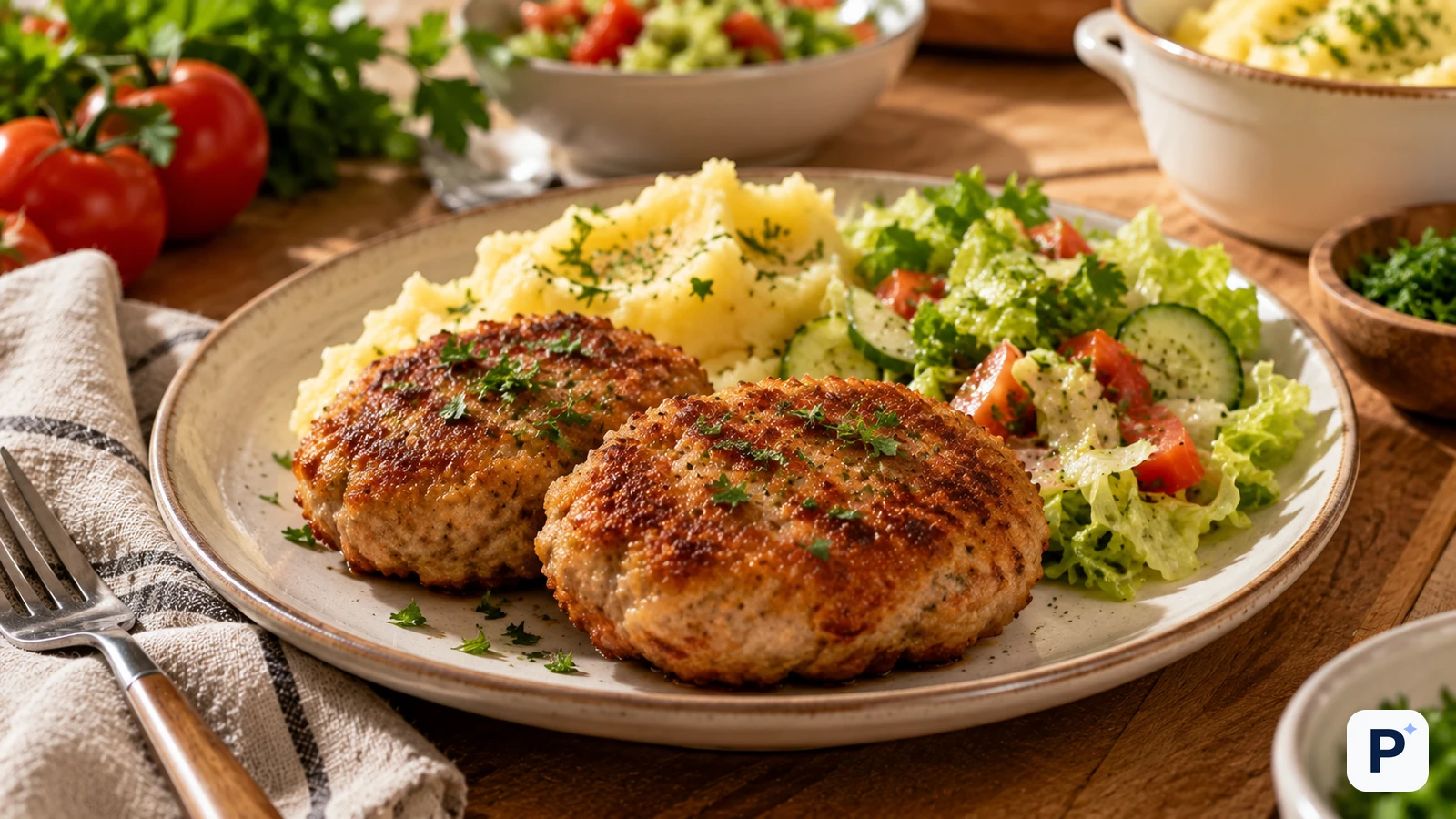
- potatoes with butter or dill,
- beetroot,
- mizeria (cucumber salad),
- carrot salad,
- white or sauerkraut cabbage salad,
- pickled cucumbers,
- carrots with peas.
If you want to use up ingredients you already have in the fridge, the meatballs also go well with roast potatoes, groats or pan-fried vegetables.
What to do with leftover meatballs
Polish meatballs also work well the next day. You can:
- Make a sandwich. Cut a meatball in half and put it in bread with lettuce, tomato, pickled cucumber and mustard.
- Slice them into a sauce. Sliced meatballs can be warmed in a tomato or mushroom sauce and served with pasta, rice or groats.
- Add them to a dinner bowl. Slice a meatball and combine it with potatoes, vegetables and a simple sauce.
This is one of the reasons it is worth making a few extra meatballs. You do not have to cook a whole dinner from scratch the next day.
How to store Polish meatballs
Let the fried meatballs cool, then transfer them to a sealed container and put them in the fridge. They are best eaten within 2–3 days.
While storing, do not leave cooked meatballs at room temperature for many hours. The sooner they are cooled and placed in the fridge, the better.
How to reheat Polish meatballs
The easiest way is in a frying pan. Place the meatballs in the pan, add a little water and cover with a lid. Reheat over low heat until they are hot in the centre too.
Thanks to the small amount of added water and reheating under a lid, the meatballs are less likely to dry out than with long reheating in a dry pan. You can also reheat them in the oven.
Can you freeze Polish meatballs?
Yes. The most convenient way is to freeze the meatballs once they are fried and cooled. Divide them into portions and transfer them to an airtight container or freezer bag. This way you can take out only as much as you need for one dinner.
After thawing, it is best to reheat them slowly, under a lid, so you do not dry them out unnecessarily.
Ingredient substitutions
Meat: you can replace the pork and beef mix with pork alone, and for a lighter version use turkey or chicken. With very lean meat, though, you need to be careful not to fry the meatballs too long.
Bread roll: use a bread roll, stale bread or other white bread.
Milk: you can replace it with water.
Egg: it helps bind the mixture, but if you use a suitably moist bread roll and mix the meat well, the mixture can also be made without egg. In that case, you need to watch the consistency particularly carefully.
Lard: it gives a characteristic, traditional flavour. You can also use oil.
Breadcrumbs: if you want to limit the amount, shape the meatballs with moist hands and fry them without coating. The outside will then be less crisp, but the meatballs can still be juicy.
The most important rules for juicy Polish meatballs
If you want to remember just a few things, pay attention to these points:
- Choose meat that is not completely lean.
- Soak the bread well, but squeeze it out before adding it to the meat.
- Do not overdo the breadcrumbs.
- Mix the meat only until the ingredients come together.
- Do not make the meatballs too thick.
- Fry in well-heated fat, but not over maximum heat.
- Do not overcrowd the pan.
- Once browned, reduce the heat and let the meatballs cook through gently.
- Do not press them down with a spatula while frying.
Cooking with what you already have?
Polish meatballs are a good example of a dinner you can adapt to what is in the fridge. Have minced meat, some bread, an egg and an onion? You do not need to buy a dozen extra ingredients.