One-Pan Leczo (Vegetable Stew)
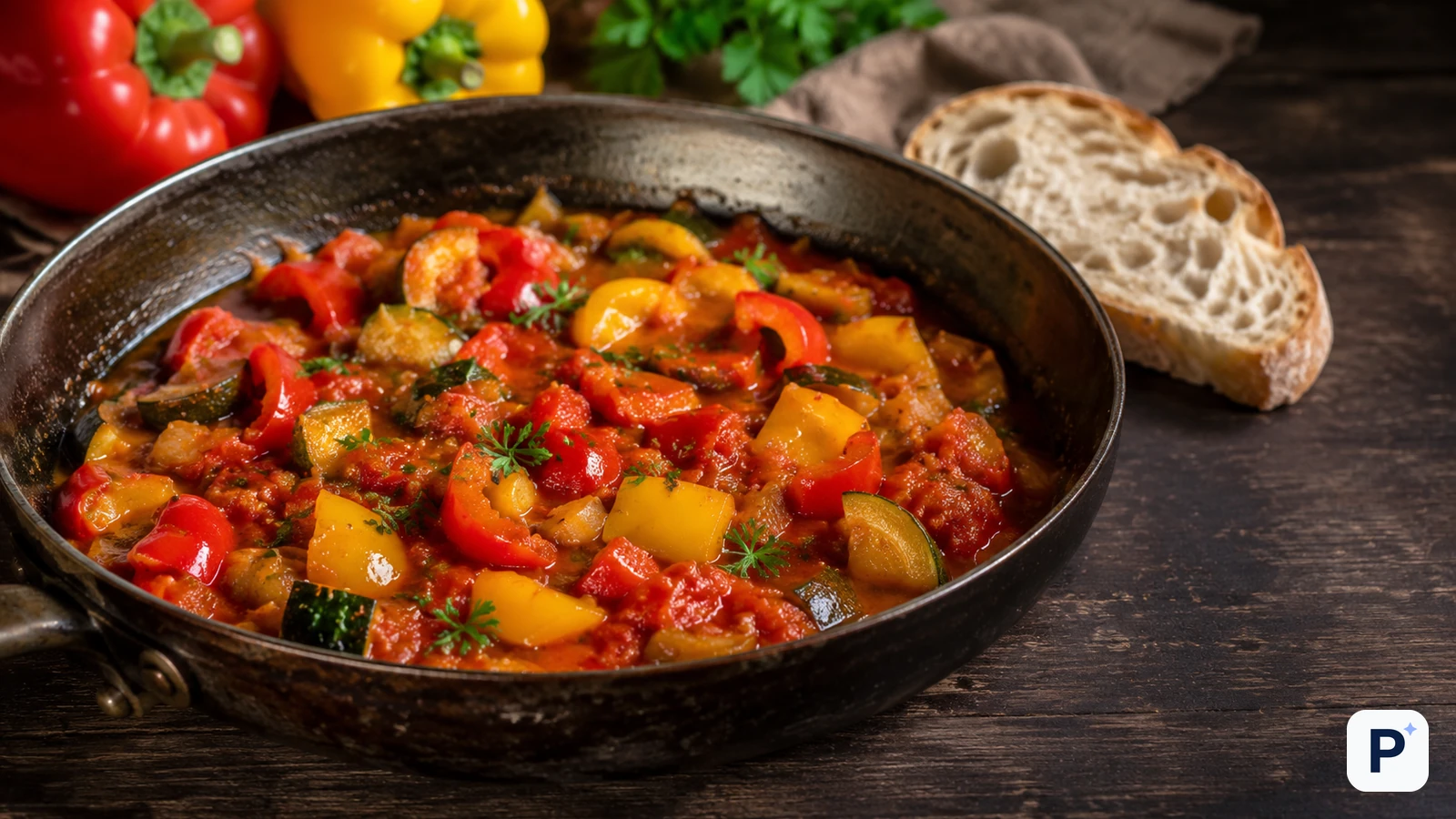
One of the best dinners for using up vegetables that need eating soon. Peppers, courgette and tomatoes form the classic base, but you don't have to treat the list as a fixed set.
Ingredients
- 1 large onion
- 2 peppers
- 1 medium courgette
- 1 can of chopped tomatoes or about 4 ripe fresh tomatoes
- 1 tablespoon tomato purée
- 1 teaspoon sweet paprika
- 1 tablespoon oil
- salt
- freshly ground pepper
Optional: about 250 g sausage, 1 can of drained chickpeas, beans or cooked lentils, smoked paprika, chilli, garlic, oregano or marjoram, or parsley.
Instructions
- Peel the onion and cut it into cubes or thin slivers. Remove the seeds and cores from the peppers and cut them into strips or larger cubes. Halve the courgette lengthways and cut it into half-slices.
- Heat a tablespoon of oil in a large, deep frying pan. Add the onion and fry for about 3–4 minutes, until it softens and turns slightly translucent.
- If you are making leczo with sausage, cut it into half-slices and add it now. Fry for a few minutes, until it browns lightly.
- Add the peppers and fry for about 4–5 minutes. Peppers need more time than courgette, so it is worth adding them earlier.
- Add the courgette and fry for another 2 minutes or so. Then sprinkle in the sweet paprika and any other spices. Stir to combine.
- Add the tomatoes and the tomato purée. Season with pepper and a little salt, stir and cover.
- Simmer over medium heat for about 15–20 minutes, stirring from time to time. The vegetables should soften but don't have to fall apart completely.
- If you are making the version with chickpeas, beans or pre-cooked lentils, add them for the last 5 minutes of cooking. The legumes are already cooked, so they just need heating through thoroughly.
- At the end, taste the leczo and adjust the seasoning. If the tomatoes are very sour, you can add a small pinch of sugar, but first check whether it is really needed.
How to Make Good Leczo Without the Vegetables Turning to Mush
The most important thing is the order in which you add the ingredients. Onion and peppers need more time, so they go into the pan earlier. Courgette softens much faster, so it is worth adding it later.
You also don't need to simmer leczo for very long. After about 15–20 minutes in the tomato sauce, the vegetables should be soft but still hold their structure.
If you prefer a thicker leczo, cook it for part of the time without a lid. More water will evaporate and the sauce will become thicker.
What to Do if Your Leczo Is Too Watery
Take off the lid and cook for a few more minutes over slightly higher heat. The excess water will evaporate and the tomato sauce will thicken.
Don't rush to thicken the leczo with flour. In most cases, evaporating the excess liquid is enough.
Remember too that courgette and other vegetables release water as they cook. If you use a very large courgette or lots of extra vegetables, the leczo may need a few extra minutes without the lid.
What to Do if Your Leczo Is Too Sour
The sourness depends mainly on the tomatoes you use. First let the leczo cook a little longer and taste it again.
If it is still very sour, you can add a small pinch of sugar. The idea is not to make a sweet sauce, just to gently balance the flavour.
Adding sweeter vegetables, such as red pepper or a small amount of carrot, can also help.
Fresh Tomatoes or Tinned Tomatoes?
Both options work. Ripe summer tomatoes are a great choice in season. Dice them and add them straight to the pan.
Out of season, tinned tomatoes often give a more predictable, intense flavour and need less preparation.
If you use fresh, very juicy tomatoes, the leczo may need a little more time to reduce.
Leczo with Sausage
If you want a more classic, filling version, add about 250 g of sausage. Fry it after the onion, before you add the peppers.
Frying the sausage before adding the tomatoes lets it brown lightly and brings out more flavour. If the sausage releases a lot of fat, you don't need to add any more oil.
Meat-Free Leczo
The basic recipe is already meat-free, but if it is to be a full, more filling dinner, add chickpeas, beans or cooked lentils.
Legumes go well with the tomato base and increase the protein and fibre content without changing the method much.
Substitutions
No peppers? Add mushrooms, aubergine or more courgette. The flavour will be less classic, but the principle of the dish stays the same.
No courgette? Use aubergine, mushrooms or extra peppers.
No fresh tomatoes? Use tinned tomatoes or passata.
No tomato purée? You can leave it out. The leczo will have a slightly milder tomato flavour.
No sausage? Chickpeas, beans or lentils will make the dish more filling.
Got half a carrot or a few mushrooms? Chop them and add them. Leczo copes very well with small additions like these.
What to Serve with Leczo
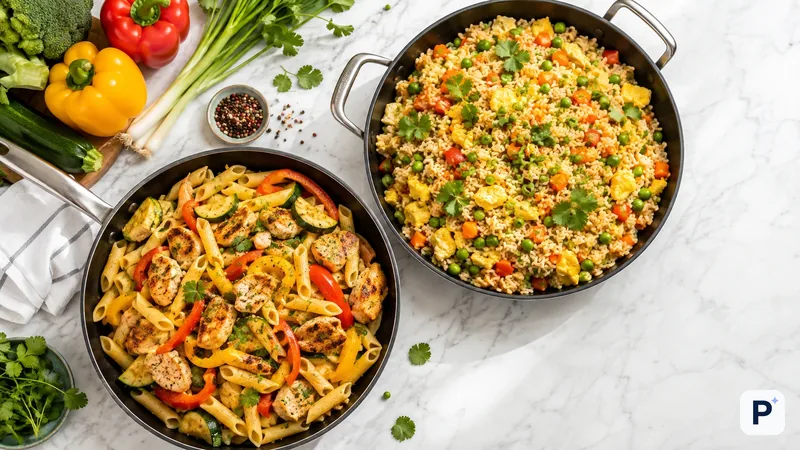
You can serve leczo on its own or with bread. If you want a more filling dinner, rice, groats, potatoes or pasta also work well.
Got a small portion of safely stored cooked rice or groats in the fridge? You can add it to the leczo towards the end of cooking and heat it through thoroughly. That way you use up both the vegetables and the leftover side from a previous dinner.
How to Store Leczo
Once it has cooled, transfer the leczo to an airtight container and put it in the fridge. It is best used within 2–3 days.
When reheating, heat the whole portion through thoroughly. If the sauce has become very thick overnight, you can add a few tablespoons of water.
Leczo is also very well suited to portioning. If you know you won't eat the whole pan at once, set some aside before serving rather than reheating the whole dish several times.
Can You Freeze Leczo?
Yes. Once it has cooled completely, divide it into portions and freeze it in airtight containers. After thawing, the courgette and peppers may be a little softer than in a freshly made dish, but the flavour will still be good.
It is worth freezing leczo in single-dinner portions. That way you take out exactly as much as you need.
What to Do with Leftover Leczo
The next day, leczo doesn't have to come back to the plate in exactly the same form. You can serve it with rice, use it as a pasta sauce, add beans or chickpeas, bake it with cheese or serve it on toast.
This is one of those recipes where the pattern matters most, not a fixed list of products: onion + vegetables + tomato base + optional protein source.
That way, instead of buying every missing ingredient, you can start with a question: what do I have in the fridge, and what needs using up first?