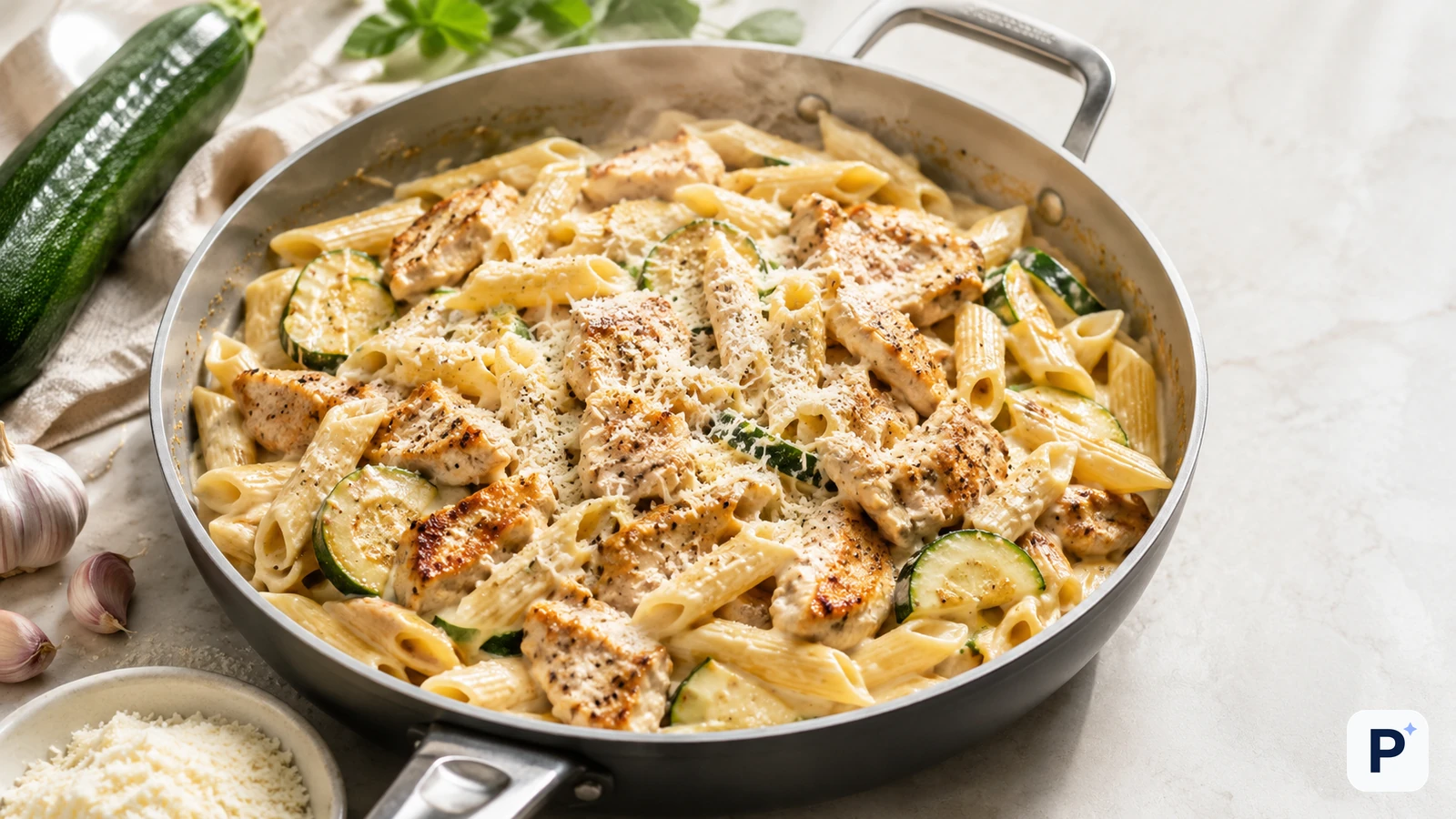
Creamy Chicken and Courgette Pasta
A quick one-pan dinner in about half an hour. The pasta cooks directly with the other ingredients, soaking up the flavour of the stock and sauce, and there is less washing up afterwards.
Ingredients
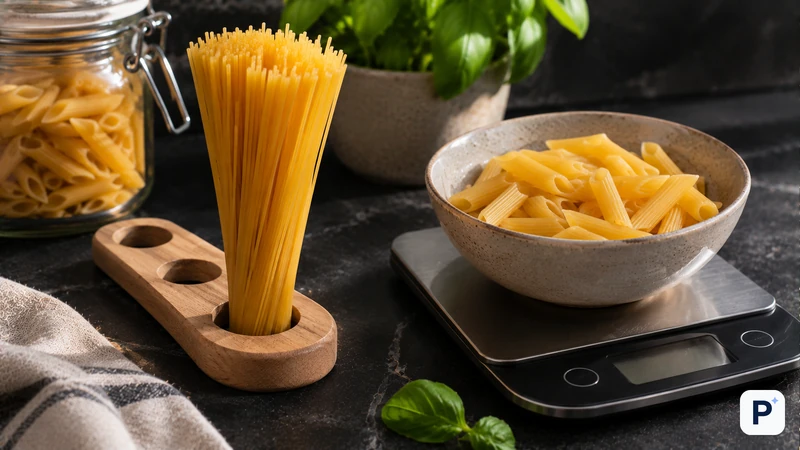
- 200 g short pasta, such as penne, fusilli or farfalle
- about 250 g chicken breast
- 1 medium courgette
- 2 cloves of garlic
- about 450–500 ml hot water or stock
- about 100 ml single cream (18% fat)
- a handful of grated Parmesan or other hard cheese
- 1 tablespoon olive oil or vegetable oil
- salt
- freshly ground black pepper
Optionally, you can add dried oregano, basil, chilli flakes, parsley or a few handfuls of fresh spinach.
Instructions
- Pat the chicken breast dry and cut it into small cubes or thin strips. Cut the courgette in half lengthways, then slice it into half-moons. Finely chop the garlic or press it through a garlic press.
- Heat a tablespoon of oil in a large, preferably deep, frying pan. Add the chicken and fry it for a few minutes over medium-high heat until lightly browned. It does not need to be fully cooked through yet, as it will finish cooking later together with the pasta. Transfer the meat to a plate.
- Add the courgette to the same pan. Fry for about 3–4 minutes, until it starts to brown but is still slightly firm. Add the garlic and fry for about another 30 seconds, just until it becomes fragrant.
- Tip the dry pasta straight into the pan and pour in about 450 ml of hot water or stock. The liquid should almost cover the pasta. Stir, cover and cook according to the time given on the pasta packet.
- Every few minutes, lift the lid and stir, especially at the bottom of the pan. The pasta will gradually absorb the liquid and release starch, which will later help to thicken the sauce. If the liquid evaporates before the pasta softens, add water in portions of about 50 ml.
- A few minutes before the end of cooking, return the chicken to the pan and stir thoroughly. The meat should be fully cooked. If you use a kitchen thermometer, the thickest piece of chicken should reach at least about 74°C.
- Once the pasta is al dente, reduce the heat. Add the cream and grated cheese. Stir until a creamy sauce forms and coats the pasta. Do not cook the cream for long over high heat.
- Taste, and only now season with salt and pepper. If you are using salty stock and Parmesan, you may need very little extra salt.
- If the sauce seems too thick, add 2–3 tablespoons of hot water and stir. If it is too thin, cook the dish for another minute or two without the lid.
Why Can You Cook Pasta Directly in the Pan?
During traditional cooking, some of the starch from the pasta stays in the water, which you later pour away. Here the starch stays in the pan and helps to thicken the sauce naturally.
That is why you should not pour in too much water at once. It is better to start with about 450 ml and add more a little at a time. This way you end up with a creamy sauce rather than pasta floating in a large amount of liquid.
How to Get a Really Creamy Sauce
The most important thing is the water with the starch released by the pasta. Once you add the cream and cheese, they combine with the liquid left in the pan and create a creamy emulsion.
If the sauce is too thick, do not add another helping of cream. Use a few tablespoons of hot water first. The sauce will become thinner but will still stay creamy.
The cheese is also best added after reducing the heat. At very high temperatures it can clump together instead of blending evenly into the sauce.
What to Do If the Pasta Is Still Hard and the Water Has Gone
Add about 50 ml of hot water, stir and continue cooking. Repeat as needed until the pasta reaches the right softness.
Different shapes and brands of pasta absorb different amounts of liquid, so treat 450–500 ml as a starting point rather than an amount you must stick to down to the millilitre.
What to Do If the Sauce Is Too Thin
Take off the lid and cook the pasta for another 1–3 minutes, stirring often. The sauce will thicken both as some of the water evaporates and thanks to the starch from the pasta.
Remember too that the sauce thickens noticeably once you take the pan off the heat. If it seems a little thinner in the pan than you want, it may have the perfect consistency a moment later.
Substitutions
No courgette? Use mushrooms, broccoli, pepper, peas, green beans or fresh spinach. Add firmer vegetables earlier and the spinach only towards the end of cooking.
No chicken? Add drained chickpeas, beans or pan-fried tofu. Chickpeas and beans only need to go in at the end, as they are already cooked. And if you have some cooked chicken left over from another meal, you can add it right at the end, just to warm through. You will find more ideas for leftover meat in our guide on what to do with leftover chicken.
No cream? You can use cream cheese, a smaller amount of mascarpone, or make a completely different version and add tomato passata.
No Parmesan? Grana Padano, pecorino or another hard cheese that melts well will work.
Have some leftover vegetables from a previous meal? Add them right at the end just to warm through.
Tomato Version
Instead of cream, add about 150–200 ml of passata. In this variation you can season the sauce with oregano, basil, chilli or a little smoked paprika.
If you add the passata while the pasta is cooking, reduce the amount of water accordingly. You can always add more later if the pasta needs extra liquid.
How to Store It
Once cooled, transfer the pasta to an airtight container and store it in the fridge. It is best eaten within about 2 days.
When reheating, add 1–2 tablespoons of water or a little milk to the pan. The sauce thickens considerably once chilled, so the extra liquid will help to restore its creamy consistency.
Reheat the dish thoroughly until it is hot all the way through.
What Else Can You Add?
This is a good recipe for 'clearing out the fridge'. A handful of spinach, half a pepper, a few mushrooms, the last of some grated cheese or a small portion of cooked vegetables can all happily go into the pan.
It is not about recreating the recipe to the gram, but about keeping to the pattern: pasta + a protein source + a vegetable + liquid + something to make the sauce.