Egg Fried Rice with Vegetables
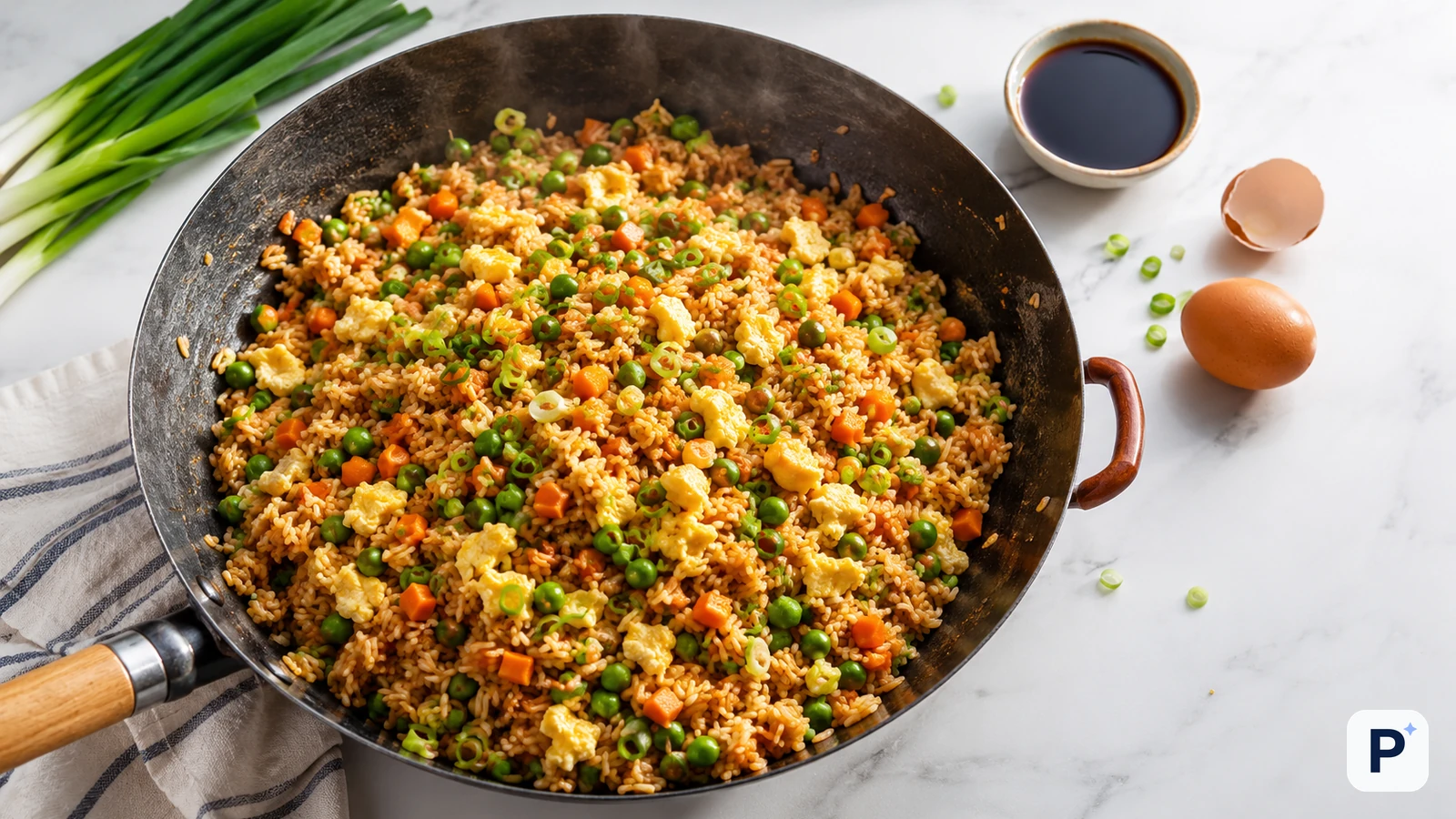
One of the simplest ways to use up rice left over from a previous meal. It works best with well-chilled, loose rice. Carrot, peas and onion are only a starting point.
Ingredients
- about 2 cups of cooked and well-chilled rice
- 2 eggs
- 1 carrot
- a handful of peas, fresh or frozen
- 2 spring onions or 1/2 onion
- 2 tablespoons soy sauce
- 1 tablespoon oil for frying
Optional: tofu, a piece of cooked chicken, pepper, sweetcorn, broccoli, green beans, garlic, ginger, sesame, chives or a few drops of sesame oil.
Instructions
- Prepare all the ingredients before you start frying. Cut the carrot into a very fine dice or thin strips, and chop the onion or spring onion. If you are using other vegetables, cut them into small pieces too.
- Separate the chilled rice with a fork or your fingers if it has clumped into larger lumps. This way it will combine more easily and evenly with the vegetables and sauce during frying.
- Heat the oil well in a large frying pan. Add the carrot and onion. Fry for about 2–3 minutes, stirring often.
- Add the peas and any other firmer vegetables. If you are using already-cooked vegetables, add them later, as they only need warming through.
- Push the vegetables to one side of the pan. Crack the eggs onto the free part and stir with a spatula, as when making scrambled eggs. When the eggs are almost completely set, combine them with the vegetables.
- Add the chilled rice. Turn up the heat and mix thoroughly. Fry for a few minutes, breaking up any lumps.
- Pour in the soy sauce, ideally down the sides of the hot pan, and quickly mix all the ingredients. Fry for another 2–3 minutes, until the rice is piping hot throughout.
- At the end, add the chopped spring onion or chives. Taste before adding any salt, as soy sauce is already salty.
Why is day-old rice best?
Freshly cooked rice contains a lot of moisture and steam. In the pan it therefore tends to stick together and can turn soft rather than lightly fried.
Once it has been chilled quickly and properly, the rice becomes firmer and drier on the surface. The grains separate more easily and hold up better during frying.
This does not mean you have to cook rice specially the day before. This recipe is above all a good way to use up rice that has safely been left over from an earlier meal.
How to make fried rice that isn't sticky
First, use cool, loose rice. Second, fry in a large pan at a relatively high temperature. If the pan is small and you put in a lot of ingredients at once, they will start to steam rather than fry.
Also, don't add a large amount of sauce at the start. Two tablespoons of soy sauce is usually enough for two servings. You can always add more on the plate.
What to do if the rice has set into one lump
This is normal after storage in the fridge. Before frying, separate the larger lumps with a fork.
Once it is in the hot pan, you can keep gently breaking up the rice with a spatula. Don't add water just to make it easier to separate, because the extra moisture will make it harder to fry.
The order of ingredients matters
You can add a great many different products to fried rice, but not all of them should go into the pan at the same time.
First fry the vegetables that need the most time, such as carrot, onion or broccoli. Then add the quicker ingredients, the egg and the rice. Already-cooked products, such as leftover roast chicken, should go in at the end, just long enough to heat them through thoroughly.
Substitutes
No peas? Use sweetcorn, pepper, finely chopped broccoli, green beans or a mix of frozen vegetables.
No carrot? Simply leave it out or replace it with pepper.
No spring onion? A regular onion, red onion or chives will also work.
No eggs? Add tofu, chickpeas or a piece of previously cooked meat.
No soy sauce? The flavour will be different, but you can still make the rice as fried rice with vegetables. In that case, season it with salt, pepper, garlic and your favourite spices.
How to use up leftovers
Do you have one carrot, half a pepper and a few broccoli florets? It can all go into the rice. This is one of the most flexible recipes, because small amounts of several different ingredients make up a complete dish.
You can also add leftover roast chicken, tofu, cooked vegetables or a small portion of meat from a previous dinner. The important thing is that they were stored correctly beforehand and are thoroughly reheated.
A note on rice storage safety
Cooked rice requires more care than many other leftovers. It can contain spores of the bacterium Bacillus cereus, which can survive cooking. The problem is therefore not reheating the rice itself, but above all the way it is stored after cooking.
If you want to keep rice for later, chill it as quickly as possible, ideally within about an hour. Spreading the rice out in a thin layer or dividing it into smaller portions helps. Then store it in the fridge. And when you cook from scratch, you can check in advance how much rice to cook so that you don't end up with too much.
For this recipe, use rice that has been stored in the fridge for no longer than about 24 hours. During frying it should be thoroughly reheated and piping hot throughout. Rice should not be reheated more than once.
If you are not sure how long the cooked rice stood out of the fridge or how it was stored, it is safer not to use it.
Can fried rice be frozen?
Yes, but rice intended for freezing also needs to be chilled quickly. The most convenient approach is to divide it into small portions straight away and pack it tightly.
After thawing, reheat it thoroughly and eat it right away.
How to make a more filling version
To the basic rice, add a source of protein: an extra egg, tofu, chickpeas, a piece of chicken or other cooked meat. You can also increase the amount of vegetables.
The pattern is very simple: cooked rice + vegetables + protein + sauce or seasoning = a quick dinner from leftovers.