How to Store Fresh Herbs So They Don't Wilt
You buy a bunch of parsley, some dill and some basil because they happened to look fresh and smelled of summer. Two days later the parsley is a slimy string at the bottom of the fridge, the basil looks like a wilted bouquet, and the dill has turned yellow. It all ends up in the bin, along with a little guilt and a few dollars. You know the feeling. The good news is that herbs don't have to wilt this quickly. You just need to give each of them what it really needs. In this guide we divide herbs into three groups and show you how to look after each one, and at the end we add a simple trick for when you buy too many.
Why Herbs Wilt
A fresh herb is still a living plant, just one that has been cut off from its roots. After picking, it carries on breathing and losing water, and without any way to replace it, it simply dries out. There's a second factor on top of this: fruit and some vegetables sitting nearby give off ethylene, a gas that speeds up the ripening and ageing of delicate leaves. That's why the salad drawer, where we keep everything together, can be the worst possible place for herbs. The problem is that different herbs have different needs. Some love cold and moisture, while others turn black in the fridge within hours. We usually treat them all the same: we throw the whole bunch into a plastic bag and tuck it into the drawer. And that is the most common mistake. When you match the way you store a herb to its type, the same money lasts a week rather than two days.
Soft, Leafy Herbs
This group includes parsley, dill, coriander, mint and chives. They have delicate, juicy leaves and dry out the fastest. Two methods work best for them, so choose the one that suits your kitchen. Both rely on the same principle: a little moisture around the leaves and some cold, but without sealing the herbs in a wet, airless bag.
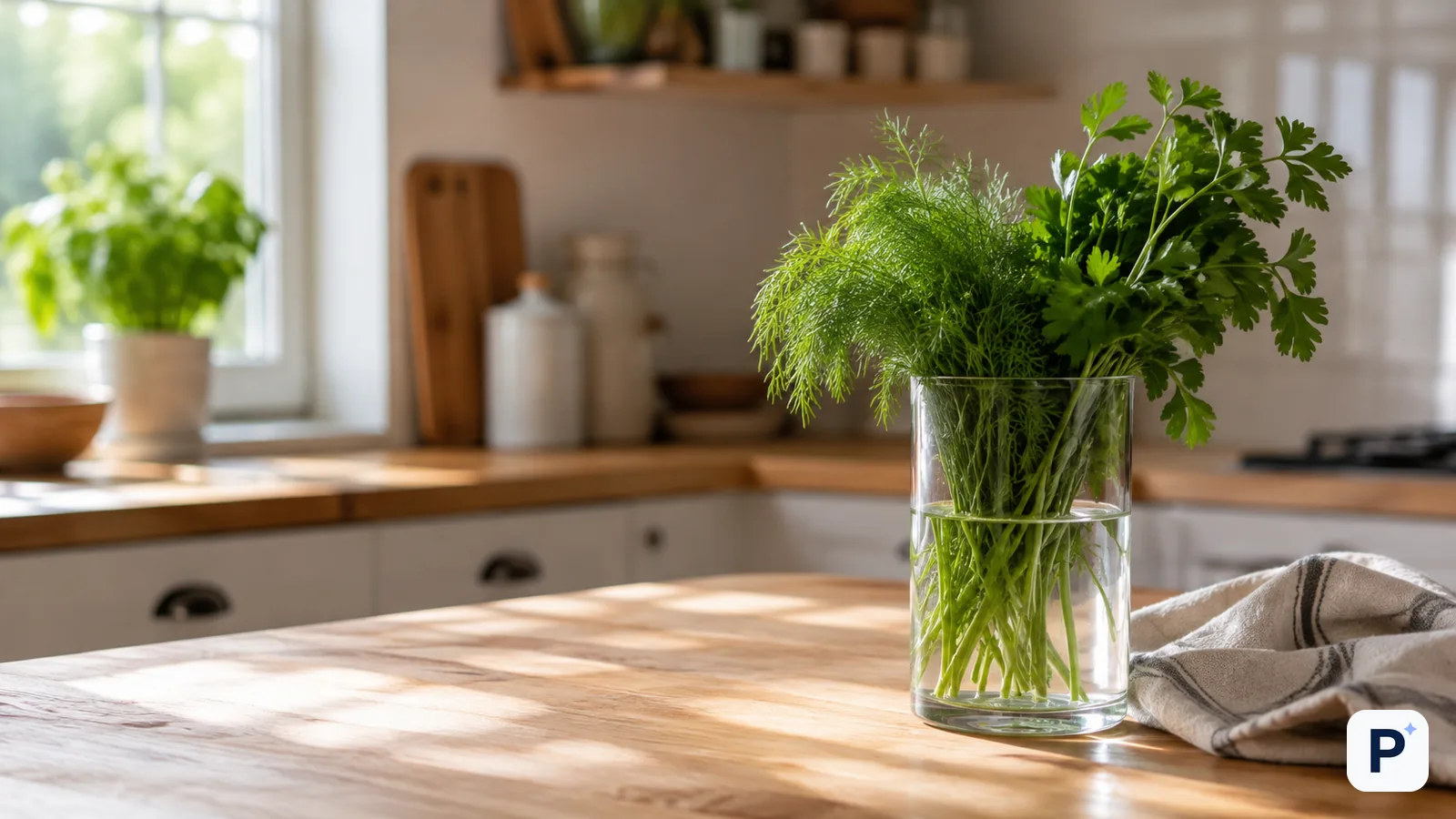
The glass-of-water method. Treat the herbs like cut flowers. Trim the ends of the stalks and stand the bunch in a glass or jar with a little water, so that only the stems are submerged and not the leaves. If you have room, drape a plastic bag loosely over the top, like a tent, to keep moisture around the leaves. Put the whole thing in the fridge and change the water every one or two days, as soon as it turns cloudy. The exception is basil, which we'll come to shortly. Stored this way, parsley or coriander can stay firm for as long as a week and a half.
The damp cloth method. If you don't have room for glasses, wrap the herbs loosely in slightly damp kitchen roll, put them in a container or a loosely closed bag and keep them in the fridge. The kitchen roll should be barely damp, not wet. The idea is to keep a little moisture around the leaves without turning the bag into a puddle. Every few days, look inside and replace the kitchen roll if it has become wet or started to smell stale.
Basil Is the Exception
Basil looks like a herb for the fridge, but it isn't one. It comes from a warm climate and the cold damages it: at low temperatures it quickly develops dark, almost black patches and loses its aroma. Keep it at room temperature, on the worktop, in a glass of water, exactly like a bunch of flowers. Stand it away from draughts and harsh sunlight, and don't cover the leaves tightly with plastic, because it likes to breathe. Here too the water should be fresh, so change it every few days. If you're picking leaves for cooking, start with the top ones, and the plant will stay attractive and compact for longer.
Hard Herbs
Rosemary, thyme, sage and oregano are a completely different league. They have woody stalks and tough leaves, so they are far hardier and more forgiving. Wrap them in slightly damp kitchen roll, a touch drier than for the soft herbs, put them in a container or wrap them loosely in plastic and keep them in the fridge. Prepared this way, they will easily last one or two weeks, and often longer. If you notice that any of them are starting to spoil, throw out that sprig so it doesn't take the rest with it. These herbs have another nice feature: even when they dry out a little on the sprig, they are still excellent for cooking, because their oils stay in the leaves.
The Most Common Mistake
The biggest enemy of fresh herbs is moisture trapped with no air getting in. Wet leaves crammed into a tightly sealed plastic bag make a ready-made damp sauna, in which herbs don't so much wilt as rot and turn slimy. That's why you should always dry herbs before putting them away. Gently spin them in a salad spinner or pat them dry with kitchen roll until there is no visible water left on the leaves. Choose a container or a loosely closed bag rather than a tightly tied bag, too, so that air can circulate. And one more thing: don't wash the whole bunch in advance. If you only need a few sprigs, wash just those, right before using them, and leave the rest dry. A bunch washed in advance spoils much faster, because water stays between the leaves.
Too Many Herbs? Freeze Them
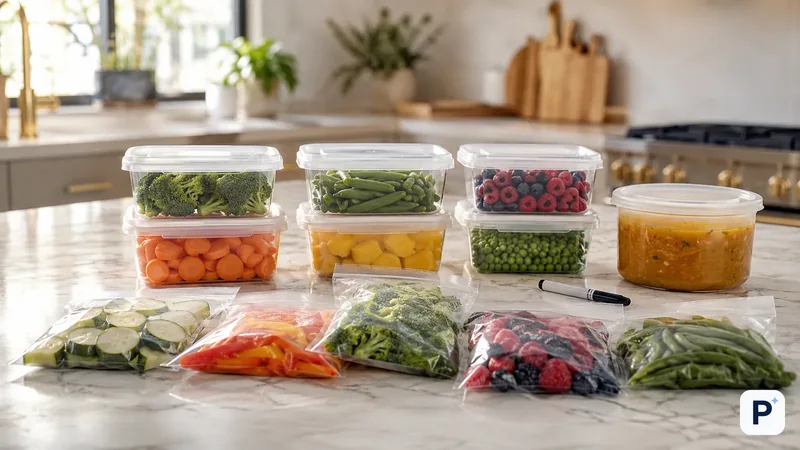
Sometimes a bunch is simply too big to use in time. Freezing is then the best option. You can divide the herbs into portions and freeze them in bags, or chop them and press them into ice cube trays, topping them up with olive oil or water. The ready-made herb cube then goes straight into the pan or pot. Another clever method is herb butter: mix chopped herbs with soft butter, shape it into a log, wrap it in foil and freeze it, then slice off discs straight into the pan. Hard herbs, such as rosemary and thyme, can also simply be dried by hanging the sprigs in a dry, airy place. Just remember that frozen and dried herbs are suited to cooked dishes, to soups, sauces or braised vegetables, and not as a fresh garnish on top. But for cooking they work brilliantly, and nothing goes to waste.