Freeze-Dried Food: How It Works and When It's Worth Buying
Freeze-dried food is light, takes up little space and can be stored for a long time without refrigeration. Preparing it, however, requires specialist equipment, so freeze-drying at home is not a solution for everyone. Find out how this method works, how it differs from ordinary drying and freezing, and when buying ready-made freeze-dried products makes more sense than investing in your own equipment.
What is freeze-drying?
Freeze-drying, also known as sublimation drying, is a method of preserving food that involves removing water from a previously frozen product. The process takes place under reduced pressure, which allows the ice to pass directly from a solid state into water vapour. This phenomenon is called sublimation.
Put simply, freeze-drying consists of three stages. First, the product is frozen. Then the pressure in the chamber of the device is lowered and most of the ice is removed through sublimation. Finally, an additional drying stage is carried out to remove the remaining moisture.
Unlike traditional drying, the process does not rely on evaporating water with warm air. As a result, the product can retain much of its original structure, colour, aroma and nutritional properties. Once the water has been removed, it becomes light, porous and often brittle. When the right amount of water is added, it can recover part of its former texture.
Fruit, vegetables, herbs, dairy, meat and ready meals are among the things that can be freeze-dried. The method is used in the food industry, in the production of food for outdoor activities, and in preparing rations with a long shelf life.
It is worth remembering, though, that freeze-drying does not sterilise food. It does not mean the product becomes free of bacteria and other micro-organisms. Micro-organisms can survive the process in a state of limited activity and, once the food is rehydrated, regain the ability to grow. That is why the quality of the ingredients and safe food preparation before freeze-drying both matter.
How does freeze-drying differ from drying and freezing?
All three methods help to extend the shelf life of food, but they work in different ways. They cannot be treated as interchangeable.
Freeze-drying. The product is frozen and then, under reduced pressure, the water is removed through sublimation. The result is light, porous food that can recover its original structure relatively well once water is added. With proper drying and packaging, it can be stored for many years.
Traditional drying. Water is removed using heat and airflow. You can dry fruit, vegetables, mushrooms and herbs in a dehydrator, an oven or under suitable natural conditions. It is a much simpler and cheaper method, but it changes the structure of the product. Dried fruit is usually denser and more chewy, and its flavour can be more intense. It also does not recover its original texture as easily once water is added.
Freezing. Food is kept at a low temperature, which slows down the processes that lead to spoilage. The water, however, remains in the product in the form of ice. Frozen food keeps many of the properties of fresh food, but it needs a constant supply of electricity and space in the freezer.
The most important difference is that freeze-drying removes most of the water, drying removes it using heat, and freezing only lowers the temperature of the product. An ordinary freezer does not freeze-dry food, even if it stays in there for many weeks.
How long can freeze-dried food be stored, and why is it so light?
The long shelf life of freeze-dried food comes above all from its very low content of available water. The micro-organisms responsible for food spoilage need the right conditions to grow. When most of the water is removed, their activity is strongly limited.
This does not mean, however, that every freeze-dried product can be stored for the same length of time. Shelf life depends on the type of product, how thoroughly it is dried, its fat content, the way it is packaged, and its exposure to oxygen, moisture and storage temperature.
For professionally prepared food for outdoor use, manufacturers may declare a shelf life of many years. Some products, packed in special barrier packaging and stored under the right conditions, have a declared shelf life of up to a dozen or even 25 years. This is not, however, a universal figure for all freeze-dried food.
For products prepared at home, you should not automatically assume such a long shelf life. Home equipment and the way food is prepared and packaged can give varying results. Without controlling the level of remaining moisture and ensuring the right storage conditions, it is hard to say reliably how long a particular product will stay safe and keep its quality.
Why is freeze-dried food so light? Fresh fruit and vegetables usually contain a great deal of water. For many products its share amounts to around 80 to 95 per cent of the mass. Once most of that water is removed, what remains is a much lighter product that takes up less space and is easier to carry.
This is exactly why freeze-dried food is popular for tourism, trekking and emergency supplies. You can store a small pack holding a meal that, once water is added, becomes ready to eat according to the manufacturer's instructions.
Can you freeze-dry food at home?
Yes, but you need specialist equipment. True freeze-drying cannot be carried out in an ordinary jar, freezer or food dehydrator.
A home freeze dryer is a device fitted with a freezing chamber, a vacuum system and a system for drawing off water vapour. It has to maintain both a suitably low temperature and reduced pressure at the same time, so that the ice can pass directly into water vapour. Ordinary kitchen appliances do not provide these conditions.
How much does a home freeze dryer cost? These are expensive devices. Home models typically cost several thousand dollars, and larger, higher-capacity units cost considerably more. The price depends on the capacity, the number of trays, the size of the chamber, the type of vacuum pump and the accessories.
On top of the price of the device itself, you also need to account for electricity, maintenance, any servicing of the pump, barrier packaging and accessories for protecting the finished food. So it is not a one-off purchase after which preparing freeze-dried food costs nothing.
How long does one cycle take? Freeze-drying is not a quick process. Depending on the device, the type of product, the amount of water and the size of the portion, a cycle can take more than ten hours, and often around 24 to 48 hours. Products with a high water content or thick pieces may need a longer process.
So it is not enough to put fruit into the device for an hour or two. A freeze dryer can run for a full day or longer, and the finished product then has to be packed quickly and correctly.
Is a home freeze dryer worth it?
For most households, buying a freeze dryer will not be the most economical way to prepare supplies. The high cost of the device is hard to justify if you are planning to prepare only a few portions of fruit or vegetables over the course of a year.
The purchase can make sense in a few specific situations. If you have a large garden or orchard and regularly gather surplus fruit and vegetables, your own equipment lets you process larger amounts of seasonal produce. The same can apply to people who often prepare food for trips, need light meals with a long shelf life, or have particular requirements about the composition of their food.
How often the device is used matters too. If you plan to prepare batch after batch of food regularly, the cost of the purchase is easier to justify. If the freeze dryer would run only a few times a year, ready-made products will usually be the simpler solution.
Before buying, it is worth working out not just the price of the device but also the cost of the ingredients, electricity, packaging and maintenance. Compare it with the price of ready-made freeze-dried products and with other storage methods. The mere fact that you can prepare food in your own home does not yet mean it will be cheaper.
What can be freeze-dried, and which products work less well?
Freeze-drying is a fairly versatile method, but not every product gives an equally good result. The best candidates are ingredients with a high water content and a relatively small amount of fat.
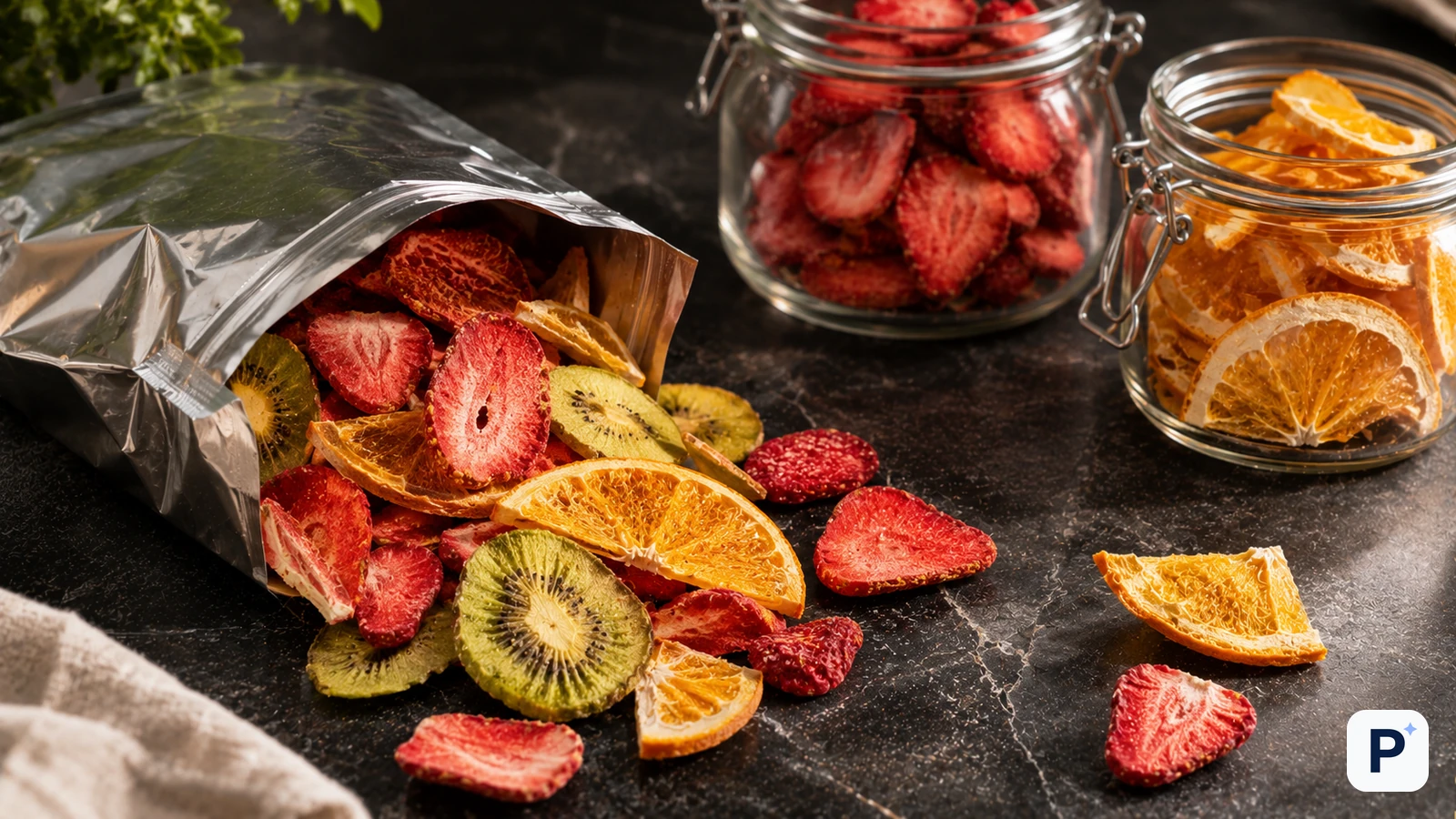
Fruit. Strawberries, raspberries, blueberries, apples, bananas, mango and other fruit are well suited to freeze-drying. Once the process is finished they are light and brittle, and when water is added they can recover part of their original texture. You can use them in porridge, desserts, smoothies or as a snack.
Vegetables. Carrots, peas, sweetcorn, beetroot, peppers and other vegetables can be freeze-dried on their own or as ingredients in ready-made mixes. Some need blanching or other preparation beforehand. Once rehydrated, you can use them in soups, sauces and one-pot dishes.
Ready meals. You can freeze-dry cooked meals, such as stews, rice dishes, sauces or vegetable dishes. This is one of the most important categories of products for outdoor use. The meals, however, have to be prepared properly before the process. Freeze-drying does not replace cooking and does not eliminate micro-organisms. If a dish contains meat or other ingredients that need heat treatment, they must be prepared safely before freeze-drying, or treated properly after rehydration.
Dairy. Some dairy products, such as milk or yoghurt, can be freeze-dried. The best results come above all from products with a lower fat content. For full-fat cheeses, cream and other products rich in fat, the result can be less stable and harder to achieve.
Fatty products. Butter, oils, mayonnaise and dishes with a lot of fat do not freeze-dry well. The process removes water but not fat. The fat left behind can turn rancid over time, and the product will not reach the same shelf life as food low in fat. Similar difficulties can arise with very sweet, sticky products and dishes with plenty of rich sauces.
Before freeze-drying, it is also worth considering how you will use the product later. Not every ingredient will recover its original texture once rehydrated. Some fruit and vegetables work better as a crunchy snack or an addition to dishes than as a substitute for the fresh product.
How to store freeze-dried food
Packing it correctly is just as important as the freeze-drying process itself. The finished food has a porous structure and absorbs moisture from its surroundings very easily. If it is left in the open air for too long, it can soften and lose the properties it gained during the process.
That is why freeze-dried food should be packed as soon as possible after the cycle finishes, once it is completely dry and cool. The packaging should limit the access of moisture, oxygen and light.
Barrier packaging. For longer storage, special multi-layer bags are used, among other things, often made from materials with a layer of aluminium foil. Such packaging limits the penetration of moisture and oxygen far more effectively than ordinary thin food bags. You can also use suitable airtight containers and jars, as long as they provide proper protection and are intended for this purpose.
Absorbers. Depending on the type of packaging and product, you can use moisture or oxygen absorbers intended for contact with food. Each has a different use. A moisture absorber limits the amount of water in the packaging, while an oxygen absorber helps to slow down oxidation. They do not, however, replace drying the product properly. Do not put food that still contains too much moisture into packaging in the hope that an absorber will solve the problem.
Storage conditions. Keep the finished packs in a cool, dry, dark place, away from heat sources. Label every package with the product name and the date of preparation or purchase. Once opened, use the contents as soon as possible and protect them from moisture.
Do not assume that freeze-dried food will keep for many years simply because it is light and dry. Both the degree to which the water has been removed and the airtightness of the packaging and the storage temperature matter.
Ready-made freeze-dried products: are they worth buying for the home?
If you want to enjoy the benefits of freeze-drying but are not planning to buy a device, the simplest solution is to buy ready-made products. Freeze-dried fruit, vegetables, ingredients for dishes, snacks and complete meals for outdoor use are all available on the market.
Freeze-dried fruit can be added to porridge, yoghurt, muesli, desserts and smoothies. It is light, takes up little space and can serve as an alternative to dried fruit. Ready-made meals for outdoor use, on the other hand, are designed for a quick reconstruction of the dish once a set amount of water is added.
Such products can be a useful addition to a home stockpile. Especially when you want to have a few meals with a long shelf life that do not need to be kept in the fridge. Before buying, however, check the composition, the portion size, the method of preparation, the storage conditions and the date given by the manufacturer.
For meals intended for outdoor use, pay attention to whether they need boiling water or whether water at a lower temperature is enough. This matters when preparing supplies in case of a power cut. A meal that needs hot water will not be as convenient if you have no way to heat it. So do not base your whole food reserve on products that need preparation.
Ready-made freeze-dried products are convenient, but usually more expensive than basic dry products, tinned goods and frozen food. You do not have to buy them in large amounts. A few packs can form an extra reserve for a trip, a breakdown or a situation in which you cannot prepare an ordinary meal.
Freeze-drying, freezing, drying or bottling: how to choose a method?
There is no single method that will be best for all products and all households. The choice depends on what you want to store, for how long, how much space you have and what equipment you own.
Choose freeze-drying if you want very light food with a long shelf life that is easy to carry and to rehydrate. It is a good solution for food for outdoor use, ready meals and larger supplies prepared with specialist equipment.
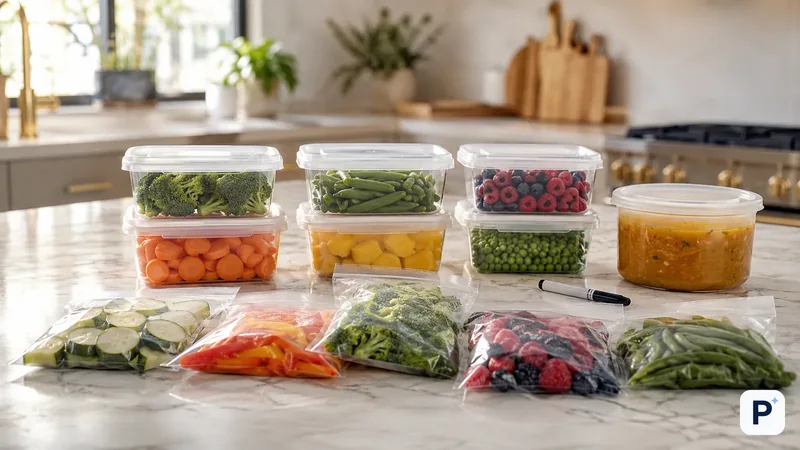
Choose freezing if you want to store meat, vegetables, fruit or ready meals without investing in an expensive device. It is a convenient method for everyday use, but it needs a freezer and a constant supply of electricity.
Choose drying if you want to extend the shelf life of fruit, vegetables, mushrooms or herbs cheaply and relatively simply. In many cases an ordinary food dehydrator is enough. You do, however, have to accept a different texture and less ability to recover the product's original structure.
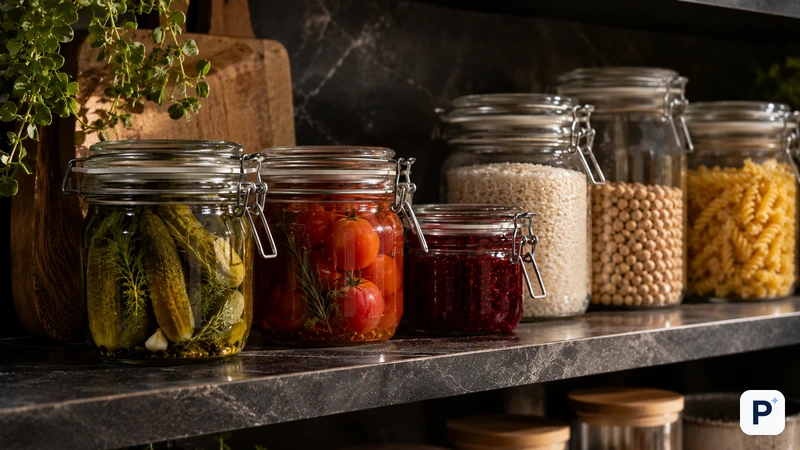
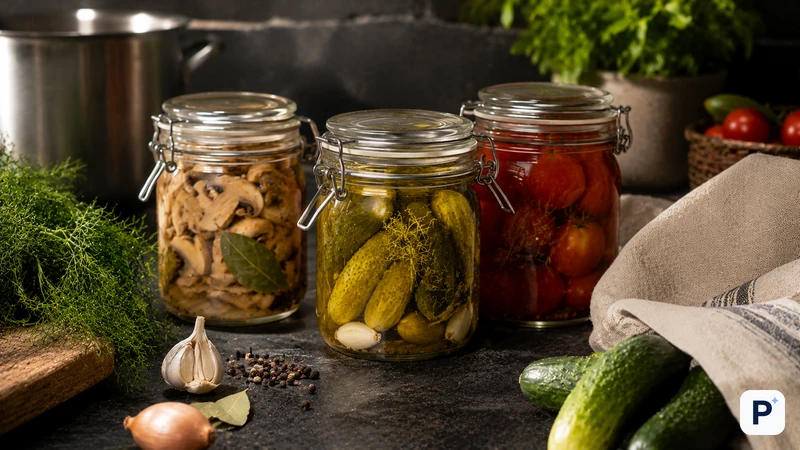
Choose bottling if you are preparing suitable acidic preserves, such as jams, fruit preserves, pickled cucumbers or properly acidified tomatoes. Pasteurising in an ordinary pot is not a safe method of preserving meat, beans and other low-acid products. You will find more information in our guide on how to preserve food in jars step by step.
If you are building a home food reserve, it is best not to limit yourself to a single method. Dry products, tinned goods, preserves, frozen food and a few ready-made freeze-dried products can complement one another. You can read more about organising such a reserve in our guide on how to build a food stockpile at home.
The most common myths and mistakes about freeze-drying
Myth: you just put food in the freezer. An ordinary freezer does not provide the conditions needed for controlled sublimation. The product stays frozen, but the water is not removed in the way it is in a freeze dryer.
Myth: you can freeze-dry in a jar. A jar can be used to store the finished product, but it does not replace the device. Freeze-drying requires freezing, reduced pressure and the controlled removal of water vapour.
Myth: an ordinary food dehydrator gives the same result. A dehydrator removes water using warm air. It does not carry out sublimation, so the product you get has a different structure, different properties and a different way of being stored.
Myth: freeze-dried food is sterile. The process does not eliminate all bacteria, viruses or other micro-organisms. If the product was contaminated before freeze-drying, micro-organisms can survive and become active again once water is added. So freeze-drying does not replace washing, cooking or other food-safety rules.
Mistake: storing it without airtight packaging. Even a well-prepared product can quickly absorb moisture from the air. Leaving it in an open container can lead to a loss of crunch and poorer shelf life.
Mistake: assuming every freeze-dried product is fit to store for several decades. A long shelf life depends on the composition of the product, how thoroughly it is dried and the packaging. Do not apply a manufacturer's declaration for specialist rations to products you have prepared yourself.
Mistake: buying a device without working out the costs. The price of a freeze dryer is only the beginning. Before buying, account for electricity, maintenance, packaging and the number of cycles you really plan to carry out.
Does freeze-dried food make sense in a home stockpile?
Freeze-drying is an effective method of preserving food, but it does not mean everyone should own a freeze dryer. The device is expensive, the process takes many hours, and the finished products need careful packing and storage.
For most households, the more sensible solution will be buying ready-made freeze-dried products in small amounts and combining them with cheaper dry supplies, tinned goods, preserves and frozen food. Your own equipment makes sense above all when you will use it regularly and have specific needs that ready-made products do not meet.
Whatever method you choose, the most important thing is still keeping track of what you have at home. Note the dates of purchase and preparation, check expiry dates and use products following the rule of rotation. A well-planned reserve does not have to be expensive. Above all, it should be matched to the needs of the household and used regularly.