Kitchen Measurement Converter
How many grams are in a cup of flour, a tablespoon of sugar or a cup of rice? Pick a product and amount, and the converter shows the weight and volume in several units at once. Handy when a recipe gives cups but you have a scale, or the other way round.
You can enter a fraction, for example 0.5 or 0.25 of a cup.
Approximate values. The weight of the same measure depends on how packed, sifted and moist the product is, most of all with flour and dry goods. Assumed: cup 250 ml, tablespoon 15 ml, teaspoon 5 ml. For precise baking it is better to use a kitchen scale. Values are based on trusted weight tables and cooking references.
Cups and tablespoons versus grams
Many recipes give ingredients in cups and tablespoons, while kitchen scales and product labels use grams. The same recipe says "a cup of flour" in one place and "125 g of flour" in another, so without a converter it is easy to slip up. The converter shows every unit at once, so you do not have to work it out in your head.
The key factor is the density of the product. A cup is always the same volume, but it weighs differently for flour, sugar or honey. That is why a cup of flour is about 125 g, while a cup of sugar is already about 200 g, even though in both cases it is the same 250 ml.
How much a cup, tablespoon and teaspoon weigh
Below are approximate weights for the most commonly measured products. These are the same values the converter uses.
| Product | Cup (250 ml) | Tablespoon (15 ml) | Teaspoon (5 ml) |
|---|---|---|---|
| Wheat flour | 125 g | 7.5 g | 2.5 g |
| Wholemeal flour | 130 g | 7.8 g | 2.6 g |
| Sugar | 200 g | 12 g | 4 g |
| Icing sugar | 125 g | 7.5 g | 2.5 g |
| Rice | 220 g | 13.2 g | 4.4 g |
| Buckwheat groats | 210 g | 12.6 g | 4.2 g |
| Millet groats | 200 g | 12 g | 4 g |
| Rolled oats | 90 g | 5.4 g | 1.8 g |
| Breadcrumbs | 150 g | 9 g | 3 g |
| Cocoa | 115 g | 6.9 g | 2.3 g |
| Salt | 300 g | 18 g | 6 g |
| Butter | 230 g | 13.8 g | 4.6 g |
| Honey | 340 g | 20.4 g | 6.8 g |
The weights of dry goods such as flour or icing sugar can vary by a dozen or so per cent depending on whether the product is packed or sifted. Treat them as a starting point, and for baking that needs precision reach for a scale.
Frequently asked questions
How many grams are in a cup of flour?
A cup of wheat flour (250 ml) weighs about 125 g. Wholemeal flour is slightly heavier, about 130 g per cup.
Why do a cup of flour and a cup of sugar weigh differently?
Because they have different densities. The same volume of sugar weighs more than flour, because the fine sugar crystals pack more tightly into the cup. A cup of flour is about 125 g, while a cup of sugar is about 200 g.
Is a Polish cup the same as an American cup?
Not quite. A Polish cup is usually 250 ml, while an American cup is about 237 ml. For most dishes the difference is small, but in precise baking it can matter.
How do you measure products without a scale?
Scoop with a level measure and do not pack the product down. Sweep off the excess with the back of a knife so the measure is level with the rim. Do not press the flour down, because then far more of it fits in the cup than the recipe assumes.
See also
Portion Calculator
Work out how much pasta, rice, meat and the rest to cook for a given number of people, so half a pot does not go to waste.
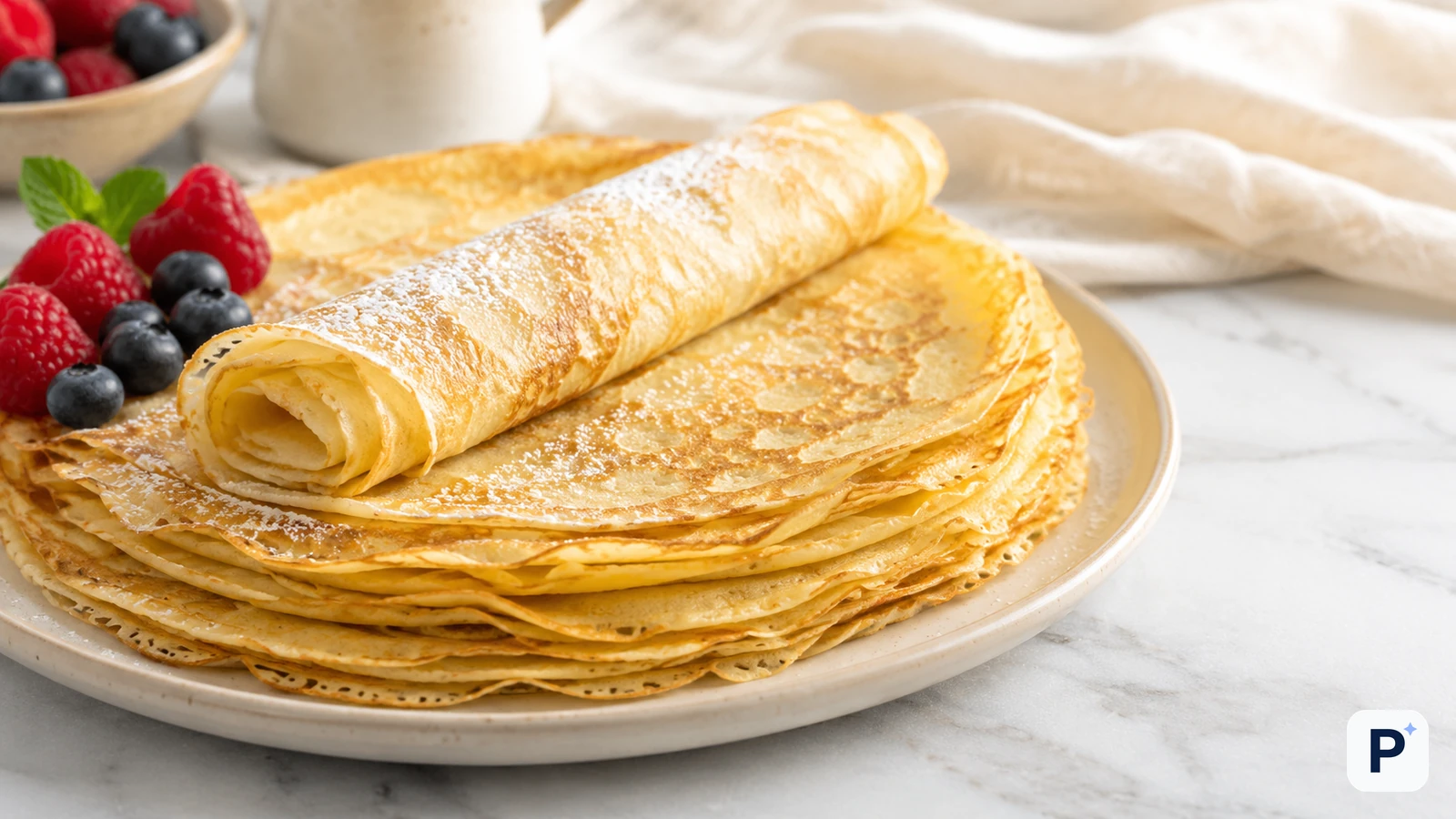
Polish Crepes (Naleśniki)
Tried-and-tested batter proportions. Measure the flour and milk in cups or in grams, whichever you prefer.
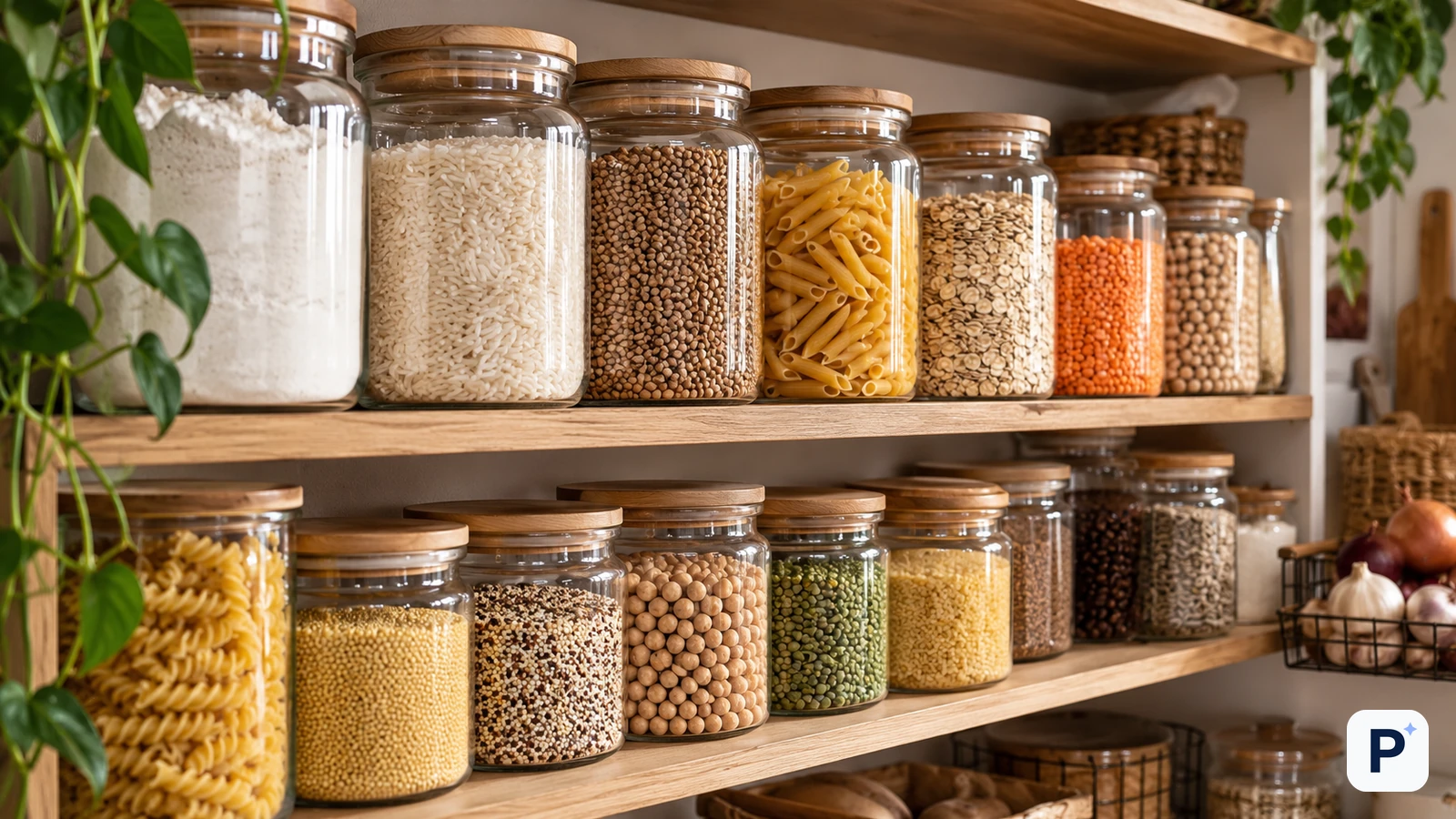
How to Store Dry Goods
Dry goods are best kept in airtight containers. See how to keep them fresh for longer.