Polish Crepes (Naleśniki)
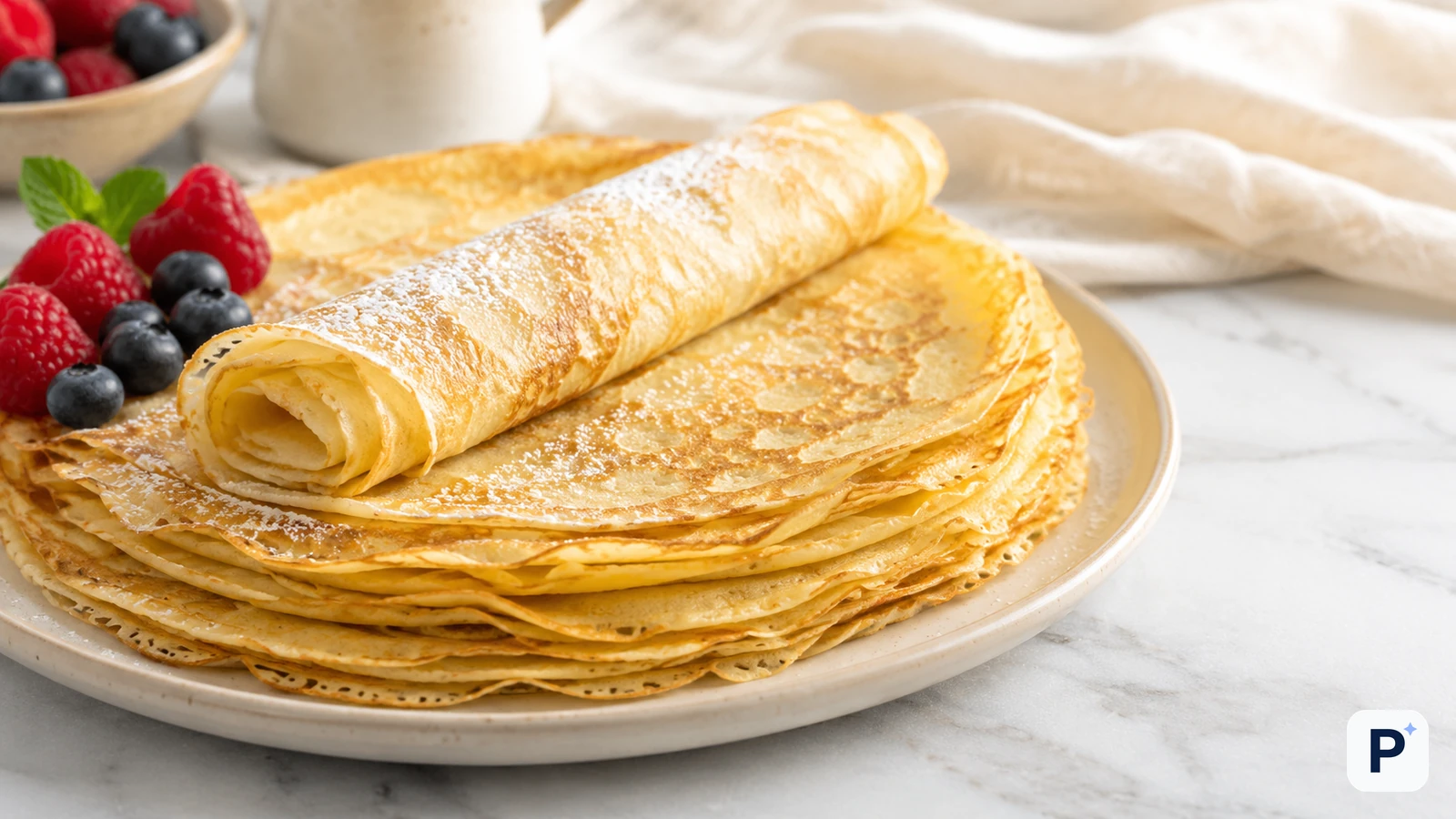
Thin, soft and flexible Polish crepes that are easy to flip and even easier to fill with whatever you have at home. This basic recipe works equally well for sweet or savoury fillings. This batch makes about 12 large crepes.
Ingredients
- 300 g plain flour
- 500 ml milk
- about 150 ml water, still or sparkling
- 2 eggs
- 2 tablespoons oil
- a pinch of salt
- a small amount of oil for frying
Instructions
- Add the flour and salt to a large bowl. Add the eggs, milk and about 150 ml of water. Blend briefly or whisk thoroughly until you have a smooth batter with no lumps.
- Add 2 tablespoons of oil and mix again. The batter should be noticeably thinner than batter for fritters and should spread easily across the pan. If it seems too thick, add water a tablespoon or two at a time until you reach the right consistency.
- Leave the batter to rest for 15–30 minutes. During this time the flour absorbs the liquid properly and the batter becomes more even and flexible. If it thickens after resting, you can add a little water.
- Heat a pan about 26–28 cm in diameter over medium to medium-high heat. Before the first crepe, brush it with a very thin layer of oil. If you use a good non-stick pan, the following crepes usually need no extra fat, because the oil is already in the batter.
- Pour in a small portion of batter and immediately swirl the pan to spread it in a thin layer across the whole surface. The less batter you use, the thinner the crepe will be.
- Fry for about 40–60 seconds. Once the surface is no longer wet, the edges start to lift slightly away from the pan and the underside is golden, gently ease the crepe up with a spatula and flip it.
- Fry the second side for less time, usually about 20–30 seconds. Stack the finished crepes one on top of another on a plate. This traps the steam and keeps them soft and flexible.
What consistency should crepe batter have?
The batter should be pourable and flow freely from a ladle. Once poured onto the pan, it must spread quickly into a thin layer without needing a spatula.
If the batter will not spread across the pan, it is probably too thick. Add 1–2 tablespoons of water, mix and check again. If, on the other hand, it is so thin that the crepes fall apart when flipped, add 1–2 tablespoons of flour.
Treat the first crepe as a test. It is the simplest way to adjust the consistency before frying the whole batch.
Why do crepes tear?
Most often the problem is not the recipe itself, but the consistency or the temperature. A crepe can tear when the batter is too thin, the pan is not hot enough, or you try to flip it too early.
Wait until the top of the crepe no longer looks wet and the edges start to lift away from the pan on their own. Only then should you flip it. Letting the batter rest for a good ten minutes or so after mixing also helps.
Do you need to add sparkling water?
No. Still water also works very well. Sparkling water can make the batter a little lighter, but it is not necessary for thin and flexible crepes.
Above all, adding water thins the batter. This lets the crepes be thinner than with a batter made with milk alone.
What to do if the first crepe doesn't turn out?
If the crepe is thick and the batter is hard to spread, add a little water. If it falls apart while flipping, add a touch of flour and make sure the pan is properly hot. If it sticks badly, add a minimal amount of fat or let the pan heat up for longer.
So you do not need to pour away a whole batch of poorly prepared batter. Crepe proportions can easily be corrected while you are frying.
Sweet crepes
The basic batter contains no sugar, so you can choose a filling based on what you have at home. Good options include farmer's cheese with vanilla, yoghurt, fresh fruit, banana, apple purée, jam, nut butter, chocolate or simply a dusting of icing sugar.
If you know the whole batch will be sweet, you can add 1 teaspoon of vanilla sugar, a little vanilla or a pinch of cinnamon to the batter.
Savoury crepes
The neutral batter also works for savoury fillings. You can use spinach and feta, chicken, mushrooms with onion, cheeses, vegetables from the fridge, meat left over from dinner or a lentil filling.
Once filled, you can pan-fry the crepes again, bake them with cheese or roll them into croquettes.
Substitutions
No milk? Make the crepes with water or a plant-based drink. With water alone they will be a little more delicate in flavour.
Only have one egg? With this amount of flour it is best to halve the whole recipe. The egg helps bind the batter and makes thin crepes easier to flip.
Want to use up a small amount of milk? Top up the shortfall with water. The milk and water do not have to be in exactly equal proportions.
No oil? You can use melted butter. Just remember that butter burns more easily.
How to store crepes
Once the fried crepes have cooled, transfer them to an airtight container or cover them and put them in the fridge. They are best used within 2–3 days. Before serving you can reheat them for a few dozen seconds in a dry pan or briefly in the microwave.
Crepes also freeze well. Separate them with pieces of baking paper, put them in an airtight container or bag and freeze. Thanks to the dividers you can later take out exactly as many as you need.
What to do with crepes the next day
Have a few left over? You do not have to serve them the same way a second time. You can make croquettes, bake the crepes with cheese and vegetables, cut them into thin strips and serve them as a garnish in broth, or make sweet rolls with fruit.
This is one of those recipes worth knowing by heart: a few basic pantry staples are enough to turn into breakfast, lunch or dessert.